How to Choose a Flex PCB Manufacturer?
Choosing a flex PCB manufacturer is not simply a price comparison. It is a decision about whether a supplier can build your circuit reliably, repeatedly, and for its actual working conditions. A thin polyimide tail bending beside a metal enclosure needs different controls from a flex circuit that moves thousands of times. Small details matter. Ask how the manufacturer evaluates bend radius, copper type, layer stack-up, adhesive choices, and stiffener placement. Then check whether its answers match your drawings and application.
Flexible-circuit author and industry educator Joseph Fjelstad is a useful expert reference. A practical paraphrase of his engineering approach is: “Choose a manufacturer whose process control fits the demands of the design.” This is a paraphrase, not a verified verbatim quotation. That distinction matters when evaluating technical advice. Request evidence, not just assurances: capability data, inspection methods, sample builds, and clear communication about design risks. A capable partner should explain how it controls registration, material handling, and final testing. It should also flag a tight bend or an unrealistic tolerance before production begins.
Some choices remain uncertain until prototypes are tested. That is normal. Compare manufacturers on technical judgment, documentation, responsiveness, and repeatability—not only on the first quote. The right flex PCB partner helps turn a promising layout into a buildable product, while making limitations visible early. Ask specific questions. Review the answers. Then decide with evidence.
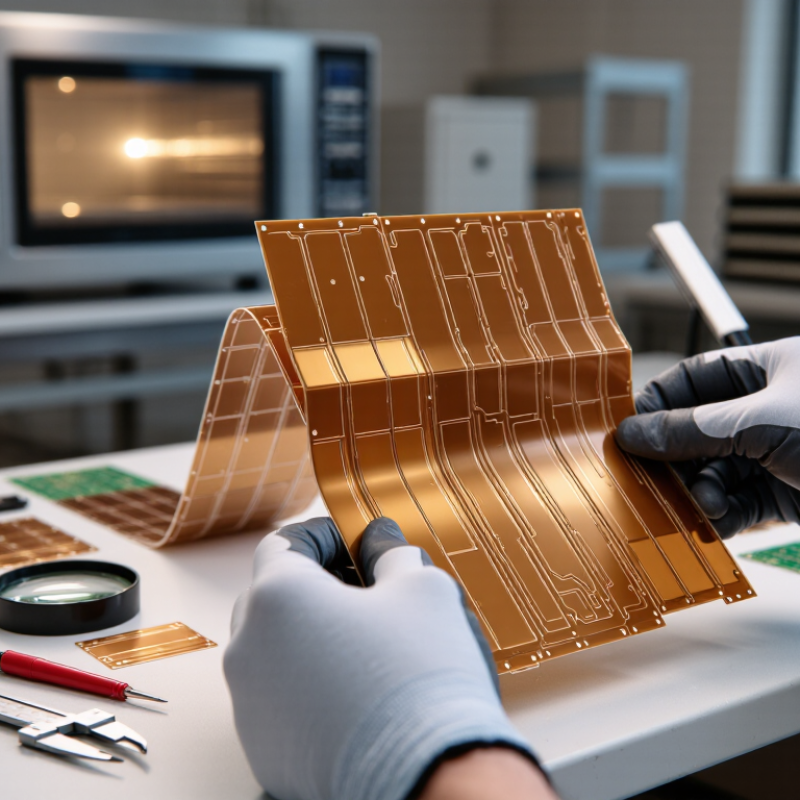
Define Your Flex PCB Requirements and Application
Before comparing flex PCB manufacturers, define what the board must do in its actual product. Is it a one-time installation bend or a cable that moves repeatedly? Record the bend radius, expected flex cycles, operating temperature, moisture exposure, current, and available space. Specify copper weight, layer count, total thickness, stiffeners, connector type, and production volume. A common miss is describing the shape but not the movement. That can lead to a design that fits the enclosure yet cracks in use.
The market context makes clear requirements even more useful. Fortune Business Insights’ Flexible Printed Circuit Board Market report estimated the global market at USD 26.03 billion in 2023 and projected USD 47.19 billion by 2032. Growth does not guarantee a supplier can build your design reliably. Ask manufacturers to review your stack-up, bend geometry, material choices, and test plan. Request evidence from comparable applications, plus details on inspection and prototype validation. A market estimate is not a quality measure.
Tips: Mark bend zones on the drawing. Share a real enclosure or a dimensioned model. State whether bends are static or dynamic. Ask for the recommended bend radius and the reason behind it. Small details matter. I would revisit the cycle-life target after testing; early estimates are often optimistic.
How to Choose a Flex PCB Manufacturer? — Define Your Flex PCB Requirements and Application
Bend radius is an important application requirement to define before requesting a flex PCB quote. These commonly used starting guidelines are expressed as multiples of the finished flex thickness.
Rule-of-thumb guidance: allow at least 10× thickness for occasional or static bending and 100× for repeated dynamic flexing. Actual requirements depend on the stackup, copper type, and expected bend cycles; confirm them with your manufacturer.
Assess the Manufacturer’s Experience and Technical Capabilities
A flex PCB manufacturer’s experience should match your board’s actual demands, not just its years in business. Ask about projects with similar layer counts, bend cycles, copper weights, and stiffener layouts. A supplier familiar with dynamic-flex designs may flag a tight bend radius before tooling begins. Request anonymized examples or process records that show how comparable boards were built and tested.
Technical capability is visible in specific answers. Can the engineering team review your stack-up, coverlay openings, trace spacing, and impedance requirements? Ask how it checks continuity, insulation, and finished dimensions. A clear sample inspection report is more useful than a broad claim of quality. Also learn which processes are handled in-house and which are subcontracted. I might focus too much on equipment lists; actual process controls matter more.
Tips: Send the same fabrication package to each candidate, including drawings and bend requirements. Ask for a design-for-manufacturing review and note every proposed change. No supplier is perfect. A vague answer about yield or inspection deserves a follow-up, not an assumption. Compare response quality alongside price and lead time.
Review Materials, Production Processes, and Quality Controls
A flex PCB quote should name the exact materials, not just “polyimide.” Check the copper type and thickness, adhesive system, coverlay, and stiffener materials against your bend radius and operating temperature. For dynamic flex, rolled-annealed copper is commonly specified because it tolerates repeated bending better than electrodeposited copper. Ask the manufacturer for material data sheets and a stack-up drawing. Small details matter. A stated minimum bend radius is useful only when it reflects your actual layer count and copper thickness.
Production capability matters as much as material choice. Review how the supplier handles laser or mechanical drilling, coverlay alignment, lamination, and controlled-impedance traces. Ask for tolerances on trace width, registration, and finished thickness, then compare them with your design requirements. Prismark’s 2023 PCB industry report estimated global PCB production value at about US$73.4 billion, down 15% from 2022. That broad market figure does not predict a supplier’s performance, but it reinforces the value of checking capacity and process consistency rather than relying on a low quote.
Quality controls should be visible in records. Request inspection criteria, electrical test coverage, and sample reports for continuity, shorts, and dimensional checks. For qualification, ask how the supplier applies IPC-6013, the performance specification for flexible printed boards, and which acceptance criteria match your order. I would still treat a neat sample cautiously; one good panel proves little. Ask for lot traceability and corrective-action records. Ask for evidence. A capable manufacturer should explain failures plainly, not promise perfection.
Compare Prototyping, Lead Times, and Customer Support
When choosing a flex PCB manufacturer, compare prototype quality, not just quoted price.
Ask for a sample build that matches your intended layer count, copper weight, and coverlay. Check fine details: connector alignment, clean cutouts, and whether stiffeners sit flat. Small details matter. Request design-for-manufacturing feedback before files are released. A useful review flags tight bend areas or traces near a fold, then explains practical alternatives.
Lead times need context.
Ask how many working days apply to fabrication, shipping, and engineering review separately. Find out whether the clock starts after your approval or file correction. Material availability can change a schedule, especially for unusual stack-ups. Get the expected date in writing, along with the factors that could move it. Fast prototypes are not always useful if testing begins before the design is stable.
Customer support is easiest to judge with specific questions.
Send a drawing with one uncertain bend radius and note how clearly the team responds. Do they answer with a reasoned recommendation, or only say the design is acceptable? Ask who handles revisions and whether updated files receive another review. No scorecard is perfect. A quick reply can still miss a technical detail, so keep decisions and assumptions documented.
Evaluate Pricing, Certifications, and Long-Term Reliability
Choosing a flex PCB manufacturer means looking beyond the unit price. Grand View Research estimated the global flexible printed circuit board market at about $20.7 billion in 2023, with projected annual growth of 10.4% through 2030. That growth makes supplier claims easy to find, but not easy to compare. Ask for an itemized quote covering tooling, copper and coverlay, testing, minimum order quantities, and engineering changes. Cheap quotes tempt. Check whether the price assumes a panel size or yield that your design cannot achieve.
Review certification scope, not just certificates on a website. Confirm that the audited facility will make your boards and that its quality system covers traceability, process changes, and corrective actions. IPC-6013 provides qualification and performance requirements for flexible printed boards; ask which class and acceptance criteria the supplier will apply. For reliability, request test records relevant to your design, such as thermal cycling, insulation resistance, and bend testing at the specified radius. A board can look immaculate and still fail at a stiffener edge. Request lot-level material records and sample data, then compare them with production results over several orders. One uncomfortable question matters: can the supplier explain a failure openly, with evidence, rather than simply promise it will not happen again?