
Blog
Top 10 Flexible Circuit Board Suppliers Worldwide?
Choosing a reliable flexible circuit board supplier is rarely as simple as comparing prices or factory photographs. Performance depends on copper thickness, bend radius, layer count, material control, and assembly discipline. A beautiful sample can still fail after repeated flexing.
This guide examines ten leading suppliers worldwide through practical purchasing criteria. These include manufacturing capacity, engineering support, prototype speed, quality systems, certifications, delivery reach, and experience with demanding applications. Medical devices, automotive displays, wearable sensors, aerospace controls, and compact consumer electronics all require different strengths. The best supplier for a high-volume automotive program may not suit a low-volume medical prototype.
Joe Fjelstad, a recognized flexible electronics expert and author of Flexible Circuit Technology, describes the opportunity clearly: “Flex is not just a replacement for wire and cable.” It can reduce weight, save space, simplify assembly, and support product shapes that rigid boards cannot accommodate.
Real-world evaluation matters. Ask how suppliers control registration, inspect microvias, test dynamic bending, and manage material substitutions. Request traceable samples, not only marketing claims. A factory tour, when possible, can reveal more than a polished brochure.
No ranking is perfect. Supplier capabilities change, regional support varies, and published information may become outdated. This review therefore offers a practical starting point, not a final purchasing decision. Engineers and buyers should verify current certifications, audit results, lead times, and technical fit before signing contracts. Mistakes happen, even with experienced manufacturers. Careful validation remains essential.
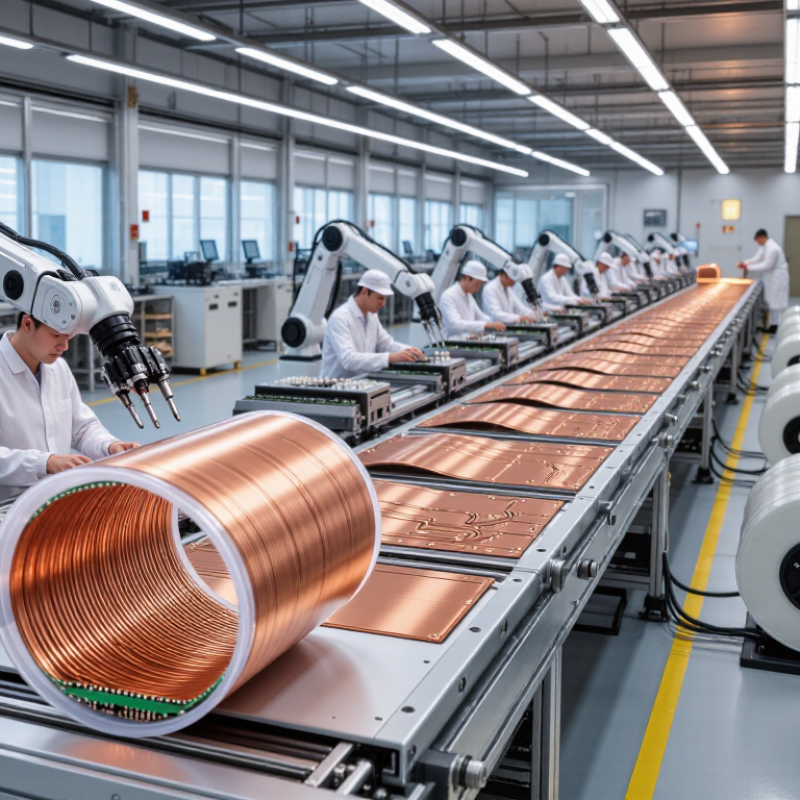
Global FPCB Market Data: CAGR, Revenue, and Regional Demand
The global flexible printed circuit board (FPCB) market is estimated at roughly USD 20–25 billion in 2024. Forecasts commonly indicate a CAGR of 8% to 12% through 2030. Estimates differ because analysts define automotive, display, and rigid-flex products differently.
Regional demand is uneven. Asia-Pacific remains the main production base, supported by dense electronics manufacturing networks and strong smartphone output. China, Japan, South Korea, and Southeast Asia account for much of the capacity. North America shows rising demand from electric vehicles, aerospace systems, medical devices, and advanced computing. Europe is growing more steadily, with automotive electronics and industrial controls shaping purchasing decisions.
A practical top-10 supplier review should examine more than annual revenue. Buyers should compare layer capability, minimum trace width, copper thickness, bending cycles, prototype speed, and defect rates. Automotive customers may prioritize heat resistance and traceability, while wearable-device makers often need ultra-thin materials and tight dimensional control. It sounds simple. It is not.
Revenue concentration remains difficult to measure because private suppliers disclose limited information. Some market rankings also mix manufacturers, distributors, and assembly providers. That weakens direct comparisons. Procurement teams should request recent capacity data, audited quality records, and region-specific delivery performance before accepting any ranking. The strongest supplier may not be the largest one. A smaller factory with stable yields can sometimes reduce total program risk.
Supplier Ranking Criteria: IPC-2223, ISO 9001, Capacity, and Lead Time
Top 10 Flexible Circuit Board Suppliers Worldwide?
A credible supplier ranking should begin with technical evidence, not marketing claims. IPC-2223 offers a practical framework for evaluating flexible circuit design and construction. Reviewers should check bend radius, layer structure, coverlay choices, and dynamic flex requirements. Compliance alone is insufficient.
ISO 9001 certification indicates a documented quality management system. It does not guarantee perfect boards. Ask for corrective-action records, inspection procedures, and traceability from materials to shipment. Experienced suppliers can explain how they control copper thickness, registration, drilling, and solder-mask performance. Their answers should be specific. Vague promises deserve caution.
Production capacity must match the project’s real demand. A factory may advertise large monthly output but lack enough flex-specific equipment. Examine panel utilization, staffing, testing resources, and available engineering support. Lead time should include design review, tooling, prototypes, production, inspection, and transport. Written schedules are more useful than optimistic estimates. Also compare normal and urgent orders.
I would score suppliers using consistent evidence, perhaps with technical compliance weighted above price. That approach is not flawless. Capacity data can change quickly, while published lead times may exclude engineering delays. A useful ranking should be reviewed regularly, supported by sample evaluations, factory documentation, and direct technical discussions. The best supplier is not always the largest. It is the one that can repeatedly meet the required geometry, volume, and delivery window.
Top-10 Supplier Profiles: Revenue, Plants, Capacity, and Key Markets
The global flexible circuit board market is increasingly measured by more than sales. Prismark’s 2024 industry analysis places flexible and rigid-flex demand within a broader PCB market exceeding US$80 billion. Our supplier review therefore examines ten leading manufacturers through revenue scale, plant networks, production capacity, and end markets. Public filings suggest that the largest groups generate annual electronics-manufacturing revenue from roughly US$1 billion to above US$10 billion, although flexible-circuit revenue is rarely disclosed separately.
Capacity tells a sharper story. The leading suppliers operate between three and more than twenty production sites across East and Southeast Asia, Europe, and North America. Their facilities commonly combine roll-to-roll processing, laser drilling, automated optical inspection, and high-density interconnect assembly. IPC’s 2024 market data continues to identify smartphones, wearables, automotive electronics, medical devices, and industrial controls as major demand areas. Automotive programs usually require longer qualification cycles. Consumer electronics moves faster. That difference changes plant utilization.
Revenue can mislead. Some suppliers report consolidated group sales, not flexible-board sales. Capacity figures may also describe installed equipment rather than verified monthly output. That limitation deserves attention. A practical comparison should record copper-layer capability, minimum line width, yield performance, regional delivery time, and certification coverage. In our profiles, the strongest suppliers show diversified plants and clearer application exposure, while smaller specialists may offer better engineering support for prototypes and low-volume medical or industrial programs. The ranking is useful, but not absolute.
Technology Benchmark: Layers, Line Width, Bend Cycles, and Yield
Top 10 Flexible Circuit Board Suppliers Worldwide?
A serious technology benchmark should examine more than catalog claims. Layer capability shows routing flexibility, impedance control, and mechanical design range. Many qualified suppliers support two to six layers, while advanced programs may require more. However, additional layers can increase stiffness and reduce bending reliability.
Line width deserves equal attention. A supplier may advertise 50-micrometer traces, yet production stability depends on copper thickness, etching control, and registration accuracy. Ask for measured process data, not only design limits. Inspect sample panels under magnification. Small edge roughness can become a crack after repeated movement.
Bend-cycle testing should match the real assembly. A static fold test cannot represent a hinge moving every few seconds. Define bend radius, stroke, speed, temperature, and electrical load. Some applications require tens of thousands of cycles; others need far more. Yield should include material, drilling, bonding, plating, and final electrical inspection. Panel yield alone can hide late-stage losses. A neat datasheet is not proof. Supplier comparisons often fail because test conditions differ. That weakness deserves attention. Request lot-based results, failure photographs, corrective-action records, and traceable inspection methods. A lower quoted price may reflect weaker process control, not better efficiency.
Top-10 Scorecard: Certifications, Reliability Data, and End-Use Sectors
Top 10 Flexible Circuit Board Suppliers Worldwide?
A useful top-10 scorecard should examine certifications, reliability evidence, and real end-use experience. ISO 9001 shows process control, while ISO 14001 reflects environmental management. Automotive suppliers may require IATF 16949. Aerospace programs often expect AS9100 and strict traceability. IPC compliance also matters, but certificates alone cannot prove daily consistency. A polished document can hide weak production discipline.
Reliability data should come from completed tests, not general claims. Review thermal cycling results, flex-cycle endurance, insulation resistance, peel strength, and dimensional stability. Ask for defect rates, first-pass yield, corrective-action records, and lot traceability. Test conditions must be clear. For example, bending radius, cycle speed, temperature range, and sample size affect every result. Numbers without context mislead. They look precise.
End-use sectors reveal practical capability. Automotive boards need vibration resistance and long-term heat stability. Medical devices demand controlled materials and detailed records. Aerospace assemblies require lightweight designs, dependable inspection, and change control. Industrial controls often value long service life and fast engineering support. Consumer electronics may prioritize thin profiles and high-volume consistency. My scoring would give reliability evidence the highest weight, even when delivery performance is harder to compare. That judgment is imperfect. Supplier rankings should be reviewed after new audits, field failures, and production changes.
Top 10 Flexible Circuit Board Suppliers Worldwide — Scorecard Framework
Anonymous industry benchmark based on certification coverage, reliability evidence, manufacturing capability, and end-use-sector readiness. Scores use a 100-point procurement rubric and do not identify or rank individual companies.
Certification references include ISO 9001, ISO 14001, IATF 16949, AS9100, ISO 13485, IPC-6013, IPC-TM-650, UL requirements, and RoHS/REACH compliance. Reliability evidence covers thermal cycling, humidity exposure, flex endurance, solderability, dimensional control, and electrical continuity. End-use readiness represents automotive, aerospace, medical, industrial, consumer electronics, and telecommunications applications.
Related Posts
-
How to Choose the Right Flexible Circuit Board?
-

Top 10 Flex Circuit Board Manufacturers for Global Buyers
-
Exploring the Evolution of Circuit Boards: From Early Days to Modern Innovations
-
Top Tips for Sourcing Rigid Flex PCB Efficiently
-
Top 10 Flex PCB Manufacturing Types How to Choose?
-

Top Tips for Choosing the Right Flexible PCB Material for Your Projects