
Blog
Why Choose an Eddy Current Separator for Recycling?
Global recycling systems face a growing volume of mixed materials. The World Bank’s What a Waste 2.0 estimated that cities generated 2.01 billion tonnes of municipal solid waste in 2016, with the annual total projected to reach 3.40 billion tonnes by 2050. The Global E-waste Monitor 2024 reported 62 million tonnes of e-waste generated worldwide in 2022; only 22.3% was documented as formally collected and recycled. These figures point to a practical challenge: valuable metals can remain hidden in dense, fast-moving waste streams.
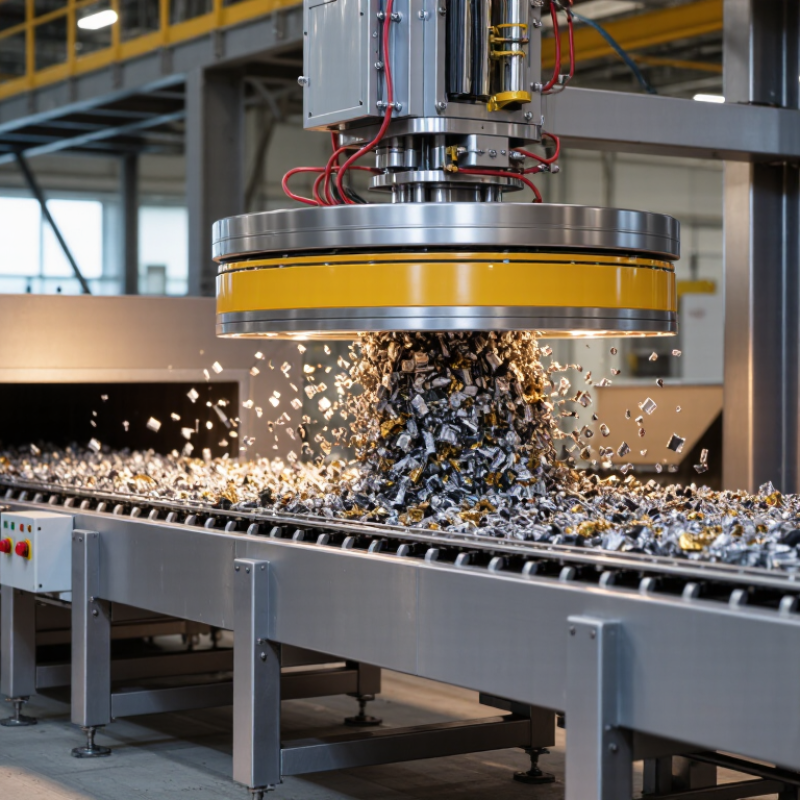
An Eddy Current Separator helps recover non-ferrous metals such as aluminum and copper. Its rotating magnetic rotor induces currents in conductive pieces, creating a force that ejects them from the conveyor flow. Picture crushed packaging moving beneath the rotor: light aluminum fragments jump into a separate chute, while other material continues along the belt. The actual result depends on feed size, material mix, belt speed, and equipment setup. It is not magic.
For recycling plants, this technology can improve metal recovery and reduce manual sorting demands. It may also help protect downstream equipment from unwanted metal contamination. But a separator alone cannot guarantee high-purity output; screening, maintenance, and process testing matter. That detail is easy to overlook. Before choosing a system, operators should test representative feed material and compare recovery performance, product quality, and operating costs. A well-matched Eddy Current Separator can strengthen a recycling line, though the best choice depends on the material being processed.
What an Eddy Current Separator Removes—and What It Cannot
Why Choose an Eddy Current Separator for Recycling?
What an Eddy Current Separator Removes—and What It Cannot
An eddy current separator uses a changing magnetic field to repel conductive, non-ferrous pieces from a moving waste stream. It commonly ejects aluminum cans, copper fragments, and brass fittings into a separate chute. The strongest results come when material is spread in a thin, even layer. That distinction matters.
It does not remove steel or iron; magnets are better suited to those metals. Nor can it separate glass, wood, or most plastics by conductivity. Tiny fragments, flat foil, tangled pieces, and wet or heavily contaminated material may behave unpredictably. A separator can also eject conductive items without identifying their alloy or resale value. Real-world sorting is less tidy than a diagram suggests.
The U.S. Geological Survey’s Mineral Commodity Summaries 2024 reported about 3.6 million metric tons of secondary aluminum production in the United States in 2023. That figure reflects the scale of scrap recovery, not the performance of any single machine. Operators should test representative feed, including fines and damp material, before setting rotor speed and splitter position. Even a small adjustment can send light aluminum into the residue stream. Raw throughput alone can hide that loss.
Why Choose an Eddy Current Separator for Recycling?
Typical electrical conductivity of selected materials, shown relative to annealed copper (100% IACS).
Eddy current separators are used to eject conductive non-ferrous metals such as aluminum, copper, and brass from mixed material streams. They do not remove non-conductive materials like glass or most plastics; ferrous metals such as steel are generally removed with magnetic separation. Conductivity varies by alloy, and actual sorting also depends on particle size, shape, and material presentation.
How Changing Magnetic Fields Repel Conductive Nonferrous Metals
An eddy current separator uses a changing magnetic field to separate conductive nonferrous metals from mixed material. At the head pulley, a rapidly rotating magnetic rotor creates that field. As aluminum or copper passes over it, induced eddy currents create an opposing magnetic field. The resulting force repels the metal particle from the belt, while glass and most plastics follow their natural trajectory. No magic. Performance depends on particle size, conductivity, rotor speed, belt speed, and feed depth.
The U.S. EPA’s Advancing Sustainable Materials Management: Facts and Figures 2018 report estimated a 50% recycling rate for aluminum cans. That national figure shows how much valuable metal moves through recovery systems. Eddy current separators can help recover metal from shredded packaging and mixed waste, but clean separation is not automatic. Thin foil, damp fines, or overloaded belts can reduce effective ejection. Operators should test representative samples and adjust settings; one rotor speed rarely suits every line. The EPA figure is a benchmark, not a prediction for an individual facility.
How Feed Preparation and Rotor Design Shape Separation Performance
An eddy current separator can recover non-ferrous metals, but its rotor cannot compensate for poor feed preparation. Remove tangled film, limit moisture, and keep the material bed shallow. A deep, mixed layer hides small aluminum pieces beneath heavier fragments. Consistent particle sizes help, too. Small details matter. The International Aluminium Institute reports that recycling aluminum can use up to 95% less energy than producing primary aluminum. That makes clean recovery valuable, but the figure does not predict a plant’s actual yield.
Rotor speed, magnetic pole arrangement, and belt speed shape how conductive particles move. A fast rotor may throw aluminum farther, yet excessive speed can increase bounce and send borderline pieces into the wrong stream. Fine particles behave differently from cans or thick cast pieces. Test them separately. Use representative samples, not a hand-picked handful. The U.S. Environmental Protection Agency’s WARM model can help compare recycling-related environmental impacts, but site conditions still matter. One uncomfortable limitation: a tidy test run may overstate everyday performance. Record feed depth, moisture, particle size, and rotor settings during trials; otherwise, a good result may be hard to repeat.
Why Choose an Eddy Current Separator for Recycling? - How Feed Preparation and Rotor Design Shape Separation Performance
| Performance Dimension | Typical Data or Operating Consideration | Effect on Separation | Practical Preparation or Design Response |
|---|---|---|---|
| Target materials | Conductive non-ferrous metals such as aluminum, copper, and brass can be separated from many non-conductive materials. | The alternating magnetic field induces electrical currents in conductive pieces, creating a repulsive force that can eject them from the belt. | Remove ferrous material upstream with a suitable magnet; an eddy current separator is not a substitute for ferrous-metal removal. |
| Particle-size consistency | Screening into relatively narrow size fractions is commonly used. Illustrative screening bands include below 5 mm, 5–20 mm, 20–50 mm, and above 50 mm; these are not universal machine limits. | Small, large, flat, and irregular pieces respond differently to the field and travel differently on the belt. A broad size mix can make splitter adjustment less effective. | Screen the feed and, where practical, process size fractions separately. Confirm the equipment’s accepted particle-size range before operation. |
| Feed-layer depth | A shallow, evenly spread layer—ideally close to one particle deep—is a common operating objective. | Overlapping pieces can shield one another, collide during ejection, or carry non-metallic material into the metal product. | Use controlled metering and an even-width distribution. Reduce throughput if the feed forms piles or multiple layers. |
| Feed presentation | Stable belt loading and consistent particle spacing are more useful than a single universal throughput figure. | Clumps and surges change the trajectory and spacing of particles, making the separation boundary less consistent. | Use a steady feeder, remove tangled or bulky material where needed, and inspect the full belt width for uneven loading. |
| Moisture and contamination | Dry, free-flowing feed is generally easier to meter than wet or sticky feed. No single moisture limit applies to every material or separator. | Moisture, fines, and adhering dirt can cause agglomeration, belt carryback, and poor particle presentation. | Drain or dry wet material when appropriate; remove excess fines and clean the belt and feed system regularly. |
| Rotor speed and magnetic field | Rotor speed, pole arrangement, and magnet configuration are machine-specific. Follow the separator manufacturer’s rated speed and adjustment limits. | Rotor design and operating speed affect the changing magnetic field and the force acting on conductive particles. The response also depends on particle size, conductivity, shape, and distance from the rotor. | Choose a rotor configuration suited to the target size range and material. Change settings in controlled steps and verify the product streams after each adjustment. |
| Eccentric versus concentric rotor layout | Both layouts are used in commercial equipment; the appropriate arrangement depends on the feed, belt, and required separation duty. | Rotor position changes where the strongest field acts relative to the belt and can affect particle exposure and wear considerations. | Consider feed abrasiveness, particle-size distribution, belt protection, and maintenance access when selecting the arrangement. |
| Belt speed and trajectory | Belt speed is set for the specific separator and feed. It should be assessed together with rotor settings, feed rate, and discharge geometry. | Particle velocity and flight distance affect whether pieces reach the intended product chute or cross the splitter boundary. | Adjust belt speed and splitter position as a system; avoid relying on rotor speed alone to correct a poorly presented feed. |
| Splitter position | The splitter separates the ejected non-ferrous stream from the remaining material; its correct position depends on observed trajectories. | An incorrect boundary can increase either metal losses to the residue or non-metallic carryover into the metal product. | Sample both outputs, inspect misplaced particles, and make small splitter adjustments under steady feed conditions. |
| Feed cleanliness and liberation | Particles should be sufficiently liberated and free of attached material for their trajectories to reflect the target particle. | Composite or contaminated pieces may not separate cleanly, even when the separator is correctly adjusted. | Use suitable upstream shredding, screening, and cleaning; avoid excessive size reduction that creates difficult-to-handle fines. |
| Performance verification | Assess metal recovery and product purity by sampling the feed, metal product, and residue over a defined operating period. | Visual inspection alone can miss small losses or contamination, particularly when feed composition varies. | Record feed rate, settings, and sample results. Recheck performance after changes in material, moisture, particle size, or loading. |
Note: Operating settings and accepted feed ranges vary by separator design and material. The size bands above are illustrative screening categories, not guaranteed machine specifications.
Where Eddy Current Separators Fit in Modern Recycling Lines
In modern recycling lines, an eddy current separator usually sits after screens and ferrous-metal removal. It targets conductive non-ferrous metals, such as aluminum cans and fragments from shredded equipment. Inside the machine, a rapidly rotating magnetic rotor creates changing magnetic fields. These fields can propel suitable metal pieces away from glass, plastic, and other material on the belt. Small details matter. A stable, shallow feed helps expose individual pieces, while mixed particle sizes can make separation less predictable.
Placement depends on the material, not just the equipment list. In a packaging plant, the separator may recover aluminum from a stream of containers and residue. In a construction-and-demolition line, it may handle mixed fragments after crushing and screening. Belt speed, moisture, particle size, and the amount of material fed at once all affect results. Not every stream fits. A separator cannot reliably make up for poor sorting upstream, and fine or tangled material may need a different process. Operators should test representative samples, check the recovered fraction, and adjust settings as the feed changes. That practical review is easy to postpone, but it often reveals where the line is losing valuable metal.
Why Recycled Aluminum Uses About 5% of the Energy Needed for Primary Aluminum (IAI)
Why Choose an Eddy Current Separator for Recycling?
Aluminum recycling saves remarkable energy. The International Aluminium Institute (IAI) reports that recycled aluminum needs about 5% of the energy required to produce primary aluminum. That means roughly 95% less energy for remelting recovered metal than producing aluminum from ore. The exact savings vary with scrap quality, processing, and energy sources; the 5% figure is a useful industry benchmark, not a guarantee for every facility. A clean aluminum stream matters.
An eddy current separator helps recover non-ferrous metals from mixed waste. Its rotating magnetic field repels conductive pieces, directing aluminum away from heavier or non-conductive material. Picture lightweight cans and fragments flicking into a separate chute. Better recovery can feed more scrap into remelting, supporting aluminum’s energy-saving potential. But separation is not magic: attached plastics, moisture, and mixed alloys can still affect material quality. Operators should check output purity and recovery rates, not only machine throughput.
Tips: Keep feed material evenly spread, and remove oversized items before separation. Track aluminum purity alongside recovery yield. Small adjustments to belt speed and feed depth can matter; results may take testing to confirm. For the energy comparison, cite the IAI recycling data and state the primary-aluminum baseline clearly.
