
skip to Main Content

What Are the Top Wrist Watch Types for 2026?

A Wrist Watch is more than a way to check the hour. It can be a tool, a personal keepsake, or a small piece of design worn every day. In 2026, shoppers can choose from mechanical and quartz models, smartwatches, dive watches, dress watches, and rugged field styles. Each serves a different routine. A bright smartwatch screen may suit someone tracking workouts, while a slim dress watch can sit neatly beneath a shirt cuff. No single type fits every wrist.

Independent watchmaker George Daniels described a watch as “a small machine that tells the time.” That simple idea still matters, even as modern watches add sensors, notifications, and new materials. When comparing styles, consider more than appearance: check case size, water resistance, strap comfort, battery or winding needs, and the clarity of the dial. Small details count. A heavy case can feel tiring after a full day, and a feature-rich model may be frustrating if its interface is awkward.

This guide explores the top Wrist Watch types to consider in 2026, explaining what each does well and where it may fall short. It also looks at who might value each style, from frequent travelers to collectors and everyday wearers. Trends can be persuasive, but they are not personal needs. A watch that looks perfect in a photograph may feel wrong on your own wrist. That is worth remembering.
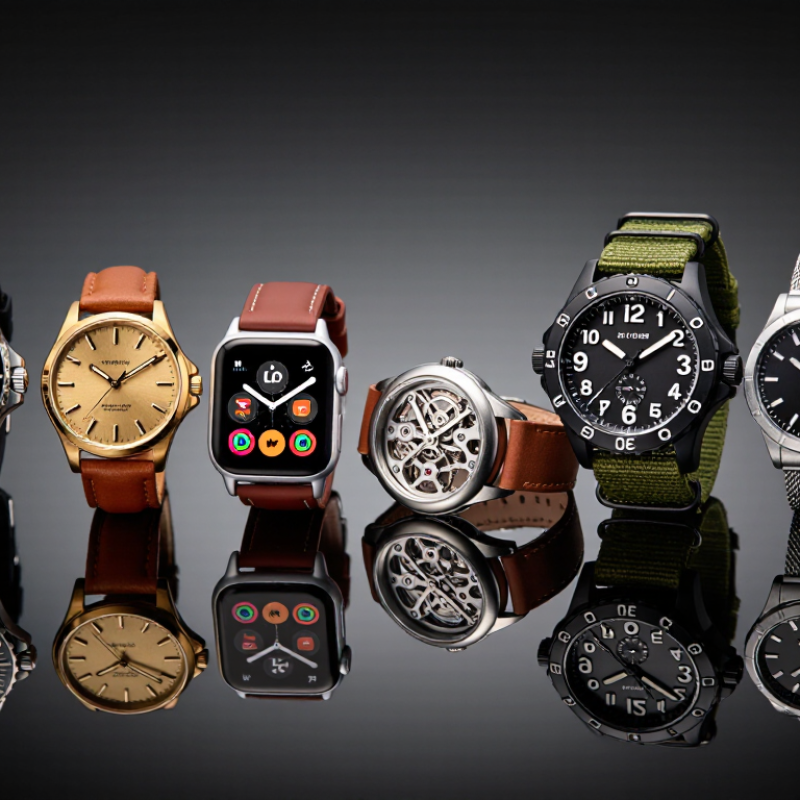
What Are the Top Wrist Watch Types for 2026?

How Wrist Watches Are Classified in 2026

In 2026, a wristwatch is best classified by several overlapping features, not one fixed label. Consider its power source, display, intended use, and construction. Quartz watches use a battery and oscillator. Mechanical watches store energy in a wound spring; automatic models wind through wrist movement. Smartwatches add digital displays, sensors, apps, and phone connectivity. Simple categories. Yet a hybrid watch can blur the lines, so this taxonomy is useful but imperfect.

Market data adds context, though it measures sales rather than watch types. Counterpoint Research reported that global smartwatch shipments fell 7% in 2024, the first annual decline.

The Federation of the Swiss Watch Industry reported CHF 25.99 billion in Swiss watch exports that year, down 2.8% from 2023. These figures describe different market segments and should not be treated as direct comparisons.

Purpose and design create another layer of classification. Dress watches tend to have slim cases and clear dials; field watches favor legible numerals and sturdy straps. Dive-style and aviation-inspired watches are identified by features shaped around particular activities, not necessarily by their movement. Materials matter, too: steel, titanium, ceramic, and precious metals affect weight and wear. A practical check is to inspect the case, dial, movement description, and water-resistance rating together. Labels can mislead. The same watch may fit several types, depending on how it is built and worn.

Mechanical and Automatic Watches: Traditional Timekeeping

Mechanical and automatic watches keep time through springs, gears, and a balance wheel, not a battery. In a hand-wound model, turning the crown tightens the mainspring. An automatic watch adds a weighted rotor, which winds the spring as the wrist moves. Same basic heartbeat. The difference is how energy returns to the mechanism. Small gears, careful tolerances, and lubrication make these watches intricate, but not immune to wear.

Their appeal is partly tactile. A crown resists gently under the fingers; a transparent caseback may reveal the rotor swinging with each motion. Some owners enjoy winding a watch each morning. Others prefer an automatic for everyday convenience. Neither type is inherently more accurate. Rate depends on movement design, condition, position, temperature, and how consistently it is worn. A mechanical watch may gain or lose seconds daily, so check its stated accuracy range rather than expecting quartz-like precision.

For choosing one in 2026, consider power reserve, case size, water resistance, service access, and how often you will wear it. If an automatic sits unused, it will eventually stop; resetting the time is normal, not a fault. Hand-wound watches ask for a small daily ritual, which can feel calming—or tedious. This trade-off is easy to underestimate. Mechanical movements need periodic professional service, and costs vary by construction and local availability. Ask about service intervals and parts support before buying. A display back looks appealing, but it does not show how accurately the watch is regulated.

Quartz and Solar Watches: Accuracy and Low Maintenance

Quartz and solar watches remain practical choices for 2026, especially when reliable timekeeping matters more than intricate mechanics. A quartz movement uses a battery to regulate its timekeeping, so daily accuracy is generally strong. Most wearers only need to set the time occasionally. No winding required. Battery replacement is still part of ownership, and a depleted battery should not be left inside the watch for years.

Solar watches use light to recharge an internal cell. A sunny windowsill or bright room can help maintain its charge, though charging speed depends on the light available. They can reduce routine battery changes, but they are not maintenance-free. The rechargeable cell may eventually need service, and prolonged darkness can leave some models short of power. That limitation is easy to overlook.

Tips: Choose quartz if you want straightforward upkeep and predictable accuracy. Consider solar if your watch gets regular exposure to light. Check the maker’s guidance for water resistance and charging, rather than assuming every model behaves alike. A small habit helps: leave a solar watch somewhere bright, not tucked in a drawer.

What Are the Top Wrist Watch Types for 2026? — Quartz and Solar Watches: Accuracy and Low Maintenance

Watch Type How It Works Typical Accuracy Power Source and Service Maintenance Best For
Standard Quartz A battery powers an electronic circuit and quartz crystal that regulate the movement of the hands. Many everyday models are rated around ±15 seconds per month; actual performance varies by movement and conditions. Usually uses a replaceable battery. Battery life is commonly about 2–5 years, depending on the movement and features. Low: periodic battery replacement and inspection of seals when the case is opened. Reliable everyday timekeeping with a simple, widely available power source.
Solar Quartz A dial or other light-collecting surface converts light into electricity, which is stored in a rechargeable cell. Generally similar to standard quartz; many models are rated around ±15 seconds per month, but specifications vary. Recharges in light rather than relying on routine disposable-battery changes. A fully charged watch may run for months in darkness; the reserve depends on the model. Very low with regular exposure to light. The rechargeable cell may eventually need service, but replacement intervals are model-dependent. People who want quartz accuracy and fewer battery changes.
Radio-Controlled Solar Quartz Uses a solar-powered quartz movement and can synchronize with compatible time signals where reception is available. When successfully synchronized, it follows the transmitted reference time; between updates, it runs on its quartz movement. Light-recharged storage cell; signal reception and synchronization depend on location, surroundings, and supported signals. Low, though users may need to adjust settings when traveling outside supported signal regions. Those who value convenient time correction and live within a supported signal area.
Multi-Function Quartz A quartz movement adds features such as a chronograph, alarm, calendar, or backlight. Accuracy depends on the specific movement; added functions do not by themselves guarantee greater precision. Usually battery-powered. Frequent use of power-intensive features can shorten battery life. Low to moderate: battery changes may be more frequent on feature-rich models, and case seals should be checked after service. Users who want practical timing or display features in a low-maintenance watch.

Note: Accuracy figures and power reserves are typical reference points, not guarantees. Check the individual watch’s specifications; temperature, usage, signal availability, and movement design can affect performance.

Smartwatches and Hybrid Watches: Connected Features

Smartwatches and hybrid watches bring connected features to the wrist in different ways. A smartwatch can show messages, calendar reminders, navigation prompts, and workout data on a bright screen. Many also track steps, heart rate, and sleep, though readings are estimates rather than medical diagnoses. Their touchscreens make settings easy to reach. Frequent notifications can also become distracting. Battery life varies, so check charging needs before choosing.

Hybrid watches usually pair traditional hands with a small display or subtle vibration alerts. They can offer call notifications, activity tracking, or simple phone controls without putting a full screen on your wrist. The quieter design suits people who want fewer interruptions. However, their companion apps may offer less detail, and some features depend on a nearby phone. That trade-off is easy to overlook. Connected features are useful, but they do not make every watch equally convenient.

Tips: Before buying, check phone compatibility, water-resistance guidance, and which features work without a connection. Turn off alerts you rarely use; a buzzing wrist can get old fast. Compare battery claims with your own habits, especially if you track workouts overnight. If health data matters to you, treat it as a rough guide and discuss concerns with a qualified clinician.

Specialty Watch Types for Sports, Diving, and Formal Wear

A sports watch earns its place through useful readings, not a crowded screen. SFIA’s 2024 Topline Participation Report counted 242.8 million Americans aged six and older in at least one sport or fitness activity during 2023. That broad participation figure is not a measure of watch ownership, but it helps explain why activity tracking matters to many buyers. For running, a readable display, dependable GPS, and comfortable strap can beat extra training modes. Small details matter. A bright screen that washes out in sun is frustrating; heart-rate readings are helpful, but not a medical diagnosis.

For diving, look beyond a depth number printed on the dial. ISO 6425 sets testing requirements for watches designed for underwater diving, including water resistance and visibility. A clear bezel and legible hands are practical when light fades underwater. Have the watch checked as its maker recommends; seals age, even when the case looks fine. Formal wear calls for a different kind of restraint: a slim case, calm dial, and strap that sits neatly beneath a cuff. The Federation of the Swiss Watch Industry reported that Swiss watch exports reached about CHF 26 billion in 2024, down 2.8 percent from 2023. Those export figures describe an industry, not formal-watch demand. Taste remains personal, and I would not choose elegance by case thickness alone.