
Blog
Top Construction Aluminum Profiles Suppliers Worldwide
Construction Aluminum Profiles support façades, window frames, curtain walls, partitions, and structural assemblies. Their performance depends on more than alloy choice. Buyers also need to assess dimensional tolerances, surface finishes, fabrication capacity, and delivery consistency. A profile that looks precise on a sample may behave differently across a large production run. Details matter.
This guide examines leading Construction Aluminum Profiles suppliers worldwide and the factors that help distinguish reliable partners. It considers product range, extrusion capabilities, quality documentation, finishing options, and experience serving international projects. Useful checks include reviewing technical drawings, requesting material and test records, and confirming how suppliers handle custom dies and production changes. Ask specific questions. Clear answers are valuable.
Supplier comparisons should reflect the project, not just a ranking. A façade contractor may prioritize finish uniformity and tight tolerances, while an industrial buyer may focus on load requirements and repeatable dimensions. Lead times, packaging, communication, and after-sales support also affect project risk. No supplier is the right fit for every application. That is worth remembering. Information can change, and published capabilities do not guarantee identical results for every order. Treat this overview as a starting point, then verify current specifications directly with each manufacturer before making a purchasing decision.
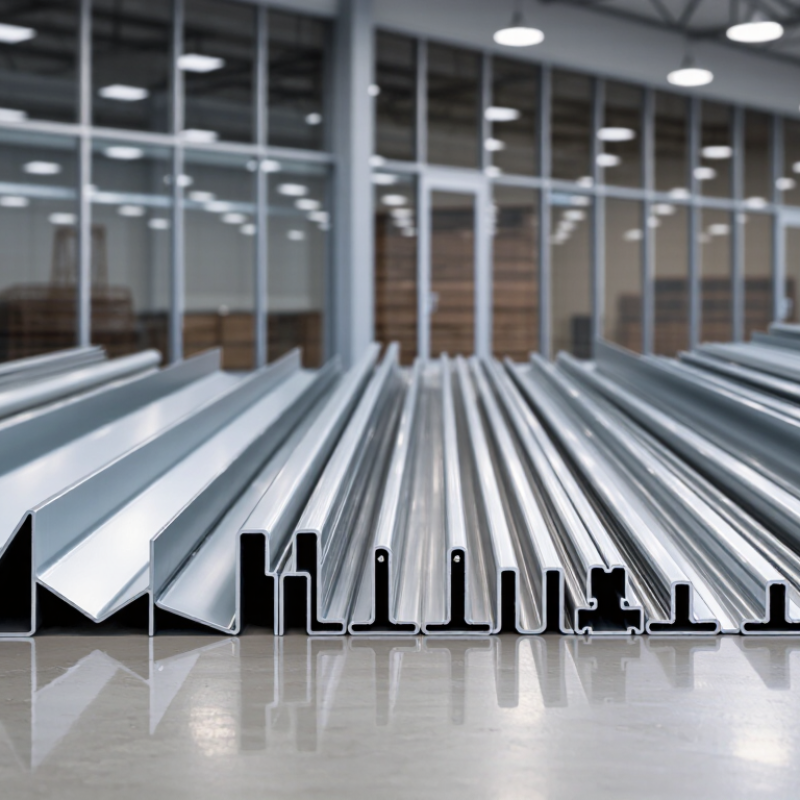
What Construction Aluminum Profiles Are and How They Are Made
Construction aluminum profiles are shaped sections used in window frames, curtain walls, doors, partitions, and railings. Their hollow chambers and ribs help manage stiffness, weight, drainage, and thermal performance. The exact cross-section matters: a narrow groove can hold a gasket, while a deeper cavity may accept insulation or hardware. Not every profile suits every span or climate. Designers should check alloy, temper, wall thickness, finish, and connection details against project loads.
Most profiles are made by extrusion. A heated aluminum billet is pressed through a steel die, forming a continuous shape that is cooled, stretched straight, cut, and heat-treated when required. The profile may then be anodized or coated for surface protection. Small changes in die design can affect tolerances and assembly, sometimes in ways that only become obvious on site.
USGS Mineral Commodity Summaries 2025 estimated global primary aluminum production at about 72 million metric tons in 2024, reflecting the scale of the material supply chain. The International Aluminium Institute reports that recycling aluminum uses roughly 5% of the energy needed for primary production. That is significant, but recycled content alone does not guarantee a lower-impact profile; transport, finishing, scrap quality, and service life also matter. A detail worth checking twice.
Main Profile Types and Their Construction Applications
Top Construction Aluminum Profiles Suppliers Worldwide
Construction aluminum profiles are shaped by extrusion, allowing consistent sections for frames, rails, and façade systems. Their usefulness depends on the profile geometry, alloy, temper, and connection design. Details matter. Window and door profiles often include drainage paths, glazing grooves, and channels for seals. These features help manage rain and fit glass securely, but poor installation can still cause leaks.
Curtain walls use vertical mullions and horizontal transoms to support glazing across building façades. Profile depth and wall thickness must suit the project’s spans and loads; appearance alone is not a reliable guide. Thermal-break profiles connect inner and outer aluminum sections with an insulating strip. They can reduce heat transfer, though performance also depends on glazing and installation. Not magic.
For interior partitions, sliding doors, and service areas, lighter tracks and framing sections can simplify assembly. T-slot profiles also support adjustable fittings, useful for screens and equipment enclosures. Anodized or coated finishes may improve surface durability, but edges and cut ends deserve attention. I have seen specifications focus heavily on finish while overlooking drainage or fastener access. That trade-off is worth reviewing. Before selection, check load calculations, tolerances, exposure conditions, and how each joint will be assembled on site.
How to Evaluate Aluminum Profile Suppliers
Top Construction Aluminum Profiles Suppliers Worldwide
Choosing a construction aluminum profile supplier requires more than comparing price lists. Start with the drawings: confirm alloy, temper, dimensions, wall thickness, and allowable tolerances. Ask how each specification is checked during extrusion and finishing. A clear answer should name inspection steps, measuring tools, and records—not just promise “high quality.” Request current test reports and batch traceability details. Details matter.
Assess whether the supplier can maintain consistent output at your order volume. Review sample profiles for straightness, surface marks, corner definition, and coating uniformity under ordinary site lighting. Ask about die maintenance, lead times, packaging, and defect handling. A supplier’s response to a failed sample can reveal more than a sales presentation. Some gaps may remain, so clarify them in writing before production.
Tips: Send a marked-up drawing and a real use case, such as a window frame exposed to coastal moisture. Compare the same sample requirements across suppliers. Check certificates against the exact alloy and process offered, and request a production sample—not only a showroom piece. If a tolerance seems unusually broad, ask whether it affects fit-up or drainage. Even careful checks may miss conditions that only appear on site.
| Top Construction Aluminum Profiles Suppliers Worldwide - How to Evaluate Aluminum Profile Suppliers | ||||
|---|---|---|---|---|
| Evaluation Dimension | Weight | What to Check | Evidence to Request | Warning Signs |
| Technical Capability | 25% | Ability to produce the required alloy, temper, profile geometry, dimensions, and surface finish. Confirm tolerances against the project drawing and applicable product standard. | Technical data sheets, sample inspection results, process capabilities, and written confirmation of the proposed alloy and temper. | Vague material descriptions; inability to review drawings; tolerances accepted without documented confirmation. |
| Quality Management and Inspection | 20% | Documented inspection controls for incoming material, extrusion, finishing, and final packing. Check how nonconforming products and corrective actions are handled. | Quality-management certificate where applicable, inspection plans, sample reports, and traceability records. | Certificates that cannot be verified; missing inspection records; no clear method for resolving defects. |
| Manufacturing and Finishing Capacity | 15% | Whether available equipment and production planning can meet the required profile size, order quantity, finishing specification, and delivery schedule. | Relevant equipment list, production plan, capacity confirmation, and details of finishing processes offered or subcontracted. | Capacity claims without supporting details; unclear responsibility for outsourced finishing. |
| Standards and Material Documentation | 15% | Whether the supplier can work to the standards and material specifications required by the buyer. Relevant references may include EN 755 for extruded aluminum products or ASTM B221 for aluminum-alloy extruded bars, rods, wire, profiles, and tubes. | Mill test certificates, material declarations, applicable standard references, and a sample certificate matched to a production lot. | Standard cited without edition or scope; documents that do not identify the supplied alloy, temper, or batch. |
| Delivery and Export Readiness | 10% | Track record for schedule communication, export documentation, packaging, and shipment planning for the destination market. | Written lead-time assumptions, packing specification, sample shipping documents, and references for comparable export orders. | Unclear delivery milestones; no agreed packaging details; incomplete export-documentation plan. |
| Commercial Transparency | 10% | Clarity of quotation, including tooling, minimum order quantities, finishing, packaging, freight terms, payment terms, and quote validity. | Itemized quotation, tooling ownership terms, payment schedule, and written inclusions and exclusions. | Unitemized costs; important charges or terms disclosed only after order placement. |
| Environmental and Responsible Operations | 5% | Availability of credible information on environmental management, material sourcing, and relevant customer reporting needs. | Environmental-management documentation where applicable, recycled-content records if claimed, and a clear explanation of data scope. | Environmental claims without supporting records or a defined measurement basis. |
| Total Evaluation Weight | 100% | Score each dimension from 1 (insufficient evidence) to 5 (strong, verified evidence). Calculate the weighted result as: sum of (dimension score ÷ 5 × dimension weight). | ||
Leading Construction Aluminum Profile Suppliers Worldwide
Leading construction aluminum profile suppliers worldwide are judged by more than catalog size. Architects and fabricators need consistent alloy composition, repeatable extrusion tolerances, and documented surface finishes. The stakes are significant. UNEP’s 2023 Global Status Report states that buildings and construction produced 37% of energy- and process-related CO₂ emissions in 2022. Supplier choices affect more than delivery dates.
A capable supplier should provide mill certificates, dimensional inspection records, and finish samples linked to production batches. Ask how it controls die wear, profile straightness, and coating thickness. These details can show up on site as misaligned curtain-wall joints or scratched frames. Check whether the supplier coordinates extrusion, heat treatment, machining, and protective packing. Long-distance freight can cause damage. Crushed corners are costly.
Material recovery matters too. The International Aluminium Institute reports that about 75% of all aluminium ever produced remains in use, reflecting the metal’s recyclability and long service life. Still, recycled content alone does not prove lower impact; energy sources, scrap quality, and product design matter. Compare verified environmental data, lead-time records, and sample consistency—not only a low quotation. One caveat remains: even careful audits cannot eliminate every production variation.
Worldwide Construction Aluminum Profile Suppliers: Material Benchmark
Typical minimum tensile strength of common aluminum extrusion alloy tempers used in construction profiles.
Values shown are representative minimum tensile strengths in MPa. Actual requirements can vary with product dimensions and applicable specifications; compare material grades and tempers when evaluating suppliers.
Global Market Trends and Supplier Selection Considerations
Construction aluminum sourcing is increasingly shaped by energy performance, carbon disclosure, and supply resilience. The Global Alliance for Buildings and Construction’s 2023 status report estimates that buildings and construction used 34% of global energy and produced 37% of energy- and process-related CO2 emissions in 2022. These figures cover the whole sector, not aluminum alone. Scope matters.
The IEA’s 2023 buildings analysis puts building operations at about 30% of global final energy use. That pressure is driving demand for thermally efficient systems, documented recycled content, and lower-carbon production. But supplier claims need evidence, not just attractive product sheets.
Compare suppliers on alloy and temper consistency, dimensional tolerances, coating thickness, test documentation, and realistic lead times. Request a sample profile and inspect its finish, corner fit, and drainage details. Ask how recycled-content figures are verified, and whether production capacity can handle repeat orders. A low unit price can still become costly when dies, scrap rates, or delivery delays are excluded. Numbers vary by scope. I would treat carbon data cautiously when suppliers use different calculation boundaries; that comparison is still imperfect.
