
Blog
What Are the Top Exhaust End Pipe Types in 2026?
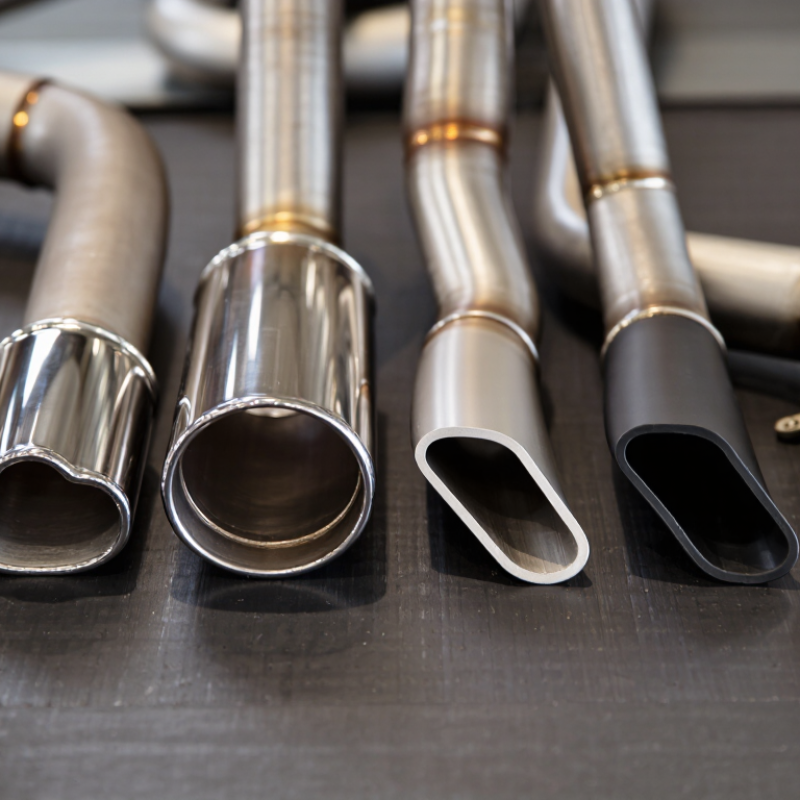
In 2026, choosing an Exhaust End Pipe means balancing appearance, fit, materials, and sound—not simply picking the largest outlet. Common styles include single-wall, rolled-edge, double-wall, slash-cut, angle-cut, and resonated tips. Each creates a distinct finish at the bumper. A polished double-wall tip looks substantial; a dark, angled outlet can feel more understated. Small details matter.
Market context helps, but it does not prove one style performs best. SEMA’s 2024 Market Report estimated U.S. specialty-equipment sales at $52.3 billion in 2023. Grand View Research’s automotive exhaust systems report tracks a broader global market, not end-pipe styles alone. Those figures show an active aftermarket, not a guarantee that any tip improves power or fuel economy. Racing engineer and author Carroll Smith’s familiar reminder, “The engine is an air pump,” is useful context: the visible tip is only one part of a much larger system.
This guide compares the leading Exhaust End Pipe types by construction, fit, upkeep, and visual effect. It also separates practical differences from claims that need stronger evidence. A tip’s shape alone rarely tells the whole story. Check outlet diameter, bumper clearance, attachment method, and material before buying. Real-world fit varies. Even a well-finished tip can disappoint if it sits crooked or collects soot quickly. That deserves more attention than glossy product photos often give it.
What Is an Exhaust End Pipe and What Does It Do?
An exhaust end pipe is the final section of a vehicle’s exhaust system, where treated gases leave the vehicle. It connects the rear exhaust pipe to the outlet, often visible beneath the bumper. Its job is practical: direct hot gases away from the body and occupants, while providing a clear exit path. Think of it as the system’s outlet, not its filter. The catalytic converter and other emissions-control components do the main work of reducing pollutants; the end pipe alone does not clean exhaust.
Its size and shape can influence how exhaust flows and how the outlet looks, but sound depends more on the muffler and resonators. A wider or angled tip is not automatically louder or more efficient. Small differences can matter, though. A poorly positioned outlet may leave soot near the bumper or send fumes toward an open window. The distinction is easy to miss. The EPA’s Automotive Trends Report estimated that 2023-model-year new vehicles averaged 27.1 miles per gallon and 319 grams of carbon dioxide per mile. Those are vehicle-level figures, not measurements of end-pipe performance; they show why the complete exhaust system matters more than its visible tip. A sound inspection checks secure joints, corrosion, and clearance from nearby body panels.
| What Are the Top Exhaust End Pipe Types in 2026? – What Is an Exhaust End Pipe and What Does It Do? | |||||
|---|---|---|---|---|---|
| An exhaust end pipe, commonly called an exhaust tip, is the visible outlet fitted to the end of a vehicle’s tailpipe. It directs exhaust gases away from the outlet area and can change the vehicle’s appearance. A tip alone usually has little effect on engine power or exhaust sound; those changes generally depend on the wider exhaust system and the tip’s design. | |||||
| End Pipe Type | Design | Typical Appearance | Common Material | Main Consideration | Sound and Performance Notes |
| Straight-cut | The outlet is cut perpendicular to the pipe’s length. | Simple, even circular opening. | Stainless steel or aluminized steel. | Check outlet diameter and clearance to the bumper. | Usually a visual change; a basic tip does not normally alter exhaust tone noticeably. |
| Angle-cut or slash-cut | The outlet is cut diagonally rather than straight across. | Slanted opening, often with a sportier appearance. | Stainless steel or aluminized steel. | The cut direction and pipe length affect how it sits beneath the bumper. | The cut changes appearance, not typically engine output. |
| Rolled-edge | The outlet’s rim is rolled inward or outward to create a rounded lip. | Thicker-looking, finished edge. | Usually stainless steel. | Confirm the outer diameter, since the rolled rim can be wider than the inlet. | Primarily a styling and edge-finish choice. |
| Double-wall | An outer sleeve surrounds an inner outlet tube. | Deeper, layered outlet profile. | Commonly stainless steel. | The larger outer diameter needs adequate bumper and ground clearance. | The double-wall construction is mostly for appearance; it is not a substitute for a muffler or resonator. |
| Single-wall | A single layer of metal forms the outlet tube. | Clean, relatively lightweight profile. | Stainless steel or aluminized steel. | Material and finish influence corrosion resistance and upkeep. | A single wall does not by itself determine exhaust volume or power. |
| Dual-outlet | One tailpipe section ends in two visible outlets; some systems use separate pipes on each side. | Two outlet openings, sometimes arranged side by side. | Usually stainless steel or aluminized steel. | A dual-outlet tip is not necessarily a true dual exhaust system; inspect the vehicle’s actual pipe layout. | Outlet count alone does not establish increased flow or performance. |
| Turn-down or downturned | The outlet bends downward toward the road surface. | Outlet is less visible from behind the vehicle. | Steel or stainless steel. | Keep exhaust flow away from bodywork and ensure safe clearance from the ground and nearby components. | Changes the direction of the outlet; sound depends mainly on the full exhaust system. |
| Resonated tip | A tip incorporates a small resonating chamber or sound-tuning element. | Often similar in appearance to a conventional tip, with a larger or extended body. | Typically stainless steel. | Confirm the part is designed for the vehicle and intended sound characteristics. | May influence sound in some applications, but results vary with the vehicle and exhaust system. |
| Material-finish variants | Tips may use polished, brushed, coated, or composite outer finishes. | Appearance ranges from bright metal to dark or textured finishes. | Stainless steel, aluminized steel, titanium, or a composite outer sleeve, depending on design. | Consider heat exposure, corrosion resistance, cleaning requirements, and the manufacturer’s installation instructions. | Material or finish alone does not guarantee a change in engine power or sound. |
| Fitment checklist: Match the tip’s inlet diameter to the tailpipe, verify attachment style and vehicle clearance, and check local noise and emissions requirements. An end pipe is not a replacement for required exhaust-system components. | |||||