7 Best Electric Furnace Transformer Suppliers Worldwide
Electric arc furnaces are reshaping industrial power demand, making the Electric Furnace Transformer a critical purchasing decision. World Steel Association data shows that electric arc furnaces produced approximately 28.6% of global crude steel in 2023. This share is growing as producers pursue lower-carbon steelmaking and greater scrap utilization. However, furnace transformers face severe operating conditions. Repeated short-circuit forces, harmonic currents, rapid load changes, and intense heat can expose weak designs quickly.
The International Energy Agency reports that steelmaking remains responsible for roughly 7% to 9% of global energy-related carbon dioxide emissions. Efficient transformer design therefore matters beyond equipment reliability. Cooling performance, impedance control, voltage regulation, tap-changer durability, and maintenance support deserve careful comparison. Dr. S. V. Kulkarni, a respected transformer engineer and co-author of Transformer Engineering, states, “Transformer life is dictated by temperature and insulation aging.” That warning is especially relevant beside a furnace with red-hot electrodes and frequent electrical shocks.
This guide reviews seven leading Electric Furnace Transformer suppliers worldwide. The comparison considers engineering experience, manufacturing capacity, testing practices, customization, delivery support, and documented service capability. No ranking is flawless. A famous brand may still be unsuitable for a specific furnace profile. Buyers should verify short-circuit calculations, cooling margins, harmonic assumptions, and local technical support before signing a contract. Reports provide direction, not certainty. The best supplier is the one whose design survives real production conditions, not merely the one with the strongest brochure. Sources include World Steel Association’s World Steel in Figures 2024 and the International Energy Agency’s Iron and Steel Technology Roadmap.
Electric Furnace Transformers: Purpose, Design, and Industrial Applications
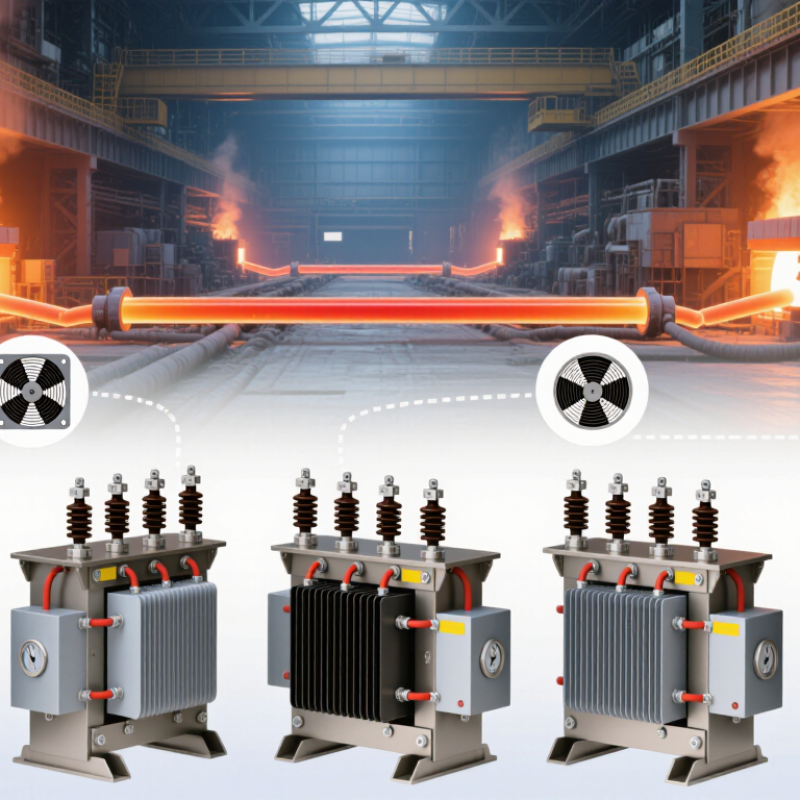
Electric furnace transformers convert high-voltage grid power into controlled, high-current energy for melting operations. Their secondary circuits may deliver thousands of amperes at relatively low voltage. This combination supports stable arcs in steel, ferroalloy, and nonferrous furnaces.
The design is demanding. Engineers specify short-circuit impedance, tap-changing range, cooling capacity, harmonic tolerance, and mechanical strength. A poorly matched transformer can create voltage flicker, electrode instability, and damaging thermal stress. Practical inspections should examine bushings, oil quality, cooling fans, and tap-changer contacts. Small details matter.
According to the World Steel Association, global crude steel production reached about 1.89 billion tonnes in 2023. Electric arc furnaces produced roughly 28% of that output, showing their continuing industrial importance. The International Energy Agency identifies steelmaking as responsible for approximately 7–9% of global carbon dioxide emissions. Higher renewable-power availability may increase electric-furnace deployment, but transformer efficiency alone cannot solve grid constraints. Supplier evaluations should therefore include verified factory testing, seismic and short-circuit design data, lifecycle service capability, and documented performance under fluctuating loads. One uncertainty remains: published efficiency figures often reflect ideal conditions, not dusty, heat-intensive furnace floors.
Seven Leading Electric Furnace Transformer Suppliers Worldwide
Seven leading electric furnace transformer suppliers worldwide are distinguished by engineering depth, factory testing, and service reach. Their equipment supports steelmakers, foundries, and mineral processors using high-current electric furnaces.
The World Steel Association reported nearly 1.9 billion tonnes of crude steel production in 2023
with electric arc furnaces producing about 28% of global output.
That share creates steady demand for reliable furnace transformers.
The strongest seven suppliers typically offer custom ratings, oil-immersed designs, and tap-changing systems for unstable furnace loads. Their engineers examine short-circuit forces, harmonic distortion, cooling capacity, and electrode-flicker risks before selecting a configuration.
Field experience matters here. A transformer can look excellent in a test bay yet struggle beside a dusty furnace hall.
The International Energy Agency identifies steel as responsible for roughly 8% of global energy-related carbon dioxide emissions, increasing pressure for efficient electric melting and lower operational losses.
Procurement teams should compare guaranteed losses, impedance tolerance, spare-part availability, and response times.
Ask for factory test records, thermal calculations, and references from similar furnace capacities.
Seven suppliers may all claim global coverage, but local technicians can determine actual reliability. That detail is easy to underestimate. I would also challenge optimistic efficiency claims unless operating conditions are clearly stated. Ambient temperature, furnace cycle, and maintenance quality can change results significantly. Audited data and transparent warranty terms remain stronger evidence than polished brochures.
Comparing Transformer Capacity, Efficiency, Safety, and Customization
7 Best Electric Furnace Transformer Suppliers Worldwide
Choosing among leading electric furnace transformer suppliers requires more than comparing price and name recognition. Capacity must match furnace load, duty cycle, and expected expansion. A 2 MVA unit may suit a small melting line, while larger operations need multiple transformers or higher ratings. Suppliers should provide verified thermal calculations, short-circuit strength data, and clear overload limits.
Efficiency affects every production hour. Look for low-load and full-load loss figures, not only one impressive percentage. High-quality core materials, optimized windings, and effective cooling can reduce wasted energy. Ask for test reports from accredited laboratories. A neat datasheet can still hide assumptions about ambient temperature, harmonics, or operating hours.
Safety depends on insulation quality, grounding design, protection systems, and maintenance access. Useful features include temperature monitoring, pressure relief, fire-resistant enclosures, and fault alarms. Customization may cover voltage ratios, tap changers, cooling methods, enclosure dimensions, and furnace control interfaces. Experienced suppliers should review site conditions before quoting. They should also explain installation limits and spare-parts support. I would not trust a supplier that promises unlimited customization without discussing testing. Real projects often reveal small oversights, such as cable clearance or unexpected harmonic heating. Those details matter.
Purchasing, Installation, Maintenance, and Supplier Support Considerations
Electric furnace transformer selection begins with furnace duty, not catalogue price. World Steel Association’s World Steel in Figures 2024 reports that electric-arc furnaces produced about 28% of global crude steel in 2023. That share makes transformer uptime a production issue, not merely an electrical specification. Ask each shortlisted supplier for impedance, short-circuit withstand, tap-changing limits, cooling method, and guaranteed losses. Request test records aligned with IEC 60076 and references from comparable furnace operations. A low quote can still become expensive.
Installation planning should cover busbar length, harmonic exposure, ambient temperature, fire separation, lifting access, and protection coordination. The U.S. Department of Energy’s 2024 transformer efficiency rule highlights the financial importance of losses. Furnace applications still require separate engineering judgment. Supplier support should include commissioning, oil or insulation tests, relay settings, spare parts, and emergency response times. Put these promises in the contract.
Maintenance agreements should define thermal scans, dissolved-gas analysis where applicable, bushing checks, cooling-fan tests, and alarm reviews. The IEA’s Electricity 2024 report projected global electricity demand growth of more than 4% in 2024 and 2025. That pressure can expose weak service networks. Remote monitoring sounds ideal, but sensors do not replace inspections. Supplier scorecards should weigh technician coverage, training, failure analysis, and realistic delivery dates. Seven suppliers may look similar on paper. The checklist is not infallible.