
Blog
China Top 10 Mirror Finish Stainless Steel Sheet Suppliers
A bright stainless-steel surface can transform an elevator panel, kitchen backsplash, or architectural feature. Yet a mirror-like appearance is only one part of a reliable purchase. Buyers also need consistent polishing, suitable grades, accurate thickness, and packaging that protects the finish during shipment. This guide to China’s top 10 Mirror Finish Stainless Steel Sheet suppliers offers a starting point for comparing manufacturers and trading companies.
The Mirror Finish Stainless Steel Sheet market includes products with different substrates, polishing processes, and surface protections. Ask suppliers to clarify grade, sheet dimensions, thickness tolerance, finish specifications, and whether protective film is applied. Request recent samples when possible. Examine them under direct light for visible scratches, cloudy areas, and uneven reflections. Details matter. A polished sample may not tell the whole story, so confirm how production batches are inspected and documented.
Supplier selection should consider more than a product photo or quoted price. Review production capacity, export experience, response quality, lead times, and the clarity of technical documents. Certifications and test reports can support a decision, but buyers should verify that documents match the product and order. Looks can deceive. No supplier is ideal for every project, and this list should not replace independent checks. One point is easy to overlook: packaging and handling can affect the surface after polishing. Compare suppliers against your own application, budget, and delivery needs, then confirm specifications in writing before ordering.
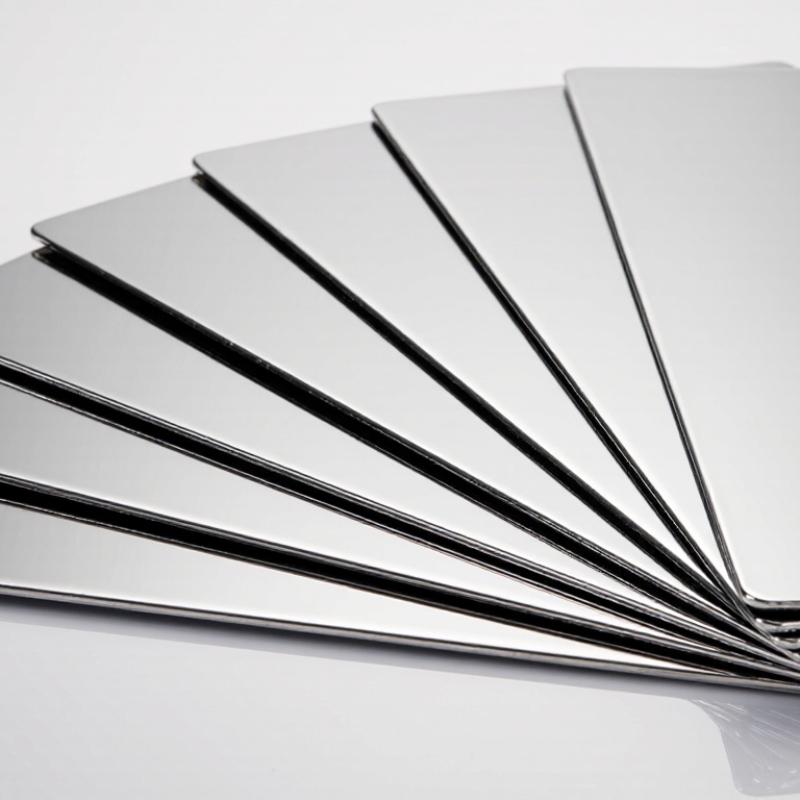
What Mirror-Finish Stainless Steel Sheets Are
A mirror-finish stainless steel sheet has a highly polished surface that reflects light and nearby objects. The finish is produced by progressively grinding and buffing the steel until visible scratches are greatly reduced. It is not usually a separate mirror coating. The steel’s chromium-rich passive layer still provides its corrosion resistance.
Often called a No. 8 finish, mirror finish can vary in clarity and uniformity. Naming conventions differ, so the finish description alone may not tell you how sharply the sheet reflects. Finish does not determine the steel grade. This distinction matters.
Under bright lights, small waviness or polishing marks can become noticeable, especially across a large panel. A removable protective film helps limit handling marks during transport and installation. Once removed, fingerprints show easily; clean the surface with a soft cloth and a non-abrasive cleaner. Abrasive pads can leave fine scratches that are difficult to hide. A sample viewed under the intended lighting is useful, since a photograph may make the reflection look more even than it is. Ask for the grade, thickness, finish specification, and film details before comparing sheets.
How Mirror-Finish Sheets Are Manufactured and Classified
Mirror-finish stainless steel sheets start with a smooth, cold-rolled surface. Manufacturers remove oils and residue before polishing. Abrasive belts or compounds refine the surface in stages, using finer materials over time. Final buffing creates a highly reflective finish. The sheet is then cleaned and often covered with protective film. Small scratches can still appear during cutting or handling, so inspection matters.
Classification usually considers both the surface finish and the steel grade. Terms such as 8K or No. 8 commonly describe mirror-like finishes, but labels can vary between suppliers and markets. They should not replace a sample inspection. Buyers may also compare thickness, alloy grade, flatness, and reflectivity. A bright appearance alone does not confirm consistent polishing or suitable corrosion resistance. One detail is easy to miss: lighting can make surface defects seem less visible.
Tips: Ask for a physical sample and inspect it under direct, angled light. Check the film, edges, and surface before fabrication. Confirm the stated finish and steel grade in writing; trade descriptions can be imprecise.
China Top 10 Mirror Finish Stainless Steel Sheet Suppliers - How Mirror-Finish Sheets Are Manufactured and Classified
Supplier-neutral guide: the ten rows below compare practical sourcing and quality checks; they do not rank or identify individual companies.
| No. | Supplier evaluation area | What to verify | Manufacturing or classification context |
|---|---|---|---|
| 1 | Stainless steel grade | Confirm the specified grade, applicable product standard, and material test documentation. | Common sheet grades include 304 and 316 austenitic stainless steels and 430 ferritic stainless steel. Grade selection should reflect the service environment and required properties. |
| 2 | Starting surface finish | Ask which starting finish is used and whether it is suitable for the requested final appearance. | Mirror polishing commonly begins with a smooth, clean surface. A 2B finish is a common cold-rolled finish, but it is not itself a No. 8 mirror finish. |
| 3 | Finish designation | Specify the finish designation and approve a sample or agreed visual reference before production. | No. 8 is commonly used to describe a highly reflective polished finish. BA means bright annealed and should not automatically be treated as equivalent to a mechanically polished mirror finish. |
| 4 | Grinding and polishing sequence | Request details of the surface preparation and progressive polishing steps used for the ordered finish. | Mechanical mirror finishing generally removes surface imperfections through progressively finer abrasive operations before final buffing. |
| 5 | Final buffing and appearance | Agree on acceptable levels of visible scratches, haze, polishing lines, and variation across the sheet. | Buffing helps produce a bright, reflective surface. Appearance depends on the starting material, processing, handling, and agreed inspection conditions. |
| 6 | Protective film and handling | Confirm whether a removable surface film is supplied, which side is protected, and how sheets are handled and packed. | Protective film can reduce handling damage during transport and fabrication; it does not replace careful storage or handling. |
| 7 | Thickness and tolerances | State nominal thickness and required tolerances on the purchase specification; verify the applicable standard. | Permitted thickness tolerances depend on product form, dimensions, and the governing specification, such as ASTM A480/A480M where applicable. |
| 8 | Sheet dimensions and flatness | Confirm ordered length and width, dimensional tolerances, edge condition, and any flatness requirements. | Available dimensions and achievable tolerances vary by product and processing route, so they should be agreed for each order. |
| 9 | Inspection and acceptance criteria | Define the inspection method, viewing conditions, sampling plan, and acceptance criteria before shipment. | A written visual standard or approved sample makes appearance checks more consistent than relying on an undefined “mirror” description alone. |
| 10 | Documentation and packaging | Confirm order traceability, material documentation, packing method, and protection against moisture and surface damage. | Documentation and suitable packaging help preserve identification and surface condition through storage and transport. |
How to Evaluate Stainless Steel Sheet Suppliers in China
Choosing a mirror-finish stainless steel sheet supplier in China takes more than comparing quoted prices. Ask which stainless steel grade is offered, and request mill test certificates linked to the material batch. Confirm thickness tolerance, sheet dimensions, and whether the surface has a protective film. A bright sample can look excellent under showroom lights, yet reveal fine scratches in daylight. Check samples from the actual production line when possible.
Tips: Inspect the sheet at an angle. Look for haze, waviness, pinholes, and uneven reflections. Ask how sheets are separated and packed for transport; paper or film between panels can reduce rubbing damage. Clarify who handles inspection and what happens if delivered material differs from the approved sample.
Evaluate consistency, not just a single polished panel. Request recent production photos or arrange an independent inspection before shipment. Confirm lead time, minimum order quantity, packaging details, and communication response times in writing. Supplier documents should be clear and verifiable. If an answer about traceability or tolerances feels vague, ask again. I have found that this step is easy to rush, especially when a deadline is tight. Yet a low quote means little if the finish varies across the order.
China Mirror-Finish Stainless Steel Sheet Supplier Evaluation: Grade Chemistry Check
Chromium content ranges for common stainless steel grades, based on ASTM A240/A240M composition limits (weight percent). Use the applicable specification and edition to verify a supplier’s mill test certificate.
The chart shows grade specification limits—not supplier test results. Confirm the ordered grade, finish, and certificate details when evaluating suppliers.
Profiles of 10 Chinese Mirror-Finish Stainless Steel Sheet Suppliers
These ten profiles describe supplier types to compare, not a verified ranking. A large-scale mill may offer broad grade options and steady production, while a specialist polishing factory may focus on consistent surface appearance. Some suppliers handle custom thicknesses; others are better suited to repeat orders. Export-oriented teams may provide clearer packing details and shipment updates. Regional stockholders can sometimes arrange smaller trial quantities. Ask each supplier for current specifications.
Other profiles include fabricators offering cut-to-size sheets, suppliers serving architectural projects, and workshops focused on decorative finishes. A technical supplier should explain grade, thickness tolerance, protective film, and finish inspection. A quality-focused exporter can share recent inspection records and sample images under consistent lighting. Smaller traders may respond quickly, but their production control can be harder to assess. I would not treat polished sample photos as proof of batch consistency. That deserves a closer check.
Tips: Request a physical sample and confirm the finish under your own lighting. Compare certificates, edge condition, packaging, and written tolerances before ordering. Small differences matter. Ask how scratches are prevented during handling, and record agreed acceptance criteria before production begins.
How to Compare Suppliers and Select the Right Partner
When comparing China’s top mirror finish stainless steel sheet suppliers, look beyond sample photos. Ask for the grade, thickness tolerance, surface finish specification, and protective-film options in writing. A bright sheet can look flawless under showroom lights yet reveal scratches or uneven reflection beside a window. Request samples large enough to inspect from several angles. Small swatches can hide waviness.
Check how each supplier controls production and quality. Ask whether inspection records can be linked to your order, and how defects are handled before shipment. Clarify packaging details, such as interleaving paper, edge protection, and crate support. These details affect the surface during long-distance transport. Compare quotations on the same grade, dimensions, finish, quantity, and delivery terms; a low price may exclude important checks. Ask for realistic lead times and updates if production slips. Good communication is useful. It is not proof of quality. A factory visit or independent inspection may add confidence, though neither removes every risk. I would also test a sample in the intended lighting, because mirror appearance can change with the room and viewing angle. No supplier is perfect; record compromises before placing a larger order.
