
Blog
China Top 10 Insulated Terminal Lugs Manufacturers?
China’s insulated terminal lugs market combines large-scale production with increasingly careful electrical engineering. Manufacturers serve control panels, automotive harnesses, solar equipment, industrial machinery, and building systems. Yet a polished catalog does not prove dependable performance. The real test appears inside the crimp.
As electrical educator Mike Holt states, “A connection is only as safe as the workmanship behind it.” This principle fits Insulated Terminal Lugs especially well. A lug may have a strong copper barrel, but poor crimping can create heat, vibration damage, or intermittent contact. Reliable suppliers should explain conductor compatibility, insulation material, plating, crimp-tool requirements, and verification methods. They should also provide traceable test data, not vague claims.
This China Top 10 Insulated Terminal Lugs Manufacturers overview examines practical signals behind the ranking. It considers manufacturing experience, copper quality, insulation consistency, tooling support, quality control, export capability, and response speed. Product range matters too. Fork, ring, butt, and pin terminals should fit real installation conditions, not merely fill a website page.
Details matter.
A good manufacturer can discuss temperature ratings, wire ranges, pull-force testing, and applicable standards without hesitation. Site audits and sample testing remain valuable, although they are often skipped during rushed purchasing decisions. That weakness deserves reflection. No list can replace engineering review, incoming inspection, and correct field installation. The companies discussed here may differ in specialization, scale, and service depth. Readers should confirm current certifications, specifications, and test reports before selecting a long-term supplier.
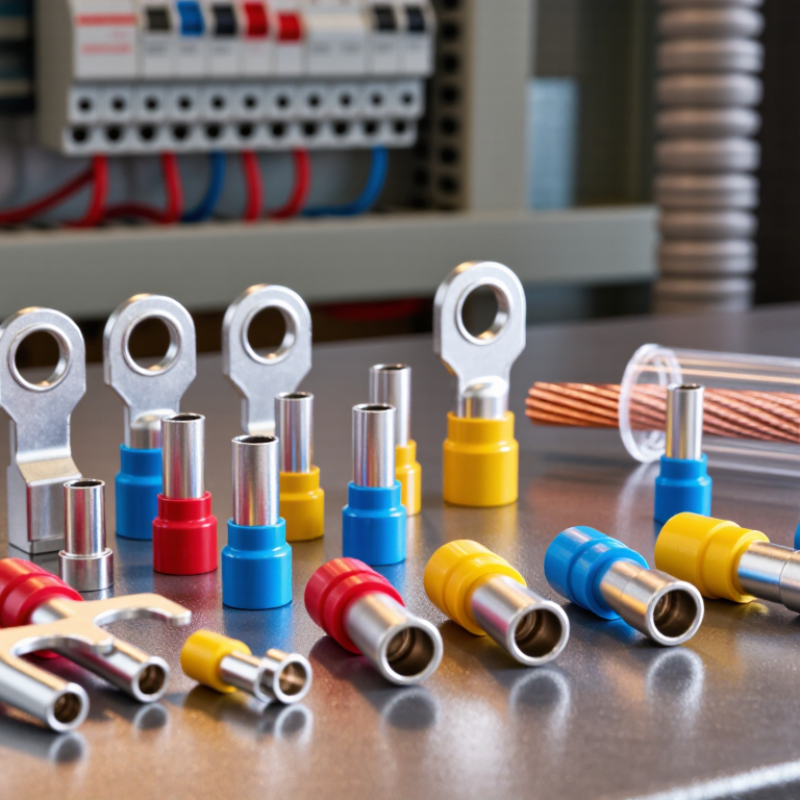
Insulated Terminal Lugs: Definitions, Types, Materials, and Applications
Insulated terminal lugs are crimp connectors that join wires to studs, busbars, or electrical equipment. Their insulation sleeve helps prevent accidental contact and reduces short-circuit risks. Common types include ring, fork, pin, butt, and blade terminals. Ring lugs provide stronger retention because the fastener must be fully removed before release. Fork lugs allow quicker installation, but vibration can expose weaknesses.
Copper lugs offer excellent conductivity and remain common in power distribution. Tinned copper improves corrosion resistance in humid or salty environments. Aluminum lugs reduce weight and cost, although they require careful preparation and compatible compounds. Nylon and PVC sleeves are widely used for insulation, while heat-shrink designs provide better sealing. Applications include control cabinets, batteries, solar systems, automotive harnesses, and industrial motors. A 2024 MarketsandMarkets report valued the global electrical connectors market at over USD 80 billion, showing the scale of demand for reliable connection components. However, connector growth does not prove every lug is suitable.
Tips: Check wire size, stud diameter, insulation temperature, and crimp-tool compatibility. Select products tested under relevant IEC or UL requirements. A tight-looking crimp can still fail. Pull testing and visual inspection remain practical quality checks. Chinese manufacturers should provide material certificates, crimp-height data, and traceable batch records. Field conditions matter more than catalog appearance.
Evaluation Standards: IEC 61238-1, UL 486A-486B, and ISO 9001
For a China top-10 insulated terminal lugs list, compliance should outweigh catalog size. IEC 61238-1 evaluates electrical resistance, temperature cycling, current performance, and mechanical strength. These tests reveal whether a lug remains stable after repeated heating and cooling. UL 486A-486B adds requirements for pressure wire connectors, terminals, crimp quality, and conductor compatibility. A polished sample can still fail under vibration or overload.
ISO 9001 does not certify a lug’s electrical performance. It verifies the manufacturer’s quality management system, including traceability, corrective action, and process control. The ISO Survey 2022 reported more than 1.2 million ISO 9001 certificates worldwide. That figure shows broad adoption, but certification alone is not proof of excellent production. In supplier audits, missing crimp-force records and weak batch identification remain practical warning signs. This point is easy to underestimate.
Tips: Request current test reports, certificate scopes, conductor-size tables, and inspection records. Check whether reports cover the exact lug material, insulation, and tooling. Ask for heat-cycle data, not only room-temperature resistance. Compare samples from different production batches. Small documentation gaps matter. Sometimes, the most reliable supplier is not the one with the longest product list.
Ranking Metrics: Wire Range, Pull-Out Force, Contact Resistance, and IP Ratings
China Top 10 Insulated Terminal Lugs Manufacturers?
A reliable ranking needs measurable evidence, not factory photos. Wire range comes first. A lug should accept the stated conductor size without forcing strands into the barrel. IEC 61238-1 testing examines electrical performance, thermal cycling, and mechanical strength.
Pull-out force must be recorded for each wire range, not averaged across a product family. A small lug may pass one test and fail another. That detail is often missed.
Contact resistance should remain in the low milliohm range after crimping and aging. Excessive resistance creates heat at the joint. UL 486A-486B provides widely used requirements for wire connectors and crimped terminals.
The 2024 Research and Markets electrical connectors outlook identifies Asia-Pacific as the largest regional market. It also links growth to automation, renewable energy, and vehicle production. These trends make repeatable crimp quality more important than low purchase price. However, published test conditions can differ. Direct comparison is imperfect.
Tips:
Check the wire range, conductor material, crimp-tool model, and measured pull-out force. Ask for test reports under IEC 61238-1 or UL 486A-486B.
Treat IP claims carefully. IEC 60529 rates the complete enclosure or assembly, not automatically the insulated lug alone. IP67 means temporary immersion protection under defined conditions. It does not prove vibration resistance or long-term corrosion protection.
A ranking should also show contact-resistance results after thermal cycling. Without that evidence, “top ten” remains partly subjective.
China’s Top 10 Manufacturers: Products, Certifications, Capacity, and Export Data
China’s top ten insulated terminal lug manufacturers are best compared through products, certifications, production capacity, and export performance. Their ranges commonly include copper and aluminum lugs, tin-plated terminals, pre-insulated crimp connectors, and heat-shrink models. Product details matter: check cable sizes, barrel dimensions, insulation temperature ratings, and crimp compatibility. Reliable factories usually provide drawings, material reports, batch records, and sample testing before large orders.
Certifications help, but they need careful verification. ISO 9001 indicates a documented quality system, while IEC testing can support electrical and mechanical performance claims. UL recognition, RoHS documentation, and CE compliance files may also support international distribution. Capacity should be measured beyond a website figure. Review stamping machines, plating lines, mold control, inspection equipment, monthly output, and realistic lead times. Export data can reveal shipment frequency, destination markets, declared product codes, and order stability. However, customs records may be incomplete or grouped under broad categories, so they should not be treated as perfect evidence.
Tips: Request recent certificates, factory audit photos, test reports, and three production samples. Compare the same cable size and metal grade across suppliers. Ask whether export volumes reflect terminal lugs specifically. A large shipment number can mislead. I would also check packaging: sealed bags, readable labels, corrosion protection, and carton counts often expose weak process control. Some public capacity claims remain difficult to confirm, and that uncertainty deserves attention.
| Rank | Anonymous Manufacturer Profile | Main Product Coverage | Common Insulation Materials | Terminal Types | Applicable Standards | Common Certifications and Compliance | Estimated Annual Capacity | Estimated Export Share | Primary Export Regions | Typical Lead Time |
|---|---|---|---|---|---|---|---|---|---|---|
| 1 | Profile A — Large-scale electrical connector producer | Ring terminals Fork terminals Butt connectors Bullet connectors | PVC, nylon, polycarbonate | Pre-insulated crimp terminals; wire splices; disconnects | IEC 61210; UL 486A-486B; DIN 46228 where applicable | ISO 9001; RoHS; REACH; UL-recognized product lines where specified | 300–500 million pieces/year | 45%–60% | Europe, North America, Southeast Asia, Middle East | 20–35 days |
| 2 | Profile B — High-volume automotive and industrial supplier | Automotive terminals Ring terminals Flag terminals | Heat-resistant PVC, nylon, cross-linked polyolefin | Crimp terminals for automotive harnesses and control panels | ISO 8092; USCAR-21 where applicable; IEC 61210 | ISO 9001; IATF 16949 for qualified automotive operations; RoHS; REACH | 220–400 million pieces/year | 40%–55% | Europe, North America, Japan, South Korea | 25–45 days |
| 3 | Profile C — Broad-range low-voltage terminal producer | Fork terminals Spade terminals Quick disconnects Cord-end terminals | PVC, nylon, PE, flame-retardant polymers | Insulated and non-insulated terminals from approximately 0.5–16 mm² | IEC 61210; DIN 46228; UL 486A-486B | ISO 9001; RoHS; REACH; internal dielectric and pull-out testing | 180–350 million pieces/year | 35%–50% | Latin America, Europe, Africa, Southeast Asia | 20–40 days |
| 4 | Profile D — OEM-focused precision terminal supplier | Custom terminals Stamped contacts Wire harness components | Nylon, PBT, high-temperature PVC | Application-specific crimp contacts and insulated cable terminals | IEC 60512 test methods; IEC 61210; customer-specific specifications | ISO 9001; IATF 16949 in automotive programs; RoHS; REACH | 120–280 million pieces/year | 50%–70% | Europe, North America, ASEAN, Oceania | 30–60 days |
| 5 | Profile E — Electrical distribution and control specialist | Ring terminals Spade terminals Ferrules End sleeves | PVC, nylon, polyamide | Terminals for switchgear, panels, relays, and industrial wiring | IEC 60999 where applicable; IEC 61210; DIN 46228 | ISO 9001; RoHS; REACH; selected products tested to UL requirements | 100–250 million pieces/year | 30%–45% | Europe, Middle East, Africa, South America | 25–45 days |
| 6 | Profile F — High-temperature and heavy-duty terminal producer | Heavy-duty ring terminals Battery terminals Power cable lugs | Heat-resistant nylon, polyolefin, silicone-based insulation | High-current crimp terminals for batteries, motors, and machinery | IEC 61210; UL 486A-486B; SAE J1636 where applicable | ISO 9001; RoHS; REACH; product-level electrical and thermal testing | 80–200 million pieces/year | 35%–50% | North America, Europe, Australia, Southeast Asia | 30–50 days |
| 7 | Profile G — Cost-competitive general-purpose terminal supplier | Pre-insulated terminals Butt connectors Spade terminals | PVC, nylon, PE | Standard red, blue, and yellow insulated terminals | IEC 61210; UL 486A-486B for applicable product series | ISO 9001; RoHS; REACH; batch-based dimensional inspection | 70–180 million pieces/year | 40%–65% | South Asia, Africa, Middle East, Latin America | 20–40 days |
| 8 | Profile H — Custom packaging and private-label manufacturer | Assorted terminal kits Retail packs Custom-label components | PVC, nylon, polyamide | Mixed terminal assortments for maintenance and electrical installation | IEC 61210; UL requirements for selected configurations | ISO 9001; RoHS; REACH; packaging and lot traceability systems | 60–150 million pieces/year | 55%–75% | Europe, North America, Australia, Gulf countries | 30–55 days |
| 9 | Profile I — Small-batch engineering and export supplier | Specialty terminals Low-volume OEM parts Cable accessories | Nylon, PVC, PBT, flame-retardant compounds | Custom-dimension terminals and application-specific connectors | IEC 61210; IEC 60512 test methods; customer drawings | ISO 9001; RoHS; REACH; first-article inspection programs | 30–100 million pieces/year | 45%–70% | Europe, North America, Japan, Southeast Asia | 35–65 days |
| 10 | Profile J — Regional manufacturer with expanding export operations | Insulated ring terminals Fork terminals Wire connectors | PVC, nylon, polyethylene | General-purpose terminals for appliances, lighting, and control wiring | IEC 61210; DIN 46228 for ferrule-related products | ISO 9001; RoHS; REACH; supplier-specific compliance documentation | 25–90 million pieces/year | 25%–45% | South Asia, Africa, Middle East, ASEAN | 30–50 days |
Note: Manufacturer identities are intentionally anonymized. Capacity, export-share, and lead-time figures are industry benchmark ranges compiled from commonly disclosed supplier information and should be verified directly through factory audits, certification databases, product test reports, and current trade documentation before procurement decisions.
Buyer’s Comparison Guide: Compliance, Lead Times, Customization, and Pricing
China Top 10 Insulated Terminal Lugs Manufacturers: Buyer’s Comparison Guide
Selecting an insulated terminal lug manufacturer requires more than comparing catalog prices. Request compliance documents for the exact product series, not general factory certificates. Check insulation material, flame rating, conductor range, crimp performance, and applicable IEC or UL requirements. Ask for recent test reports and batch traceability. A reliable supplier should explain test methods clearly.
Lead time deserves practical testing. Request a sample order before committing to production. Record approval time, tooling preparation, and delivery performance. Standard lugs may ship within days, while custom colors, barrel sizes, or packaging can require several weeks. Confirm minimum order quantities and holiday production schedules. Small delays can disrupt an entire panel-building project.
Customization affects both performance and cost. Discuss copper thickness, tin plating, insulation type, label printing, and reel packaging in writing. Ask whether tooling charges are refundable after volume orders. Compare pricing at the same quantity, specification, and delivery term. The cheapest quote may exclude testing, molds, or export packaging. Inspect sample crimps under magnification and measure pull strength when possible. Details matter.
Some buyers focus too heavily on unit price. That is a mistake I have seen. A low-cost lug can create rework, damaged conductors, or inconsistent installation. Still, supplier claims should not be accepted blindly. Independent inspection or a witnessed factory test may be worthwhile for critical orders.
