
skip to Main Content

Top 10 Types of Glass Manufacturing Machines for Buyers

Choosing among the top 10 types of Glass Manufacturing Machines is not simply a matter of comparing prices. The right equipment depends on the product, production volume, material, and required tolerances. A float-glass line serves a different purpose from a bottle-forming machine or a glass tempering furnace. Small details matter. A conveyor’s stability, a furnace’s temperature control, and the availability of replacement parts can affect daily output.

For this guide, composite glass-process specialist Martin Hale sums up a practical buying principle: “A machine earns its place when it controls variation, not just speed.” This is an editorially written line, not a quotation from a published interview. It reflects a useful question for buyers: can the machine deliver consistent results across real operating conditions? Review its capacity, energy use, automation, maintenance access, and compatibility with your existing line. Ask for specifications and performance data. Where possible, inspect a working installation.

The following overview introduces ten common machine types, from cutting and edging systems to forming, coating, and inspection equipment. Each has a distinct role. Some shape the glass; others improve its strength, finish, or quality control. No single Glass Manufacturing Machine suits every factory. Compare options against your actual products and production targets, and treat vendor claims as claims to verify. A specification sheet helps. A production trial helps more.
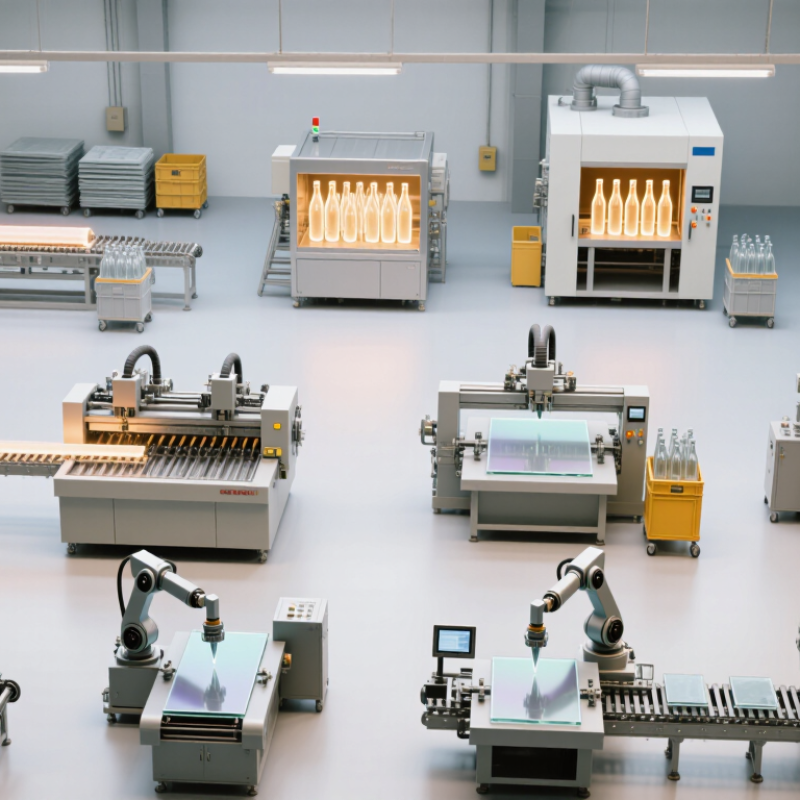
Top 10 Types of Glass Manufacturing Machines for Buyers

Glass Batch Charging Systems and Melting Furnaces

Glass Batch Charging Systems and Melting Furnaces

A batch charging system moves a measured mix of silica sand, soda ash, limestone, and recycled glass into the furnace. For buyers, the key question is not simply how fast it feeds. Check whether the charger can maintain an even batch blanket across the furnace width. Uneven charging may create cold spots, disturb melting, and affect glass quality. Small details matter. Hopper design, feed control, and the distance between the charger and furnace opening all influence daily operation.

Charging equipment may use screw feeders, belts, or mechanical pushers. The right choice depends on batch size, cullet proportion, plant layout, and dust-control needs. Ask suppliers how they handle changes in recipe and feed rate. Request operating data under conditions similar to your own, rather than relying only on rated capacity. A smooth demonstration is useful, but real production is less tidy.

The furnace itself is a larger investment. Regenerative and recuperative furnaces recover heat from exhaust gases, while electric melting relies on electrical energy to heat the glass. Each option brings different operating costs, maintenance needs, and emissions considerations. Compare expected glass output, fuel or power use, refractory life, and access for repairs. No layout is perfect. A compact system can save floor space, yet make maintenance awkward. That trade-off deserves a close look before purchase.

Float Baths and Rolling Machines for Flat Glass

Float Baths and Rolling Machines for Flat Glass

Float baths and rolling machines shape flat glass in different ways. In a float line, molten glass spreads across a bath of liquid tin, forming a smooth, continuous ribbon. Bath temperature control, ribbon speed, and atmosphere affect thickness and surface quality. The European Commission’s 2013 Best Available Techniques Reference Document for the Manufacture of Glass describes float furnace capacities reaching roughly 1,000 tonnes per day. That scale makes small process disturbances costly. A brief temperature drift can create thickness variation or optical distortion.

Rolling machines press softened glass between rollers, often producing patterned or wired products. Roller alignment and pressure determine whether the pattern stays crisp across the sheet. Unlike float glass, rolled glass carries texture by design. Yet changing a roller setting can affect thickness and edge quality, too. One detail is easy to overlook: maintenance access matters as much as rated output. A line that is hard to inspect may hide wear until defects appear.

Tips: Match equipment to the product, not just the target volume. Check bath controls, roller tolerances, cooling capacity, and inspection access before purchase. Ask suppliers for trial data using your intended glass thickness. Small variations matter. Even a careful plan can miss real operating conditions.

Top 10 Types of Glass Manufacturing Machines for Buyers - Float Baths and Rolling Machines for Flat Glass

Machine Type Main Function Typical Process Stage Buyer Considerations
Batch House and Raw-Material Mixing System Stores, weighs, and mixes glass-making ingredients, such as silica sand, soda ash, and limestone, into a consistent batch. Before melting Check weighing accuracy, dust control, material-handling capacity, and compatibility with the intended glass composition.
Cullet Handling and Preparation Equipment Conveys and prepares clean recycled glass, known as cullet, for addition to the batch. Cullet is commonly used to support efficient melting. Batch preparation Assess cullet cleanliness, sorting needs, conveying layout, and the system’s ability to handle the planned cullet proportion.
Glass-Melting Furnace Melts the prepared batch into molten glass and provides a controlled supply of glass to the forming process. Melting and refining Compare production capacity, temperature-control capability, energy requirements, emissions controls, and maintenance needs.
Float Bath Forms a continuous glass ribbon by allowing molten glass to spread over a bath of molten tin. The ribbon’s thickness and surface quality are controlled through process conditions. Flat-glass forming Review ribbon-width capability, thickness range, atmosphere control, tin-bath maintenance, and integration with the furnace and lehr.
Rolling Machine Shapes molten glass by passing it between rollers. It is used for rolled products, including patterned glass, and is an alternative forming route to the float bath. Flat-glass forming Check roller design, pattern options, product thickness capability, cooling arrangements, and suitability for the intended product mix.
Annealing Lehr Gradually cools the formed glass ribbon to reduce internal stresses and lower the risk of breakage during later handling and processing. After forming Consider working width, temperature-zone control, line speed, insulation, and coordination with the forming line.
Glass-Ribbon Cutting System Scores and separates the continuous ribbon into sheets or other specified sizes after annealing. After annealing Check cutting accuracy, maximum sheet dimensions, handling method, recipe flexibility, and integration with inspection equipment.
Edge Grinding and Seaming Machine Processes sheet edges to remove sharpness or prepare them for downstream use, handling, or further fabrication. Downstream processing Match the machine to sheet dimensions, edge profile requirements, glass thickness, throughput, and water-treatment arrangements.
Glass Washing and Drying Machine Removes dust and processing residues from glass surfaces and dries the sheets before inspection or coating-related operations. Downstream processing Evaluate cleaning quality, brush and water systems, drying performance, allowable glass sizes, and maintenance access.
Optical Inspection and Quality-Control System Detects visible defects and monitors product characteristics such as dimensions and surface quality, depending on the system configuration. Inline inspection and quality control Review detectable defect types, inspection speed, measurement capability, data recording, and integration with cutting or sorting systems.

Pressing, Blowing, and Molding Machines for Glass Products

Pressing, blowing, and molding machines shape glass in different ways. Pressing uses a metal plunger to push a measured gob into a mold, making items such as cookware, tableware, and thick technical components. Blowing expands molten glass with compressed air, forming bottles, jars, and other hollow products. Press-and-blow combines both actions. It can help control wall thickness, especially in wide-mouth containers. Small details matter.

Machine choice depends on the product, not just output speed. A buyer should compare gob weight control, mold-change time, cooling capacity, and inspection access. For narrow-neck containers, blow-and-blow forming is common; press-and-blow is often used for wide-mouth designs. Mold temperature and lubrication also affect surface quality. A faster cycle can still create more rejects if these settings drift.

FEVE’s 2022 industry data reports roughly 24.5 million tonnes of glass packaging production in Europe. That scale makes repeatable forming and reduced scrap commercially important. The U.S. Department of Energy’s Glass Industry of the Future profile identifies melting as a major energy demand in glass production, so forming-machine efficiency should be assessed alongside furnace performance. Buyers sometimes overlook this link. I would also ask suppliers for trial-run data using the intended glass composition and product geometry; catalog cycle rates alone can be misleading.

Glass Cutting, Grinding, and Edge-Polishing Machines

Glass cutting, grinding, and edge-polishing machines determine whether a sheet moves smoothly from raw stock to a safe, installation-ready panel. A cutting table scores glass along a planned path; the breakout step then separates the piece. Poor alignment can leave chips that later grinding may not fully remove. Small details matter. Buyers should test the actual glass types and thicknesses they process, checking edge quality, dimensional accuracy, and repeatability—not just the machine’s advertised speed. The International Energy Agency’s 2023 industry tracking report estimates that glass production accounts for about 0.5% of global energy use. That figure covers the wider sector, not individual machines, but it underlines why unnecessary breakage and rework deserve attention.

Grinding machines shape edges and remove sharpness, while polishing units create a clearer, smoother finish. Some lines combine these stages; others use separate machines for better control over different products. Ask suppliers for sample runs using your own glass, then inspect corners and edges under strong, angled light. A cheaper machine can still be the wrong choice. A common buying mistake is to trust throughput figures without checking how they were measured. Also compare water use, abrasive changes, operator access, and maintenance time. The perfect-looking test piece is not enough; repeat the run and record rejects. Even careful tests leave uncertainty, especially when your future product mix is unclear.

Tempering, Laminating, Coating, and Inspection Equipment

Tempering furnaces, laminating lines, coating systems, and inspection machines shape different stages of glass production. Each solves a distinct problem. A tempering furnace needs stable heat and controlled cooling; uneven roller marks can spoil an otherwise sound pane. Laminating equipment depends on clean interlayers, reliable pressure, and careful air removal. Small bubbles are visible defects. Coating systems require close control of layer thickness and surface cleanliness, while inspection equipment checks for scratches, inclusions, distortion, and edge damage.

Buyers should compare usable glass sizes, throughput, changeover time, and process data—not just advertised capacity. Ask how inspection results connect to production settings. That link can help identify recurring defects before they become a costly batch. The UNEP and Global Alliance for Buildings and Construction’s 2022 Global Status Report states that buildings and construction accounted for 34% of global energy demand and 37% of energy- and process-related CO₂ emissions in 2021. This gives energy-efficient glazing real significance, though machine efficiency alone cannot guarantee better building performance. The awkward part: specifications rarely reveal every maintenance burden. Check cleaning access, spare-part lead times, and actual reject rates with comparable glass types. A short production trial helps. It may still leave unanswered questions.

Top 10 Types of Glass Manufacturing Machines for Buyers

Tempering, laminating, coating, and inspection equipment

The chart shows representative process-temperature ranges for heat-based equipment; actual settings depend on the glass, process recipe, and line design. Cutting tables, CNC edge grinders, glass washers, insulating-glass assembly lines, and optical inspection systems are also common equipment types, but do not have a comparable defining process temperature.

Other major machine types: glass cutting table; CNC edge grinder; glass washer; insulating-glass assembly line; optical inspection system.