
Blog
10 Best Circuit Board Manufacturing Companies Worldwide
Circuit board manufacturing supports nearly every modern product, from medical monitors and electric vehicles to factory robots and communication systems. Behind each finished device lies a chain of design reviews, material choices, controlled etching, drilling, plating, inspection, and testing. Small process errors can create serious field failures. Reliability matters.
This guide examines 10 leading circuit board manufacturing companies worldwide. The comparison considers production scale, multilayer and high-density interconnect capabilities, flexible and rigid-flex expertise, certifications, delivery performance, traceability, and engineering support. It also considers practical details, such as automated optical inspection, clean production areas, copper thickness control, and responsiveness during design changes. IPC President and CEO John W. Mitchell has stated, “Standards are the foundation of the electronics industry.” That principle remains central to responsible supplier evaluation.
No ranking is flawless. A large factory may offer impressive capacity but weaker communication. A smaller specialist may provide closer engineering support but limited geographic coverage. Prices can also mislead when testing, tooling, logistics, and warranty support are excluded. This overview therefore avoids treating one metric as decisive. It focuses on evidence, including documented capabilities, recognized certifications, customer experience, and manufacturing consistency. Readers should still verify current facilities, approved materials, regional compliance, and sample quality before selecting a partner. Manufacturing conditions change. Even strong companies can face delays, equipment upgrades, or supply shortages. That uncertainty deserves attention.
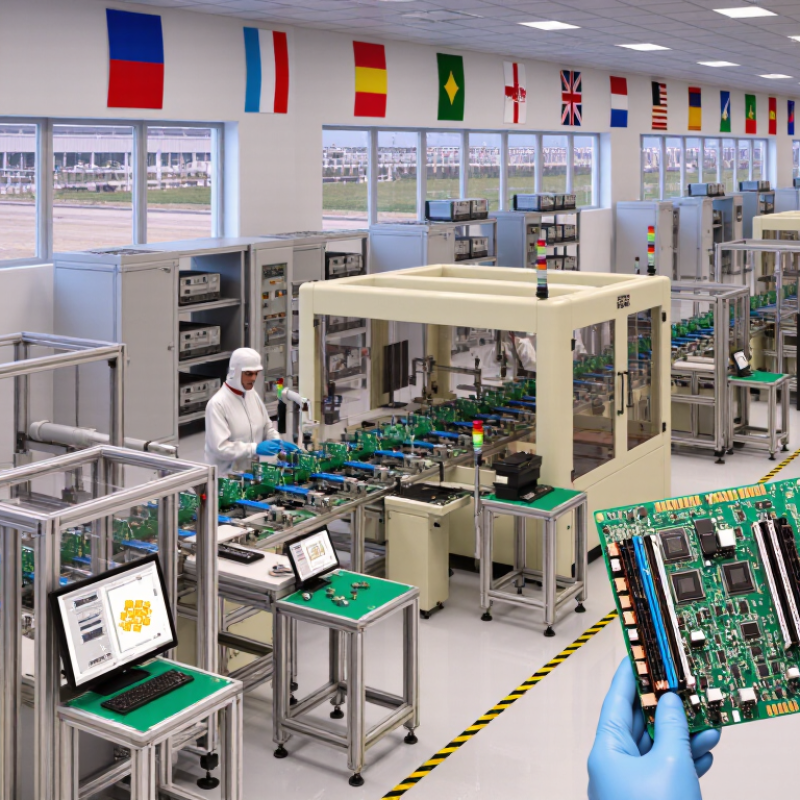
Global PCB Industry Scale: US$80B+ Market and Asia-Pacific’s Dominance
The global printed circuit board industry now represents an estimated US$80 billion-plus market. Demand continues to rise across vehicles, medical equipment, industrial controls, and connected devices. Every compact product depends on precise layers, reliable solder pads, and stable electrical performance. Small defects can create expensive failures after assembly.
Asia-Pacific remains the industry’s manufacturing center. The region combines dense supplier networks, skilled production teams, automated inspection, and high-volume capacity. Major facilities can move from laminate preparation to drilling, imaging, plating, and electrical testing within one coordinated supply chain. This concentration reduces transport time and supports competitive production costs. It also creates pressure. Environmental controls, labor standards, and supply-chain resilience require constant investment. The picture is not perfectly balanced.
A practical list of the ten best circuit board manufacturing companies worldwide should examine more than factory size. Strong candidates demonstrate consistent quality records, dependable delivery, engineering support, and clear material traceability. Their capabilities may include multilayer boards, high-density interconnects, flexible circuits, and assemblies for demanding applications. Independent audits and customer references add credibility, but no evaluation is flawless. Production results can vary between plants, product types, and order volumes. Buyers should review recent test data, inspection methods, and failure-response procedures before making a decision. That step often reveals more than a polished corporate presentation.
10 Best Circuit Board Manufacturing Companies Worldwide - Global PCB Industry Scale: US$80B+ Market and Asia-Pacific’s Dominance
| No. | Industry Dimension | Global Data Point | Key Manufacturing Implication | Reference Period / Source |
|---|---|---|---|---|
| 1 | Global PCB Market Value | Approximately US$89.7 billion | Confirms that printed circuit boards are a large-scale global electronics manufacturing sector. | 2023; Grand View Research market estimate |
| 2 | Forecast Market Growth | About 5.6% compound annual growth projected for 2024–2030 | Capacity expansion is expected to focus on high-density, flexible and application-specific boards. | 2024–2030; Grand View Research forecast |
| 3 | Asia-Pacific Market Dominance | Approximately 90.5% of global revenue | The region remains the primary center for PCB fabrication, assembly, materials and electronics supply chains. | 2023; Grand View Research regional estimate |
| 4 | Largest Product Category | Rigid printed circuit boards represented approximately 84.9% of revenue | Rigid-board production remains the volume foundation, while advanced formats support higher margins and technical differentiation. | 2023; Grand View Research product-segment estimate |
| 5 | High-Density Interconnect Demand | Driven by smartphones, data centers, networking equipment and compact computing devices | Leading facilities require laser drilling, microvia, fine-line imaging and sequential-build capabilities. | 2023–2030; industry application analysis |
| 6 | Automotive Electronics Exposure | Demand is increasing through electric vehicles, advanced driver-assistance systems and vehicle connectivity | Suppliers need strong traceability, thermal management, reliability testing and automotive quality systems. | Current industry trend; automotive electronics research |
| 7 | Flexible and Rigid-Flex Boards | Used extensively in wearables, medical devices, cameras, mobile equipment and aerospace systems | Manufacturing excellence depends on precision lamination, bend testing and controlled material handling. | Current industry applications; IPC technology classifications |
| 8 | Semiconductor and Package Substrates | Advanced substrates support high-performance processors, memory, networking and artificial-intelligence hardware | Critical capabilities include ultra-fine circuit formation, low-warpage control and advanced inspection. | 2023–2025; semiconductor packaging industry analysis |
| 9 | Quality and Process Standards | Common qualification frameworks include ISO 9001, ISO 14001, IATF 16949 and IPC standards | Certifications help demonstrate process control, environmental management and sector-specific reliability. | International standards currently in use |
| 10 | Sustainability and Compliance | Lead-free manufacturing, restricted-substance compliance and wastewater management are standard industry priorities | Modern plants increasingly compete through energy efficiency, chemical recovery and transparent supply-chain reporting. | RoHS, REACH and international environmental requirements |
Note: Market figures are industry estimates and may vary by research methodology, product scope, exchange rates and reporting year. No individual company or brand data is included.
Related Posts
-
How to Choose the Right PCB Printed Circuit Board in 2026?
-
Understanding the Industry Standards Challenges for Best PCB Circuit Production
-

Top 10 PCB Fabrication Manufacturers Worldwide?
-
How to Achieve Fast and Cost-Effective PCB Prototyping for Your Product Development
-

How to Master Circuit Board Design: Essential Tips for Beginners
-
Top 5 Insights for Successful PCB Production in Modern Electronics