
Blog
Top 10 Types of Automatic Transfer Switches
An Automatic Transfer Switch (ATS) moves a load between normal and alternate power when the preferred source fails or becomes unsuitable. You may find one in a hospital, data room, factory, or backup generator enclosure. The operating principle is familiar, but the equipment is not interchangeable. Switching time, load characteristics, source coordination, and maintenance access all affect the choice.
This guide compares 10 common types, including open-transition, closed-transition, delayed-transition, bypass-isolation, manual, contactor-based, molded-case, power-frame, and static designs. These labels do not all describe the same feature. Some refer to how the transfer occurs; others describe the switch’s construction or control method. That distinction matters. A static switch, for example, uses power electronics, while a bypass-isolation model adds a way to maintain a load during switch servicing.
In practical selection, engineers check current ratings, available fault current, transfer timing, controls, and compatibility with the generator or utility supply. They also consider what happens during testing and routine maintenance. A larger rating alone does not guarantee a better fit. Neither does the fastest transfer time. Site conditions and the connected equipment matter.
Simple on paper. Not always in service. A clean comparison can still miss details, especially when product names vary between manufacturers. Treat this list as a starting point, then verify specifications against the equipment documentation and have qualified electrical professionals assess the installation. That extra check is worth the time.
Automatic Transfer Switches: Purpose and Basic Operation
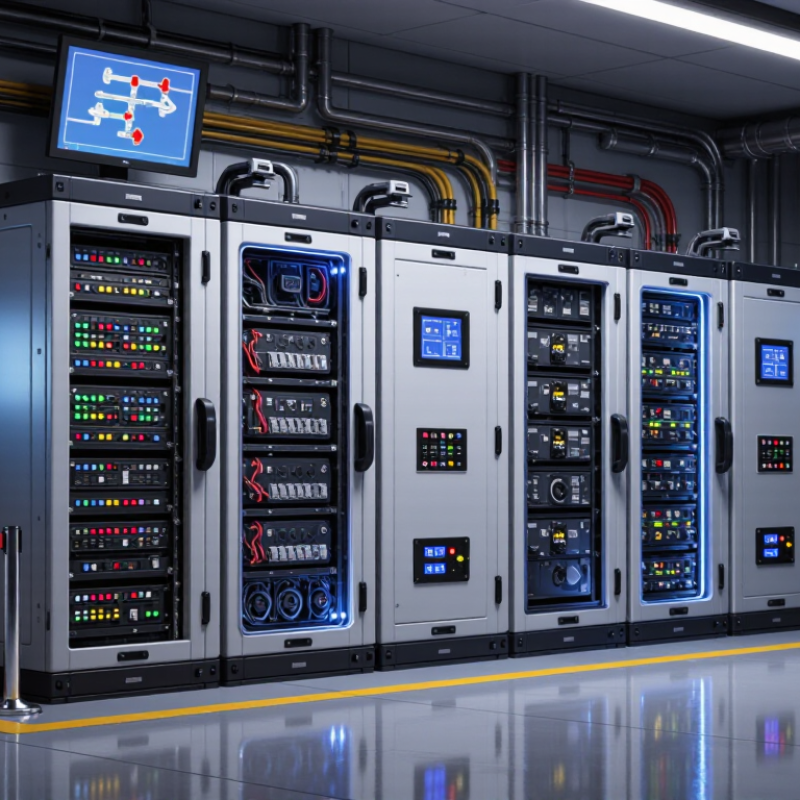
An automatic transfer switch (ATS) monitors the utility supply and connects a facility to a backup source when voltage or frequency moves outside set limits. In a typical installation, the switch signals a standby generator, checks that its output is stable, then transfers the load. The sequence may take several seconds. Sensitive equipment may need separate ride-through support.
The return matters too. After utility power stabilizes, the ATS can transfer the load back, often after a delay that prevents switching during a brief fluctuation. Open-transition switches break the first connection before making the next; closed-transition designs briefly overlap sources when conditions allow.
Uptime Institute’s 2024 Annual Outage Analysis found that 54% of respondents said their most recent significant outage cost more than $100,000. That figure covers outages broadly, not ATS failures specifically, but it shows why transfer reliability deserves attention.
An ATS cannot fix a failed generator, poor wiring, or neglected maintenance. Test the complete system under realistic load. Settings can drift, too.
The overlooked detail is often the return sequence.
How ATS Units Are Classified by Switching Technology
Automatic transfer switches are best classified by how their contacts move between the normal and alternate power sources. In an open-transition unit, one source disconnects before the other connects. The load experiences a brief interruption, which is usually acceptable for lighting and many general-purpose circuits. A delayed-transition design adds a neutral pause between sources. That pause can help motor voltage decay before reconnection, reducing the risk of an out-of-phase transfer.
Closed-transition switches connect the alternate source just before disconnecting the normal one. This creates a short period of overlap and can prevent interruption, but the sources must be properly synchronized. Solid-state switches use semiconductor devices rather than moving contacts, enabling very rapid transfers for sensitive electronic loads. Speed is not everything. A fast transfer is not automatically a better one.
These categories can overlap: a switch may be described by both its contact mechanism and its transition mode. During selection, check the load’s tolerance for interruption, motor starting behavior, and the switch’s rated current and fault withstand capacity. Commissioning tests should confirm that the actual transfer sequence matches the design. Small timing differences matter. I would not assume that a “fast” label alone proves suitability.
Ten Common ATS Types and Their Defining Features
Automatic transfer switches are described by both transfer behavior and construction, so the categories can overlap.
Open-transition ATS briefly disconnect the load before connecting the alternate source. Delayed-transition ATS add a pause, useful when motors need time to shed residual voltage. In-phase ATS wait until source waveforms are suitably aligned. Closed-transition ATS briefly connect both sources together, while soft-loading ATS shift load gradually between them.
That distinction matters.
Other common types differ mechanically. Contactor-based ATS use compact switching contacts and suit many standard loads. Molded-case circuit-breaker ATS use breaker mechanisms that can provide overcurrent protection. Power-frame-breaker ATS handle larger currents and are often selected for demanding installations.
Bypass-isolation ATS let technicians isolate the main switch for service while a bypass path keeps critical loads supplied. Service-entrance-rated ATS can serve as the building’s service disconnect when designed and installed for that role.
Pole configuration is another useful type label.
Three-pole units switch three phases but leave the neutral connected; four-pole units switch the neutral too. Check the grounding arrangement before choosing.
A real panel rarely fits one label neatly. Transfer time, fault ratings, generator capacity, and load behavior all matter, and a motor that looks small on paper may still cause trouble at startup. Verify the design against the equipment documentation and have a qualified electrical professional review the installation.
Comparing ATS Types by Load, Speed, and Power Source
Top 10 Types of Automatic Transfer Switches
Comparing ATS Types by Load, Speed, and Power Source
Automatic transfer switches differ in how they handle load, transfer time, and available power sources. An open-transition ATS disconnects one source before connecting another, creating a brief interruption. It suits many lighting and general-purpose loads. Delayed-transition models add a pause between sources, which can help when motors need time to slow down. Closed-transition switches briefly overlap sources, but only where source synchronization and system design allow it.
Other common options include soft-load, static, bypass-isolation, and service-entrance-rated ATS units. Some designs switch between utility power and a generator; others manage two generators or three sources. These categories can overlap, so “ten types” is not always a clean technical division. Static switches transfer quickly, but their suitability depends on load behavior and the power electronics involved. A fast transfer is not automatically the best transfer.
Tips: Start with the actual load list. A server rack, a pump, and a small office panel have different needs. Check motor starting current, acceptable interruption time, and source capacity with a qualified electrical professional. Then compare switch ratings and control features. Small details matter. I would not choose by speed alone; I have seen that priority overlook practical maintenance needs.
Top 10 Types of Automatic Transfer Switches — Comparing ATS Types by Load, Speed, and Power Source
| # | ATS Type | Typical Load Fit | Transfer Speed / Behavior | Common Power-Source Pairing | Key Consideration |
|---|---|---|---|---|---|
| 1 | Open-Transition ATS (break-before-make) | General building loads, including lighting, HVAC, and non-sensitive equipment | Disconnects the preferred source before connecting the alternate source. Mechanical switching commonly interrupts power for tens to hundreds of milliseconds after the alternate source is available. | Utility to generator; utility to utility | Widely used and avoids paralleling the two sources. Loads sensitive to even a brief interruption may need separate ride-through protection. |
| 2 | Delayed-Transition ATS | Motors, transformers, and loads that may retain residual voltage after disconnection | Introduces a programmed neutral interval, often adjustable from fractions of a second to several seconds, before connecting the alternate source. | Utility to generator; generator to utility | The delay can help reduce out-of-phase re-energization effects. The load must tolerate the intentional interruption. |
| 3 | Closed-Transition ATS (make-before-break) | Loads where a brief interruption is undesirable, such as data, process, and commercial facilities | Briefly connects both sources in parallel during transfer when voltage, frequency, and phase conditions are suitable; overlap is typically limited to a short interval. | Utility to generator; dual utility feeds | Requires synchronization and appropriate utility approval and protection. It is not suitable for every source arrangement. |
| 4 | Soft-Load Transition ATS | Large motor or facility loads where abrupt load changes could affect source stability | Transfers load gradually by controlling the power shared between sources; the ramp generally takes longer than a simple open transition. | Utility to generator; generator to utility | Can reduce sudden loading or unloading of a generator, but requires compatible controls and sources capable of parallel operation. |
| 5 | Static Transfer Switch (STS) | Critical electronic loads, including data-processing and control equipment | Uses solid-state switching devices; transfer can occur in a few milliseconds when the alternate source is available and within acceptable limits. | Two independent utility feeds; utility and conditioned or generator-backed sources | Very fast switching, but source compatibility, fault-current coordination, and heat management are important. Generator start time is additional. |
| 6 | Contactor-Based ATS | Common low-voltage distribution loads in commercial and light-industrial facilities | Electromechanical operation; transfer time depends on the contactor, controller, and programmed delays, and is generally measured in tens to hundreds of milliseconds once the source is ready. | Utility to generator; utility to utility | Often compact and suited to frequent automatic operation. Confirm the required short-circuit rating and withstand performance for the installation. |
| 7 | Circuit-Breaker-Based ATS | Higher-current distribution, industrial systems, and installations requiring breaker-based protection | Transfer time varies with breaker mechanism and control sequence; it is generally slower than solid-state switching and may include programmed delays. | Utility to generator; dual utility feeds | Can provide a robust switching and protection arrangement. Breaker ratings, interlocking, and coordination must match the system design. |
| 8 | Bypass-Isolation ATS | Critical facilities that require ATS inspection or maintenance without interrupting the load | The automatic transfer mechanism has a design-dependent transfer time; separate bypass paths allow the ATS section to be isolated for service. | Utility to generator; dual utility feeds | This is an ATS configuration, not a distinct transfer mode. Bypass operation depends on correct switching sequence and equipment design. |
| 9 | Service-Entrance-Rated ATS | Buildings where the transfer switch is installed at the service entrance and serves as the main disconnecting equipment | Transfer speed follows the underlying switching mechanism and transition mode; service-entrance rating does not itself determine transfer time. | Utility service to generator; utility service to an alternate utility feed | Must be specifically listed and configured for service-entrance use. Grounding, bonding, and overcurrent-protection requirements need careful review. |
| 10 | Multi-Source ATS | Facilities with several available supplies or a prioritized backup-power arrangement | Sequence and timing are controller-configured; the switch selects among eligible sources according to priority, availability, and programmed logic. | Utility, one or more generators, and/or other qualified AC sources | Source count and control logic vary by design. Each source must meet the system’s electrical limits before it can be connected to the load. |
Note: Transfer times are indicative, not guaranteed specifications. Actual performance depends on the equipment, transition mode, settings, source conditions, and applicable standards. Generator start and stabilization time is additional to the switching interval.
Choosing an ATS for a Specific Electrical System
Top 10 Types of Automatic Transfer Switches
Choosing an ATS for a Specific Electrical System
Choosing an automatic transfer switch starts with the load, not the product category. List essential circuits, their voltage, phase, and normal current. Then check motor-starting surges, short-circuit ratings, and whether the backup source is a generator or a second utility feed. A pump may draw several times its running current at startup. That detail can change the required switch rating.
Reliability targets matter too. The U.S. Energy Information Administration reported that average electricity interruption duration reached about 5.5 hours per customer in 2022, including major events; without them, it was about 2.4 hours. These figures do not predict a specific site’s risk, but they help explain why homes, clinics, and data rooms may need different backup strategies. NFPA 110 sets a 10-second performance class for certain emergency power systems. That is a design requirement for those systems, not a universal ATS rule.
Choose open-transition switching when a brief break is acceptable. Closed-transition models can reduce interruption, but require compatible sources and careful engineering. Delayed-transition designs may suit loads that need residual voltage to decay before reconnection. Bypass-isolation equipment can support maintenance without leaving critical loads unprotected. Uptime Institute’s 2024 outage analysis attributed 54% of significant outages in its dataset to power issues. The number is sobering, though it does not prove an ATS alone would prevent them. Review coordination, maintenance access, and generator response with a qualified electrical engineer; real installations rarely fit a tidy chart.
