7 Tips for Choosing a Tractor Hydraulic Ram
Choosing a Tractor Hydraulic Ram is not just a matter of matching its length to the space beneath a tractor. The ram must suit the machine’s hydraulic pressure, available flow, mounting points, stroke, and intended load. A mismatch can cause slow lifting, uneven movement, or strain on connected components. Small details matter.
Industry references help frame the decision. The USDA National Agricultural Statistics Service’s 2022 Census of Agriculture includes farm machinery and equipment data, including tractor counts by horsepower range. Nebraska Tractor Test Laboratory reports provide model-specific performance information, including hydraulic system measurements where available. These sources offer useful context, but neither replaces checking the specifications of your own tractor and attachment. ISO 4413:2010 also sets general safety requirements for hydraulic fluid power systems and components. Pressure is not flow.
The seven tips ahead focus on practical checks: verify pressure and flow, measure the required stroke, inspect mounting dimensions, and confirm the ram’s load capacity. Compare the replacement with the tractor’s manual and the attachment maker’s specifications before ordering. A tidy product listing can still leave out a critical dimension. Even a careful checklist has limits; when specifications conflict or remain unclear, ask a qualified dealer or hydraulic technician to verify the fit.
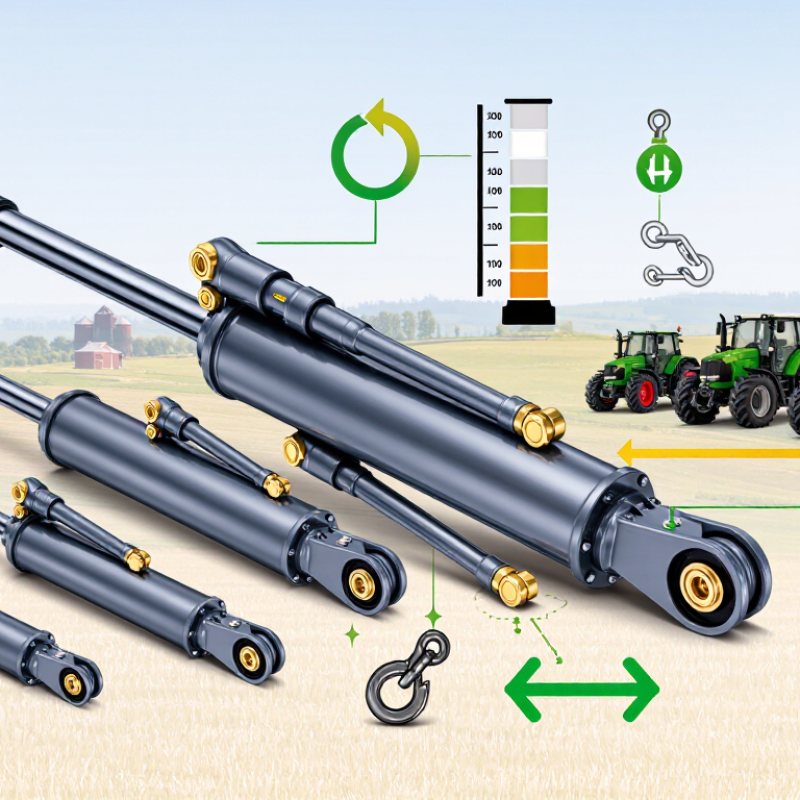
Identify the Tractor’s Hydraulic System and Required Ram Type
Before choosing a tractor hydraulic ram, identify how the tractor’s hydraulic system works. Check the operator’s manual for system pressure, pump flow, and whether the control valve is open-center or closed-center. These details matter: a ram may fit physically but perform poorly if the valve and hydraulic supply are incompatible. If the manual is missing, read the markings on existing components and ask a qualified service technician to verify them. Guessing is expensive.
Next, determine whether the job needs a single-acting or double-acting ram. A dump bed may need hydraulic force in one direction and gravity to lower it; a loader attachment often needs powered movement both ways. Look at the existing hose connections and count the ports, but confirm their function rather than relying on appearance alone. Measure the mounting-pin diameter, closed length, and stroke. A tape measure helps. So does a photo.
I have seen measurements taken with an attachment partly raised, which can give a misleading stroke estimate. Lower and secure the equipment before measuring, and compare the ram’s pressure rating with the tractor’s specifications. Keep some doubt in the process: worn hoses, altered brackets, or a replacement valve can make an older setup differ from its original configuration. When the system details remain unclear, pause before ordering.
Match Bore, Stroke, Working Pressure, and Load Capacity
A tractor hydraulic ram must match the machine’s measured pressure, not a guessed “typical” value. Check the manual, then confirm pressure with a suitable gauge under operating conditions. ISO 4413:2010 sets general safety requirements for hydraulic systems; its practical lesson is simple: never size a cylinder beyond the pressure rating of any connected component. Bore controls extension force: pressure multiplied by piston area. At 2,500 psi, a 3-inch bore produces about 17,700 pounds of theoretical extension force. Real force will be lower because of losses.
Tip: Match stroke to travel. Measure the attachment from fully retracted to fully extended, and leave clearance at both ends. A longer stroke can create interference or side-loading. For a 3-inch bore with a 2-inch rod, the rod-side area is smaller, so retraction force is about 9,800 pounds at 2,500 psi, before losses. Check both directions against the load and linkage geometry. ASABE EP496.3 offers agricultural machinery management guidance, but your tractor’s own specifications remain the controlling data.
Tip: Check load capacity and mounting. A ram’s rated force does not guarantee the pins, brackets, or implement can take that force. Inspect for bent mounts, worn pin holes, and uneven loading. Measure under load. I would recheck the pressure and travel after installation; small measurement errors can matter.
7 Tips for Choosing a Tractor Hydraulic Ram — Match Bore, Stroke, Working Pressure, and Load Capacity
How to read this chart: A larger bore produces more theoretical extension force at the same pressure. Values assume 2,500 psi and ideal conditions; actual force is lower due to losses. Match bore and working pressure to the required load, choose a stroke that provides the needed travel, and allow for a suitable safety margin. Retraction force is lower because the rod reduces the effective piston area.
Check Mounting Dimensions, Pin Size, and Hose Connections
Before choosing a tractor hydraulic ram, measure the mounting points on the machine, not just the old cylinder’s body. Record the pin-to-pin distance with the ram fully retracted and fully extended. Check the pin diameter, mounting width, and whether each end uses a clevis, eye, or another fitting. Small errors matter. A ram that looks close may bind at the end of its stroke or place excess strain on a bracket.
Compare bore and rod diameters when you can find them in the service information. These affect lifting force and operating speed, so matching only the overall length may not be enough. I’ve found that dirt and worn pin holes can make measurements misleading; clean the area and measure across unworn surfaces. Check twice. If dimensions conflict with the machine manual, pause and verify before ordering.
Hose connections deserve the same care. Note the port location and direction, thread type, and hose size, then compare them with the replacement ram’s specifications. A fitting that screws in partway is not necessarily compatible. Don’t force it. Also confirm that hose routing leaves clearance through the full lift range, with no sharp bends or contact against moving steel. Release hydraulic pressure before disconnecting lines, and use the machine’s service instructions to confirm the correct connection details.
Compare Cylinder Materials, Seals, and Corrosion Protection
A tractor hydraulic ram works through mud, pressure washing, and long idle periods. Compare the barrel, rod, and seals as one system. Honed carbon steel is common and strong, but damaged paint can expose the tube to rust. Stainless steel can improve corrosion resistance, yet grade and load capacity still matter. The rod deserves close attention: a nick can cut a seal during each stroke.
ISO 9223:2012 classifies C4 atmospheric exposure as causing 50–80 micrometres of first-year carbon-steel corrosion loss. That figure describes atmospheric exposure, not a tractor’s exact service life. Still, it shows why coating quality, drainage, and regular inspection matter. Salt, fertilizer dust, and trapped water can turn small coating damage into pitting. Easy to miss.
Seal material must match the hydraulic fluid, temperature, and dirt exposure. Nitrile often suits mineral hydraulic oil; polyurethane can resist abrasion, while fluorocarbon compounds may suit higher temperatures or certain fluids. Formulations vary, so check the seal supplier’s compatibility data rather than relying on material names alone. Look for a rod wiper that sheds grit, plus a seal that tolerates the system’s pressure and temperature peaks. One trade-off remains: tougher seals may add friction, and that can affect smooth movement.
Review Compatibility, Safety Ratings, and Maintenance Needs
A tractor hydraulic ram must match the machine and the job, not just look similar. Check the ram’s bore, stroke, closed length, and pin diameter against the original part or mounting points. A few millimeters can cause binding. I learned that the hard way. Confirm that the tractor’s hydraulic pressure and flow suit the ram, and that hose fittings match without adapters that create weak connections.
Read the rated working pressure and load capacity, then compare them with the tractor’s hydraulic system and the implement’s demands. The ram’s force depends on pressure and piston area, but a higher rating does not make every setup safe. Check the hoses, couplers, and fittings too; the lowest-rated component sets a practical limit. Keep people clear of raised equipment, use mechanical supports during inspection, and never rely on hydraulic pressure alone. A slow leak still matters.
Maintenance needs are easy to underestimate. Inspect the polished rod for scratches, rust, or dried mud that could damage seals. Look for wet spots around the seals and fittings, and check hoses for cracks or bulges. Keep exposed rods clean, use the correct hydraulic fluid, and follow the tractor and ram service instructions. I sometimes missed small seepage during a quick check. A closer look would have caught it sooner.