
skip to Main Content

Top Silicone Universal Lid Buying Guide for Global Buyers?

Choosing the right Silicone Universal Lid can simplify food storage, reduce disposable packaging, and support more efficient kitchen operations. Yet “universal” does not mean perfectly compatible with every bowl, pan, jar, or container. Global buyers need practical evidence, not attractive claims. Diameter ranges, silicone grade, thickness, sealing strength, and temperature performance all influence real-world value.

A reliable buying decision begins with the product’s intended use. A lid stretched over a glass bowl should grip firmly without excessive tension. Its edge should remain stable after repeated washing, while the center should resist warping during refrigeration or gentle heating. Buyers should review food-contact documentation, manufacturing controls, packaging quality, and supplier consistency. Regional requirements may differ, so certificates and test reports should be verified for the target market.

Small details matter. Does the lid have a visible tab? Can users remove it with wet hands? Will printed sizing remain readable after months of cleaning? These questions reveal practical experience. No product is flawless. Softer silicone may seal better but attract lint, while thicker silicone may last longer but feel less flexible. Some suppliers provide strong samples yet deliver inconsistent production batches. That risk deserves attention. This guide examines material quality, size selection, performance testing, supplier evaluation, pricing, and international purchasing considerations, helping buyers make a confident decision without relying on vague universal claims.
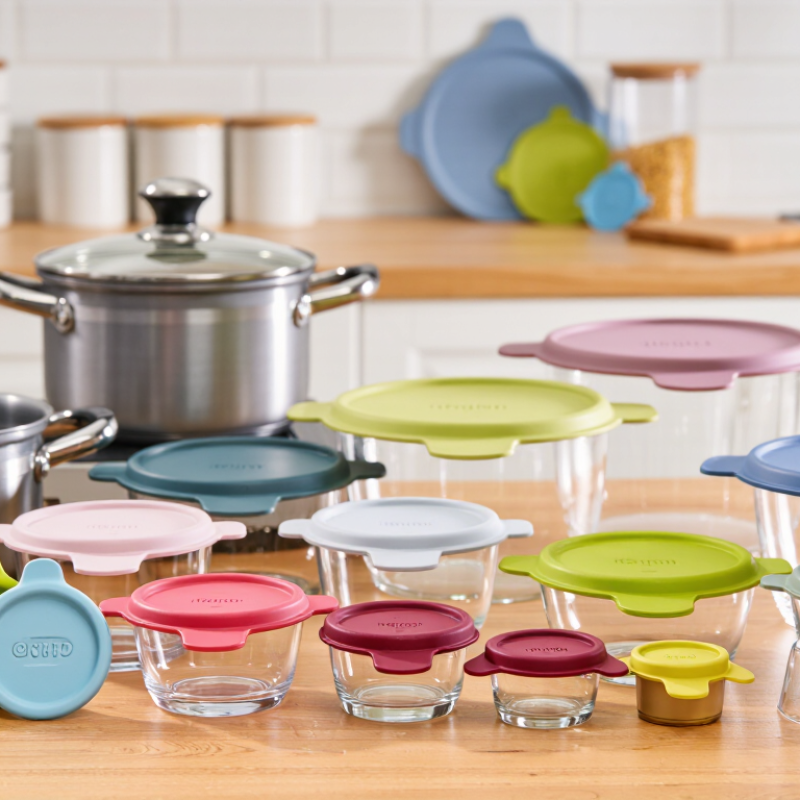
Top Silicone Universal Lid Buying Guide for Global Buyers?

Define Universal-Lid Fit by Vessel Diameter, Rim Shape, and Use Case

A universal silicone lid is not truly universal. Reliable fit begins with the vessel’s outside diameter, measured across the rim, not the base. Use a ruler or caliper, and record measurements in millimeters. A two-millimeter difference can change sealing performance. For global purchasing, confirm whether suppliers use metric or imperial dimensions. Do not rely only on labels such as small, medium, or large.

Rim shape matters just as much. Straight, rolled, flared, and uneven rims create different contact points. A flat lid may seal well on a smooth bowl but slip from a pouring spout. Textured rims can also reduce grip. Check the rim after washing, because grease and detergent residue affect adhesion. Glass, stainless steel, ceramic, and plastic vessels may require different flexibility levels. The lid should stretch firmly without excessive force.

Use case defines the practical fit. A lid for refrigerator storage may need light tension and easy removal. A lid for mixing bowls needs stronger edge retention during stirring. For hot contents, verify the silicone’s stated temperature range and leave room for steam release when necessary. I once approved a sample by diameter alone. It fitted the bowl, yet lifted near the handle. That mistake showed me that a measurement sheet needs rim photos, vessel drawings, and real-use testing. A small trial batch is wiser than a large order based on assumptions.

Compare Silicone Grades by Shore A 40–70 and −40°C to 230°C Ratings

Silicone Universal Lids should be compared by Shore A hardness, not appearance alone. Shore A 40–50 feels softer and conforms well to bowls with uneven rims. Shore A 60–70 offers stronger resistance to stretching and puncture. I once treated 60 Shore A as automatically better. That was wrong. A rigid lid may seal poorly on a thin, flexible container.

ASTM D2240 and ISO 7619-1 define common hardness testing methods. Buyers should request test results, test temperature, and sample thickness. A reported Shore A value without these details is incomplete. The −40°C to 230°C range also needs careful reading. It usually describes a material capability, not permanent service under pressure. IEC 60216 thermal-endurance guidance evaluates aging over time, rather than approving one temperature claim. At 230°C, repeated heating can still reduce elasticity.

Look for compression-set results after heat aging. Lower compression set usually means better recovery after long sealing periods. Ask for data at 175°C or 200°C, not only room temperature. Food-contact applications require separate migration and extractables documentation under applicable regulations. Market reports from Grand View Research identify silicone as a growing material sector, but market growth does not prove lid performance. A practical sample test matters more: place the lid on glass, stainless steel, and a flexible plastic container. Check sealing after refrigeration, hot-water exposure, and repeated stretching. Small gaps reveal more than a brochure.

Check Food-Contact Compliance: FDA 21 CFR 177.2600, EU 1935/2004

Top Silicone Universal Lid Buying Guide for Global Buyers

Check Food-Contact Compliance: FDA 21 CFR 177.2600, EU 1935/2004

A silicone universal lid touches food directly, so material compliance matters more than attractive packaging. Ask for documentation covering FDA 21 CFR 177.2600, especially when the lid is designed for repeated use. This regulation concerns extractable substances from rubber articles used with food. The supplier should identify the silicone formulation, intended food types, contact time, temperature, and test conditions. “Food grade” alone is not enough.

For European sales, check alignment with EU Regulation 1935/2004. The material must not transfer substances that endanger health, change food composition, or damage its taste and smell. Request migration test reports and a Declaration of Compliance when applicable. Also review manufacturing controls under relevant good manufacturing practice requirements. Test results should match the actual lid, not only a similar silicone sheet.

Look closely at use conditions.

A lid used on hot soup differs from one covering cold fruit. Confirm performance after washing, stretching, freezing, and repeated heat exposure. Inspect the rim for tears, sticky residue, strong odors, or color changes. These details can reveal weak curing or poor quality control, although visual inspection cannot replace laboratory testing. Keep batch numbers and supplier records for traceability. A common purchasing mistake is accepting an old report without checking its test temperature or food simulant. Compliance documents can be genuine yet unsuitable for the product’s real use. When requirements remain unclear, obtain an independent laboratory review before placing a large order.

Top Silicone Universal Lid Buying Guide for Global Buyers? - Check Food-Contact Compliance: FDA 21 CFR 177.2600, EU 1935/2004

Buying Dimension Recommended Specification / Verified Data FDA 21 CFR 177.2600 Check EU 1935/2004 Check Documents or Tests to Request
Material identity Food-contact-grade silicone elastomer; obtain the exact formulation and supplier material specification. Confirm the formulation is suitable for repeated food contact and falls within the applicable requirements for rubber articles. The finished article must not transfer substances to food in quantities that endanger health or cause unacceptable changes in food composition or organoleptic properties. Material specification, composition statement, supplier compliance declaration, and traceability records.
FDA extraction testing Testing should reflect the intended food type, contact time, temperature, and repeated-use conditions. Request test results for the applicable extractive limits using the specified simulants and conditions for the finished lid. FDA results alone do not establish EU compliance; EU assessment and supporting documentation are also required. Accredited laboratory report, test method, simulant, time/temperature condition, sample description, and result units.
EU framework compliance Assess the finished lid under Regulation (EC) No 1935/2004 and manufacturing controls under Regulation (EC) No 2023/2006. EU documentation does not replace the FDA assessment when the product is sold into the United States. Verify safety, inertness, traceability, good manufacturing practice, and intended-use conditions. Silicone may also require assessment under applicable national or member-state guidance where relevant. EU Declaration of Compliance or equivalent supplier declaration, migration assessment, GMP statement, and traceability information.
Temperature range Specify the validated operating range. A common silicone product target is approximately −40°C to 200°C, but the actual limit depends on formulation, design, and use. Temperature is not a blanket FDA approval claim; extraction and safety data must cover the proposed use conditions. The intended temperature and contact duration must be included in the risk and migration assessment. Technical data sheet, oven/freezer validation, thermal cycling results, and use-condition statement.
Intended food contact State whether the lid is intended for aqueous, acidic, alcoholic, fatty, dry, hot, frozen, or mixed foods. The applicable extraction conditions depend on the food-contact scenario and repeated-use profile. Migration and sensory assessment should represent the foods and conditions reasonably expected during use. Intended-use matrix, food simulant selection rationale, migration report, and sensory/odour evaluation where applicable.
Odour and taste neutrality Choose low-odour, post-cured silicone and verify that the lid does not impart taste or odour under normal use. Chemical compliance does not automatically prove acceptable sensory performance; practical testing is recommended. Food-contact materials must not cause unacceptable changes in food characteristics, including taste or smell. Organoleptic test report, post-curing specification, production batch information, and cleaning-condition results.
Lid diameter and tolerance List the supported vessel diameter range, for example 70–230 mm, plus dimensional tolerances and fit limitations. Dimensional fit is not a regulatory compliance criterion, but poor fit can increase leakage and misuse risk. Provide clear instructions so the article is used as intended and remains traceable through the supply chain. Engineering drawing, tolerance table, fit-test records using representative containers, and user instructions.
Seal performance Define leak-resistance criteria for liquids, powders, and tilted or inverted storage; universal lids generally seal best on smooth, rigid rims. Functional performance is separate from 21 CFR material compliance and must be validated through product testing. Use instructions and foreseeable-use assessment should address leakage, detachment, and contamination risks. Leak test protocol, vacuum or pressure test where relevant, tilt test, repeated-use test, and container compatibility results.
Mechanical durability Assess tear strength, compression set, flexibility, puncture resistance, and repeated stretching of the sealing edge. Mechanical properties are not a substitute for chemical extraction compliance. The product should remain safe and suitable throughout its reasonably foreseeable service life. Tensile/tear data, compression-set results, accelerated ageing, cyclic opening tests, and visual inspection criteria.
Cleaning and dishwasher use Only claim dishwasher suitability after validating detergent, heat, drying, and repeated-cycle exposure. Cleaning exposure should be considered when it can affect extractives, odour, surface condition, or product life. Provide cleaning instructions and ensure continued compliance after the stated cleaning process. Dishwasher-cycle test, detergent compatibility data, post-cycle migration or sensory assessment, and care instructions.
Colourants and additives Use documented food-contact colorants and additives; black, red, and highly pigmented parts need the same finished-article verification as translucent parts. The full colored formulation, not only the base silicone, must be included in the compliance assessment. All constituents and foreseeable migrants must be assessed for the intended application. Colorant/additive declarations, formulation change-control procedure, and finished-color migration or extractive results.
Traceability and labeling Use batch or lot identification and retain production records for the finished product. Maintain records linking the tested material and production lot to the supplied lid. Regulation (EC) No 1935/2004 requires traceability through relevant stages of manufacture and distribution. Lot code, production date, packaging label, supplier audit records, and recall/complaint procedure.
Key purchasing decision Approve only when material, finished-product performance, intended-use conditions, and documentation are consistent. Do not rely on the phrase “FDA approved”; request evidence for the specific formulation and article. Do not rely on an “EU compliant” label without a documented assessment covering 1935/2004, GMP, and the actual use. Signed compliance statement, current laboratory reports, technical file, production controls, and change-notification commitment.
Important buyer note: FDA 21 CFR 177.2600 and EU Regulation (EC) No 1935/2004 are not blanket approvals for every silicone lid. Compliance depends on the exact formulation, finished article, food type, contact time, temperature, repeated-use conditions, manufacturing controls, and the destination market.

Verify Seal Quality with ASTM D2240 Data and Leak-Test Results

ASTM D2240 hardness data is a useful starting point when evaluating silicone universal lids. For many lids, Shore A readings reveal whether the compound is unusually soft, hard, or inconsistent. Yet hardness is not seal proof. An experienced buyer requests the test method, reading location, conditioning time, and batch number. Without these details, a neat-looking certificate may hide weak process control.

Ask for leak-test results using the lid’s actual container size and closure geometry. Testing a flat sample is not enough. A controlled pressure or vacuum test should include temperature, dwell time, fixture details, and pass/fail limits. Inspectors should watch for bubbles, pressure loss, edge lifting, and slow recovery after removal. Record several samples, not only the best one. Small leaks matter.

Compare hardness variation with leak performance across the same production lot. A lid may measure 55 Shore A and still leak around a rough rim or oversized vessel. Surface finish, wall thickness, stretching, and compression all deserve attention. For global purchasing, request dated reports, instrument calibration evidence, and traceable sample identification. Acceptance limits should be agreed before shipment, not negotiated after failure. That step is easy to overlook. I would also repeat a simple in-house check, because laboratory data can miss handling damage. Not perfect, but practical.

Evaluate Global Supply Terms: MOQ, Incoterms, HS Code, and Testing Costs

Global buyers should evaluate silicone universal lids through supply terms, not appearance alone.

Ask suppliers to state the minimum order quantity, or MOQ, by size, color, and packaging type. A factory may quote 1,000 pieces, then apply separate MOQs to each color. That difference can increase inventory quickly. Request a written price ladder for 1,000, 5,000, and 10,000 pieces. Keep the figures comparable.

Incoterms also change the real purchase cost.

Under EXW, the buyer usually arranges factory pickup, export handling, and inland transport. Under FOB, the supplier manages delivery to the named loading port. Under CIF, freight and insurance are included, but destination charges may remain unpaid. Confirm the exact port, transfer point, insurance scope, and payment trigger. I have seen attractive CIF offers become expensive after terminal fees were added.

Confirm the proposed HS code with a qualified customs professional before shipment.

Silicone lids may be classified differently by material, use, or national customs practice. A supplier’s code is useful evidence, not final authority.

Testing costs need similar discipline. Ask whether food-contact migration, odor, heat-resistance, and dimensional tests are included. Request the laboratory name, test standard, sample quantity, and report validity.

Testing one color may not represent every pigment or production batch. This is easy to overlook. A small pilot order can reveal sealing problems, uneven edges, and packaging damage before a larger commitment.

Article Source: