
skip to Main Content

How to Choose the Right Electric Generator?

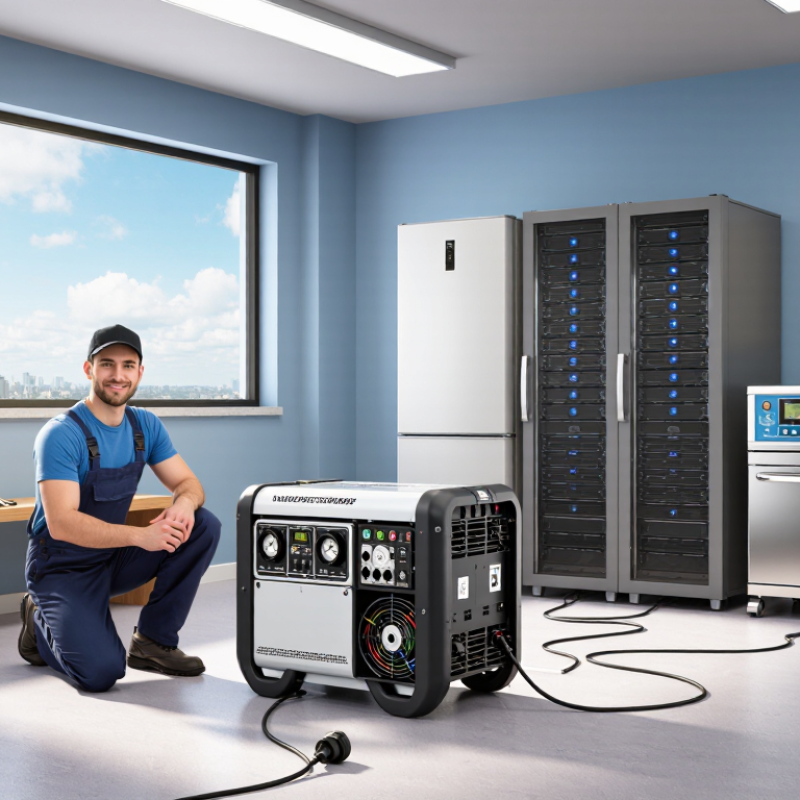
Choosing the right Electric Generator begins with the load, not the advertised wattage. A refrigerator, medical device, pump, and server rack each create different starting demands. The generator must handle running watts, surge watts, voltage, frequency, and transfer time. A neat spreadsheet can still miss motor inrush current.

The International Energy Agency reports that global electricity demand is expected to grow strongly through 2026, driven partly by data centers, industry, and electrification (IEA, Electricity 2024). The U.S. Energy Information Administration also documents how severe weather continues to disrupt electricity delivery across American regions (EIA, Annual Energy Review). These findings make backup planning more practical, not merely convenient. They also reveal an uncomfortable point: climate exposure and grid reliability differ by location. A specification suitable for a warehouse in Arizona may fail in a coastal clinic.

Generac CEO Aaron Jagdfeld has often emphasized, “It’s not a matter of if the power goes out, but when.” That warning supports a disciplined selection process. Consider fuel availability, emissions requirements, noise limits, maintenance access, automatic transfer equipment, and installation space. Diesel may suit high-load commercial use, while natural gas can offer convenient, continuous fuel access. Portable gasoline units may work for short, light-duty needs, but their runtime can disappoint.

No checklist is perfect. Real-world testing matters. Ask an experienced electrician to measure actual loads and verify compliance with local requirements. The best Electric Generator is not always the largest model. It is the one that starts reliably, carries the critical load, and remains serviceable when conditions become difficult.
How to Choose the Right Electric Generator?

Define Your Electricity Needs and Operating Conditions

How to Choose the Right Electric Generator?

Define Your Electricity Needs and Operating Conditions

Choosing a generator starts with an honest load assessment, not a guess based on appliance count. List every device, its running wattage, and its starting surge. Refrigerators, pumps, compressors, and air conditioners may briefly demand two to seven times more power.

Measure the important loads. Do not rely only on labels.

Add essential lighting, heating, medical equipment, and communication devices. Then decide what can operate at the same time. A qualified electrician can verify the calculation and recommend a safe transfer arrangement. Oversizing wastes fuel and may cause poor performance at light loads. Undersizing can overheat the generator and interrupt sensitive equipment.

Operating conditions matter just as much. Note the installation height, outdoor temperature, humidity, dust, and available ventilation. At high altitude, engines usually produce less power. Hot, enclosed spaces also reduce cooling efficiency. A generator near a bedroom may need sound control, while a construction site may require weather protection and stronger filtration.

Fuel availability changes the practical choice. Check storage limits, refueling access, and expected running hours. Think about maintenance intervals, oil checks, battery condition, and emergency access. I once underestimated startup demand from a water pump; the generator ran, but the voltage dipped sharply. That mistake was preventable.

Review the generator’s technical manual and applicable electrical standards before purchase. Record the measured loads, not just estimated figures. Your operating plan may still be imperfect, so leave a sensible capacity margin without paying for unused output.

How to Choose the Right Electric Generator? - Define Your Electricity Needs and Operating Conditions

Application Scenario Typical Essential Loads Estimated Running Load Estimated Maximum Starting Surge Recommended Continuous Generator Output Recommended Surge Capacity Typical Operating Conditions Key Selection Considerations
Small Apartment Backup Refrigerator, LED lighting, Wi-Fi router, laptop, phone chargers, and a small fan Approximately 1,000–1,400 W Approximately 2,000–3,000 W 2,000–2,500 W 3,000 W or more Short outages; limited ventilation; low noise may be important Choose a compact generator with overload protection, low noise, and clean power suitable for electronics
Home Essentials During an Outage Refrigerator, freezer, gas furnace blower, lighting, router, television, and small kitchen appliances used separately Approximately 2,500–3,500 W Approximately 5,000–7,000 W 4,000–5,000 W 7,000 W or more Several hours to multiple days; cold or hot weather may increase operating time Calculate motor-starting demand carefully and avoid operating high-wattage heating appliances simultaneously
Small Workshop Portable air compressor, work lights, battery chargers, drill, circular saw, and shop vacuum Approximately 3,500–5,000 W Approximately 7,000–10,000 W 5,000–7,000 W 10,000 W or more Intermittent use; frequent motor starts; dusty or outdoor environments may be possible Prioritize high surge capacity, sufficient outlet current, grounding, and protection against overloads
Construction or Jobsite Use Multiple work lights, concrete mixer, circular saw, rotary hammer, battery chargers, and a portable compressor Approximately 5,000–7,000 W Approximately 10,000–14,000 W 7,000–10,000 W 14,000 W or more Outdoor operation; long extension cords; changing loads; possible rain, dust, and uneven terrain Use a rugged unit with GFCI protection where required, weather-appropriate placement, and adequate voltage regulation
Large Home With Electric Heating Loads Refrigerator, freezer, sump pump, well pump, lighting, heating system, and selected kitchen circuits Approximately 6,000–9,000 W Approximately 12,000–18,000 W 8,000–12,000 W 16,000 W or more Extended outages; low temperatures; automatic standby operation may be preferred Confirm fuel availability, transfer-switch requirements, pump starting current, and local installation regulations
Remote Cabin or Off-Grid Site Refrigerator, LED lights, water pump, communications equipment, small tools, and battery-charging equipment Approximately 2,000–4,000 W Approximately 4,000–8,000 W 3,000–5,000 W 7,000 W or more Limited fuel access; variable weather; possible low-temperature starting conditions Consider fuel storage, cold-start capability, runtime, maintenance access, and compatibility with renewable-energy systems
Planning rule: Add the running watts of all devices that may operate at the same time, then add the largest starting-watt requirement from a motor-driven appliance. Select a generator with additional capacity rather than operating continuously at its maximum rating.
Wattage values are typical planning estimates. Actual requirements vary by equipment model, motor design, voltage, altitude, temperature, and operating method. Check each appliance nameplate or manufacturer specification before final selection.

Compare Generator Types, Fuel Options, and Power Ratings

Choosing an electric generator starts with the load, not the advertised wattage.
Portable conventional units suit pumps, tools, and short outages. Inverter generators usually provide cleaner power for sensitive electronics, but their output is often lower. Standby systems respond faster and connect to fixed wiring, although installation costs and maintenance are higher.

Fuel choice changes daily practicality.
Gasoline is widely available but stores poorly and can degrade in small engines. Diesel supports long running periods and heavy loads, but it may be noisy and requires fuel-quality control. Propane stores longer, yet cold weather can reduce vapor pressure. The U.S. Energy Information Administration reports that fuel prices vary substantially by region and season, so local availability deserves more attention than a simple price comparison. That point is easy to miss.

Read two ratings.
Running watts cover continuous demand; starting watts handle motor surges. A refrigerator, sump pump, or compressor may briefly need two to three times its operating power. Add essential loads, then leave practical headroom rather than sizing at the limit. The U.S. Department of Energy recommends matching generator capacity to connected loads, while NFPA 110 emphasizes reliable emergency power performance. In my own load checks, people often forget chargers, lights, and control boards. Small omissions become inconvenient. Recheck the calculation.
A 5,000-watt load may need a generator rated above 6,000 watts when startup demand and future equipment are considered.

Check Essential Features for Safety, Control, and Convenience

Choosing an electric generator starts with safety, not wattage. The U.S. Consumer Product Safety Commission reports roughly 85 annual carbon-monoxide deaths linked to portable generators in recent years. That makes an automatic CO shutoff more than a selling point. Place the unit outdoors, far from doors and windows. Never trust a sensor to replace ventilation. It cannot.

Control features should match real use. A clear fuel gauge, overload protection, low-oil shutdown, and a physical emergency stop reduce hurried decisions. The U.S. Energy Information Administration recorded about 5.5 hours of average U.S. electricity interruptions in 2022, excluding major events. During a long outage, remote monitoring can show runtime and fault codes before a midnight walk outside. Still, wireless controls can fail. Test local controls every few months. Also verify the starting load of pumps, refrigerators, or medical equipment, not only their running wattage.

Convenience must include safe connection. A properly installed transfer switch helps prevent dangerous backfeeding into utility lines, while NFPA 110 defines performance expectations for emergency and standby power systems. Look for GFCI protection, weather-resistant outlets, stable handles, and manageable noise. Read the manual before buying. Manuals are often ignored, yet they reveal grounding instructions and service intervals. No checklist is perfect. A powerful generator may become useless when rain, cold, or stress arrives. Choose controls you can operate with gloves and poor lighting.

Evaluate Installation Requirements, Maintenance, and Running Costs

How to Choose the Right Electric Generator?

Choosing an electric generator starts with the installation site, not the advertised power rating. Measure the available space, ventilation, access routes, and distance from electrical panels. A basement may seem convenient, but poor airflow can create serious safety and maintenance problems. Outdoor installation needs weather protection, stable ground, and suitable clearance around the exhaust.

List every essential load, including pumps, refrigerators, lighting, and control equipment. Note each appliance’s starting current, because motors often demand more power briefly. An electrician should verify transfer-switch compatibility and grounding requirements. Local electrical rules can differ. Guessing here can become expensive.

Maintenance affects reliability more than many buyers expect. Check oil levels, filters, battery condition, coolant, and fuel quality according to the service schedule. Keep a written log with dates and operating hours. Small neglect becomes a large repair. I have found that accessible service points save time, although compact designs sometimes make routine checks awkward. That trade-off deserves honest attention.

Tips:
Compare total running costs, not only purchase price. Estimate fuel use per hour, scheduled servicing, replacement parts, noise control, and professional inspections. Choose a generator that usually operates near its efficient load range. An oversized unit may waste fuel. An undersized unit may suffer premature wear. Leave some capacity for future equipment, but avoid paying for power you will rarely use.

How to Choose the Right Electric Generator?

Evaluate installation requirements, maintenance, and running costs before selecting a generator.

Representative planning estimates in USD for common generator sizes. Annual running cost assumes 500 operating hours, typical fuel consumption, and average U.S. fuel prices of $3.50 per gallon for gasoline, $4.00 per gallon for diesel, and $1.20 per therm for natural gas. Actual costs vary by load, location, installation complexity, service rates, and fuel prices.

Match the Generator to Your Budget and Long-Term Usage Plans

How to Choose the Right Electric Generator?

Your budget should cover more than the purchase price. Include fuel, oil, filters, battery replacement, storage, and annual servicing. A low-cost generator may become expensive after several seasons. I once underestimated starting power from a freezer and water pump. The generator struggled, although their running wattage looked acceptable. Check both running watts and starting watts before buying. List essential appliances, then add their demands carefully. Leave a safety margin of about 20 percent for unexpected loads.

Tips: Record each appliance’s wattage from its label. Ask a qualified electrician to verify the total. If you need household circuits, use a properly installed transfer switch. Never connect a generator directly to a wall outlet. That shortcut can endanger workers and damage equipment.

Think about your long-term routine. Occasional emergency use may suit a smaller portable unit with simple controls. Frequent construction, farm, or backup use requires stronger frames, longer service intervals, and easier access to parts. Fuel availability matters too. Gasoline can degrade during storage, while other fuel systems may require different maintenance. Store fuel only as local regulations permit. Review noise levels if the generator will run near bedrooms or neighbors. I would not choose the cheapest option automatically. However, buying far more capacity than needed also wastes money, fuel, and space. Your plan may change, so allow room for one future appliance.