
Blog
How to Choose a TCU Temperature Controller Machine
Choosing a TCU Temperature Controller Machine is not simply a matter of selecting the highest heating capacity. The correct choice must match the process, fluid, mold, and production rhythm. A machine that performs well at 80°C may struggle near 180°C. Small details matter, including hose length, pump pressure, sensor location, and cooling-water quality.
Thermal-process engineer Dr. Markus Keller states, “A stable process begins with a measured heat balance, not a larger heater.” This principle deserves attention. Before comparing suppliers, identify the required operating range and the actual heat load. Check whether the unit uses water, oil, or another approved heat-transfer medium. Confirm the pump can maintain steady flow through narrow channels. Inspect the controller’s display, alarm functions, and temperature sensor response.
Look closely at the factory floor. Is the machine surrounded by dust, moisture, or limited ventilation? Will operators need quick access to filters and valves? These practical conditions often influence reliability more than brochure specifications. Energy consumption also deserves a realistic review. A larger unit may provide extra capacity, but it can increase operating costs and occupy valuable space.
Experience shows that selection mistakes often begin with incomplete data. I have seen systems chosen from peak temperature alone. That approach can create unstable cycles, noisy pumps, and uneven product quality. A perfect selection is rare. Careful verification is better. Compare heat-transfer performance, control accuracy, maintenance access, safety features, and supplier support together. The best TCU Temperature Controller Machine should deliver repeatable temperatures under real production conditions, not merely impressive figures on paper.
Understanding the Purpose of a TCU Temperature Controller Machine
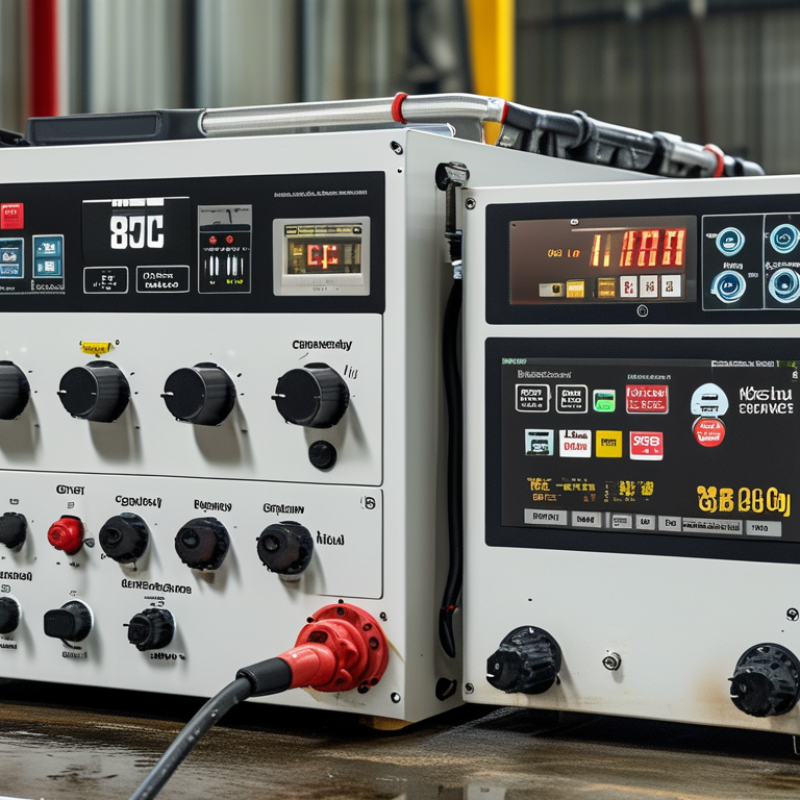
A TCU temperature controller machine manages heating and cooling around a process. It circulates water or thermal oil through molds, reactors, rollers, or test fixtures. Its purpose is not simply to make equipment hot or cold. It holds a stable temperature during production, even when material demand changes.
A suitable TCU should match the process load, fluid type, temperature range, flow rate, and pressure requirement. Check the heating and cooling capacity separately. A machine may reach the target temperature slowly if its heat exchanger is undersized. That detail is easy to miss.
Experienced operators also inspect sensor placement, because a sensor near the outlet may not reflect the hottest point inside a mold. The International Energy Agency reported in Energy Efficiency 2023 that industry remains one of the largest energy-consuming sectors worldwide. This makes efficient circulation and accurate control practical concerns, not optional upgrades.
In real plants, oversized units sometimes waste energy through frequent cycling. Bigger is not always better.
Record actual process temperatures, peak loads, and recovery times before choosing the controller.
My view may be incomplete, especially where seasonal cooling conditions change the load.
Defining Process Temperature, Heating, and Cooling Requirements
How to Choose a TCU Temperature Controller Machine
Defining the process temperature is the real starting point. Record the normal operating temperature, allowable variation, and highest safe limit. Do not rely only on a machine’s advertised range. Your material, tooling, and thermal fluid may behave differently. A stable process often needs control within ±1°C, but some applications require tighter accuracy. Check the temperature at the process point, not only at the controller outlet.
Heating and cooling requirements need separate attention. Calculate the heat needed during startup, including the mass of the mold, vessel, product, and fluid. Then estimate heat loss from exposed surfaces and connecting pipes. Cooling is often underestimated. A hot mold may need rapid cooling after each cycle. That demand can exceed the steady-state load. It happens frequently. Measure real cycle times when possible.
Review flow rate, pressure, fluid compatibility, and control response before selecting the unit. A larger heater cannot fix poor circulation. An oversized cooling system may also cause unstable temperature swings. I have seen operators choose capacity from peak numbers alone, then face slow response at normal production levels. That choice deserves a second look. Use logged temperature data from several cycles, including startup and shutdown. Confirm alarm functions, over-temperature protection, maintenance access, and electrical requirements. Reliable selection comes from matching calculated loads with observed process behavior, not from capacity figures alone.
Comparing TCU Specifications, Control Methods, and Performance
How to Choose a TCU Temperature Controller Machine
Comparing TCU specifications, control methods, and performance starts with the process load. The U.S. Department of Energy’s Industrial Decarbonization Roadmap (2022) reports that process heating uses 51% of manufacturing energy. The IEA’s Energy Efficiency 2023 report also places industry near 37% of global final energy consumption. These figures make control accuracy more than a purchasing detail.
Start with the load.
Check heating capacity, cooling capacity, flow rate, pressure, operating range, and fluid compatibility. A unit rated only by maximum temperature may disappoint during low-load operation. A broader range sounds safer, but it can hide weak control near the target point. I once treated range as the main advantage. That was incomplete. Stability, response time, and repeatability often matter more than peak temperature. For sensitive processes, compare actual deviation, such as ±0.5°C, under changing loads. Ask whether that figure comes from laboratory testing or production conditions. The difference can be uncomfortable.
Control methods deserve equal attention.
PID control is common and reliable when tuning is correct. Cascade control can reduce overshoot when heating and cooling react at different speeds. Feed-forward control may improve response when load changes are predictable. PLC or network communication helps record alarms, trends, and maintenance data. However, more functions do not guarantee better results. Poor sensor placement can undermine an advanced controller. Check sensor accuracy, sampling time, alarm logic, and calibration records before approval. Small details matter.
Evaluating Fluid Compatibility, Safety Features, and System Integration
How to Choose a TCU Temperature Controller Machine
Fluid compatibility should guide every TCU temperature controller decision. Check the process fluid, heat transfer medium, seals, hoses, and internal metal surfaces. A controller may reach the correct temperature but still damage seals or contaminate production. Review viscosity changes at both operating extremes. Request compatibility data from the manufacturer, then compare it with your actual fluid safety documents. Small laboratory trials can reveal swelling, discoloration, or unexpected residue. I have seen clean-looking systems fail because one gasket was overlooked.
Safety features deserve practical testing, not just a checklist review. Look for independent over-temperature protection, low-fluid detection, pressure monitoring, emergency shutdown, and clear alarm records. Confirm that the unit responds safely when a pump stops or a hose becomes blocked. Test the alarm from the operator’s normal position. It should be loud enough. Poorly placed indicators can delay a response, especially in a busy production area.
System integration affects stability, maintenance, and operator confidence. Verify communication protocols, signal types, control accuracy, and available connection points before purchase. The TCU should exchange useful data with the process controller without creating confusing duplicate commands. Check installation space, ventilation, drain access, and service clearance. A compact machine is not always easier to maintain. I once underestimated access around a rear connection. That mistake increased cleaning time. Leave room for calibration tools and future process changes, even when the current layout seems sufficient.
How to Choose a TCU Temperature Controller Machine - Evaluating Fluid Compatibility, Safety Features, and System Integration
| Evaluation Dimension | Water-Based TCU | Pressurized Water TCU | Thermal-Oil TCU | Water-Glycol TCU | Selection Guidance |
|---|---|---|---|---|---|
| Typical Operating Range | Approximately 5–95°C | Approximately 5–140°C | Approximately 50–300°C | Approximately −20–90°C | Choose a range that covers the process setpoint plus startup, shutdown, and control margin. |
| Compatible Fluids | Clean water and approved water-based heat-transfer fluids | Treated water or approved water-based fluids under pressure | Approved synthetic or mineral thermal oils | Water-glycol mixtures formulated for heat-transfer systems | Verify fluid chemistry, operating temperature, viscosity, flash point, and supplier approval before selection. |
| Fluid Compatibility Risks | Scaling, corrosion, biological growth, and poor water quality | Pressure-related leakage, dissolved-gas effects, and corrosion | Oxidation, thermal degradation, coking, and fluid leakage | Concentration imbalance, corrosion, and reduced heat-transfer performance | Use compatible seals, hoses, pumps, heat exchangers, and monitoring instruments. |
| Heating Method | Electric immersion or inline heater | Electric heater designed for pressurized circulation | Electric heater sized for high-temperature oil service | Electric heater with low-temperature control capability | Confirm heater capacity, electrical load, ramp rate, and fluid-specific heat-transfer limits. |
| Cooling Method | Cooling-water heat exchanger or air-cooled circuit | Cooling-water heat exchanger with pressure-rated components | Heat exchanger or controlled cooling circuit | Refrigeration or cooling-water circuit, depending on target temperature | Check available cooling-water temperature, flow, pressure, and seasonal conditions. |
| Control Stability | Good for general-purpose molding and process temperature control | Suitable for higher-temperature water processes requiring stable control | Suitable for high-temperature processes with slower thermal response | Suitable for low-temperature operation and freeze protection | Evaluate sensor accuracy, PID tuning, flow stability, and actual process heat load. |
| Maximum Typical System Pressure | Commonly below 6 bar, depending on design | Often designed for approximately 10–20 bar | Typically lower than pressurized-water systems; verify by design | Usually low to moderate pressure, depending on pump and piping | Select pressure ratings for the complete circuit, not only the controller. |
| Essential Safety Features | High-temperature cutoff, low-level protection, flow switch, overcurrent protection | All standard protections plus pressure switch, pressure relief valve, and leak detection | High-temperature cutoff, low-level protection, overpressure protection, and oil-leak monitoring | Low-temperature alarm, freeze protection, flow monitoring, and leak detection | Require independent shutdowns for temperature, pressure, level, flow, and electrical faults. |
| Pump and Flow Requirements | Moderate flow with low-to-medium viscosity | Stable flow at elevated pressure and temperature | Pump must tolerate oil viscosity and high operating temperature | Pump must handle increased viscosity, especially at low temperatures | Match pump capacity to pressure drop, pipe length, fittings, and heat-exchanger resistance. |
| Materials in Contact with Fluid | Stainless steel, copper alloys, and compatible elastomers | Pressure-rated stainless steel, steel piping, and compatible seals | Materials and seals rated for thermal oil and high temperature | Corrosion-resistant materials and glycol-compatible seals | Check chemical compatibility charts for every wetted component and gasket. |
| Process Connections | Threaded or flanged supply and return connections | Pressure-rated threaded or flanged connections | High-temperature-rated connections and flexible hoses | Low-temperature-rated hoses and corrosion-resistant connections | Confirm connection size, standard, direction, accessibility, and service clearances. |
| Automation and Communication | Digital setpoint, alarm relay, and optional serial or Ethernet communication | PLC-ready signals, alarm contacts, and recipe or remote monitoring functions | Digital control, alarm logging, and remote status monitoring | Digital control with freeze, concentration, and low-temperature alarms | Verify protocol, signal type, data points, cybersecurity requirements, and PLC compatibility. |
| Electrical and Utility Needs | Electrical supply plus cooling water or ventilation | Electrical supply, cooling water, drainage, and pressure-rated piping | Higher electrical load, ventilation, and oil-handling provisions | Electrical supply, cooling provision, drainage, and fluid storage | Confirm voltage, phase, installed power, cooling capacity, drainage, and floor loading. |
| Maintenance Requirements | Water-quality checks, filter cleaning, descaling, and leak inspection | Pressure-device inspection, water treatment, leak testing, and filter cleaning | Oil sampling, oxidation checks, filter inspection, and heater cleaning | Glycol concentration checks, corrosion monitoring, and filter cleaning | Choose a design with accessible filters, drain points, sensors, and service panels. |
| Best-Fit Applications | General process cooling and heating, molding, and moderate-temperature equipment | High-temperature water processes where pressurization prevents boiling | High-temperature processing, drying, laminating, and heat-treatment systems | Low-temperature circuits, outdoor systems, and applications needing freeze resistance | Base the final choice on process temperature, fluid properties, heat load, and operating environment. |
| Overall Selection Priority | Low complexity and efficient heat transfer | Temperature capability and pressure safety | High-temperature stability and fluid safety | Freeze protection and low-temperature performance | Select the safest system that meets the required temperature, flow, pressure, control, and integration targets. |
Selecting, Installing, and Validating the Right TCU Machine
How to Choose a TCU Temperature Controller Machine
Selecting a TCU machine starts with the process, not the catalog. Define the required temperature range, heating load, cooling load, fluid type, flow rate, and pressure. A unit that reaches 180°C may still perform poorly if its pump cannot maintain stable circulation through narrow channels. The U.S. Department of Energy’s Industrial Decarbonization Roadmap identifies process heating as roughly 51% of manufacturing energy use. Efficient heat transfer therefore affects both production quality and operating cost. Ask for verified performance curves, not only maximum temperature claims.
Installation deserves equal attention. Use correctly sized hoses, insulated lines, clean filters, and accessible drains. Confirm electrical protection and ventilation before energizing the machine. During commissioning, compare the controller display with a calibrated reference sensor near the mold or process inlet. Record temperature stability, pressure, flow, alarm response, and recovery time under real production conditions. ASTM E230 provides reference guidance for thermocouple calibration, while ISO/IEC 17025 supports confidence in testing laboratory results. One imperfect assumption can distort the validation: the display may be accurate, while the process temperature is not.
Tips: Leave room for maintenance. Check fluid compatibility first. Test at minimum and maximum loads. Keep calibration records. Repeat validation after changing molds, hoses, or control settings. A short trial may look successful, but longer production cycles often reveal drift, blocked filters, or insufficient cooling capacity.
