
Blog
What Is First Plate Proofing and Why Is It Important?
First Plate Proofing is an early check of a newly prepared printing plate before a full production run begins. It gives the press team a chance to inspect how the plate transfers the design onto the chosen material. Fine type, edge detail, color balance, and registration all matter. A small shift between colors can make a label look visibly wrong. So can a faint line that disappears on screen but shows on the press sheet.
The exact procedure depends on the printing process, equipment, and substrate. A useful proof is not just a quick glance. It involves comparing the printed result with approved artwork, checking critical details under consistent lighting, and recording adjustments. Quality expert W. Edwards Deming’s reminder, “Quality is everyone’s responsibility,” fits this stage well. The operator, prepress team, and customer may each notice something different. Small checks matter.
There is no magic button.
When handled carefully, First Plate Proofing can reveal issues before they affect a larger batch, helping teams reduce avoidable waste and costly rework. It also creates a practical reference for later quality checks. Still, a proof cannot promise a flawless run; ink, material, press settings, and handling can change the result. That limitation is worth remembering. Even experienced teams can miss a detail when the schedule is tight. A clear checklist and honest review help—but they do not replace attentive judgment at the press.
What Is First Plate Proofing?
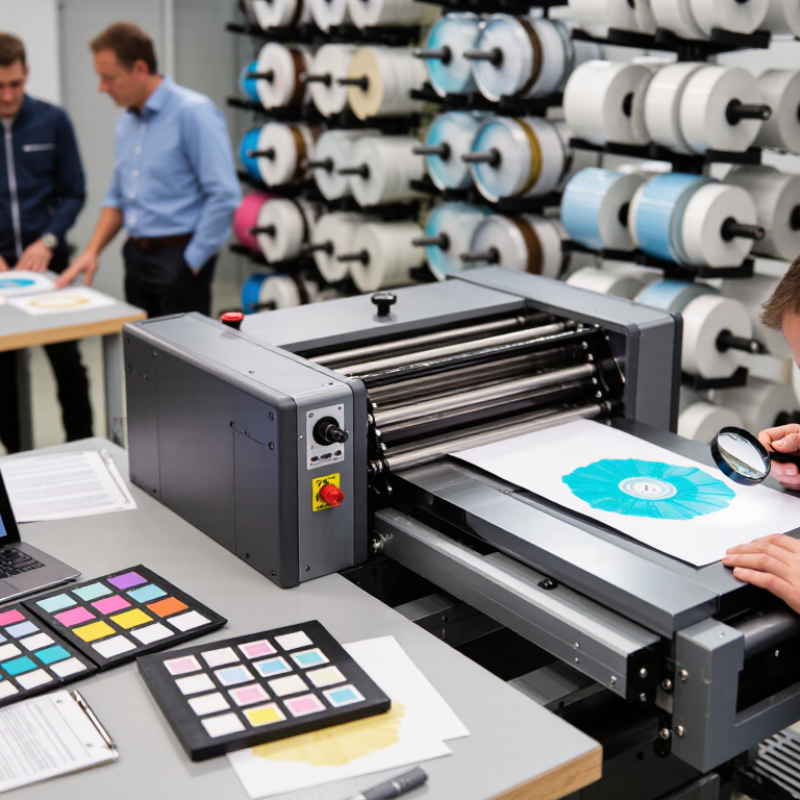
In plate-based printing, first plate proofing is the check made from the first usable impression produced with newly prepared plates. The plates carry the image, text, and other artwork onto the chosen material. A printer runs a small number of sheets, then checks whether the result matches the approved file. Small differences matter. Fine lines may fill in, tiny text can soften, and colors may shift on uncoated stock.
The proof gives the team a chance to catch problems before the full run begins. They inspect color balance, image placement, registration, and details such as barcode edges or small type. A shift of even a fraction of a millimeter can leave colored outlines around letters.
If something looks wrong, the operator can adjust plate position, ink, or press settings and pull another proof. It is not a guarantee. Paper texture, lighting, and later press changes can still affect the finished batch.
A proof viewed under dim room light, for example, may hide a weak contrast that becomes obvious under standard inspection lighting. That is easy to overlook.
Careful review helps reduce waste and rework, while giving the printer and customer a shared, physical reference before production continues.
How Is a First Plate Proof Produced?
A first plate proof is made after the initial printing plate has been prepared, but before a full run begins. The plate is mounted on a proofing press or the relevant press setup, then ink is applied and transferred onto a sample sheet. The exact method varies by printing process. The sheet gives the team a physical way to check details that may be hard to judge on a screen.
Review the proof under consistent lighting. Check that text is sharp, fine lines are intact, and images sit in the correct position. Look for color shifts, uneven ink, or gaps where colors should meet. Registration marks can reveal whether separate colors align properly. Compare the sample with the approved artwork, and note any change clearly for the printer. Small defects matter. A faint line may disappear on the final stock. The proof is useful, but it cannot guarantee every sheet will look identical.
Tips: Use the intended paper or a close match when possible. Keep a marked proof as a reference, and record the date and revision. If something looks wrong, pause and ask the printer to check the plate or press setup. A quick review can miss details; give the sample another look.
What Details Are Checked During Proofing?
During first plate proofing, the printer checks whether the plates reproduce the approved file accurately before the full run. Text receives close attention: spelling, punctuation, font substitutions, and small type that may fill in on press. Images are checked for cropping, sharpness, and unexpected pixelation. A tiny pale line can disappear against a dark background. It is easy to overlook.
Color and alignment matter just as much. The proof is checked for plate-to-plate registration, so fine edges do not show colored fringes. Solid areas, gradients, and overprints are reviewed for streaks, gaps, or unwanted color shifts. ISO 12647-2 provides process-control benchmarks for four-color printing, including tone values and color aims. Viewing conditions also affect judgment: ISO 3664:2009 specifies D50 illumination, with 2,000 lux for its P1 viewing condition. That is a measurable reference, not a substitute for checking the actual stock and press conditions. I would also inspect trim marks, page orientation, and plate damage under magnification; a proof can look clean while one small defect remains easy to miss.
What Is First Plate Proofing and Why Is It Important?
First plate proofing is an early review of a prepared printing plate or proof before the full production run. It helps catch content, image, color-separation, and setup issues while corrections are still possible.
What Details Are Checked During Proofing?
The bars show the number of checks in an example review checklist—not industry-wide statistics. Typical checks include copy and page order, type legibility, image placement and separations, trim and bleed, registration marks, and production specifications.
Why Is First Plate Proofing Important?
First plate proofing gives a print team a chance to inspect real output before a full production run. A proof can reveal weak fine text, uneven ink coverage, poor registration, or colors that shift on the chosen stock. These details are easier to correct while the press is still being set up. The Flexographic Technical Association’s FIRST guidance emphasizes controlled, repeatable print conditions, including consistent color measurement and process checks. That discipline makes proofing more than a visual glance.
The waste stakes are tangible. The U.S. Environmental Protection Agency reported that containers and packaging generated 82.2 million tons of municipal solid waste in 2018, or 28.1% of the total. This figure covers packaging waste broadly; it does not measure waste prevented by proofing. Still, it shows why catching a misprinted label or carton early matters. A proof lets operators compare printed samples with approved artwork, check small type under normal viewing conditions, and adjust plates or press settings before more material is used.
Look closely. A proof is not magic. Lighting, substrate, ink, and press conditions can all change how colors appear, so teams should assess the sample under agreed viewing conditions and record any changes. A rushed approval can miss subtle defects. Even experienced operators can overlook them when the production schedule is tight.
What Happens After the Proof Is Reviewed?
After the proof is reviewed, the team records every correction against the approved file. A changed headline, image, or color may require a revised plate and another proof. Even a tiny shift in a barcode or fine text deserves a close check. A signed proof is not magic.
The printer then prepares the press using the approved proof as a visual reference. Operators check registration, ink coverage, and color while the first sheets come off the press. Measurements matter: Fogra’s ProcessStandard Offset guidance uses color measurement and defined tolerances to help assess print consistency. If the sheet falls outside the agreed target, the press is adjusted before the full run. Small differences can be hard to spot under poor lighting, so comparisons should use consistent viewing conditions.
Once the sheet is accepted, it becomes the production control sample. The crew keeps checking later sheets for drift, and the quality team records results and any rejected material. That discipline also matters for paper use. The U.S. EPA’s 2018 materials report estimated a 68.2% recycling rate for paper and paperboard; that figure does not measure press waste, but it underscores why avoiding unnecessary make-ready sheets matters. A missed correction can still travel downstream. That is worth acknowledging.
