
skip to Main Content

Why Choose the Right Steel Fabrication Materials?

Choosing Steel Fabrication Materials is not a paperwork detail; it shapes how a structure performs in the shop and in service. A plate that looks suitable on a drawing may behave differently after cutting, welding, or years of exposure to moisture. Strength matters. So do weldability, corrosion resistance, availability, and the cost of maintenance.

The scale of steel use makes these decisions consequential. World Steel Association’s World Steel in Figures 2024 reports global crude steel production of about 1.89 billion tonnes in 2023. The International Energy Agency’s Iron and Steel Technology Roadmap identifies steel production as a source of roughly 7% of global energy-related CO₂ emissions. These figures describe the industry, not the footprint of every project. Still, they show why material efficiency and service life deserve attention alongside purchase price.

In practice, the right choice starts with the operating conditions: load, temperature, chemicals, weather, and expected lifespan. A coastal handrail may need stronger corrosion protection than an indoor support, while a welded frame depends on compatible grades and qualified fabrication procedures. Check material certificates, applicable specifications, and supplier traceability before cutting begins. Small details matter. A cheaper grade can become costly if it needs extra rework or early replacement. That sounds obvious, yet project teams sometimes learn it late. Material selection is not a perfect calculation; assumptions about maintenance and site exposure can be wrong. Reviewing those assumptions early helps engineers and fabricators make decisions they can explain, verify, and revisit.
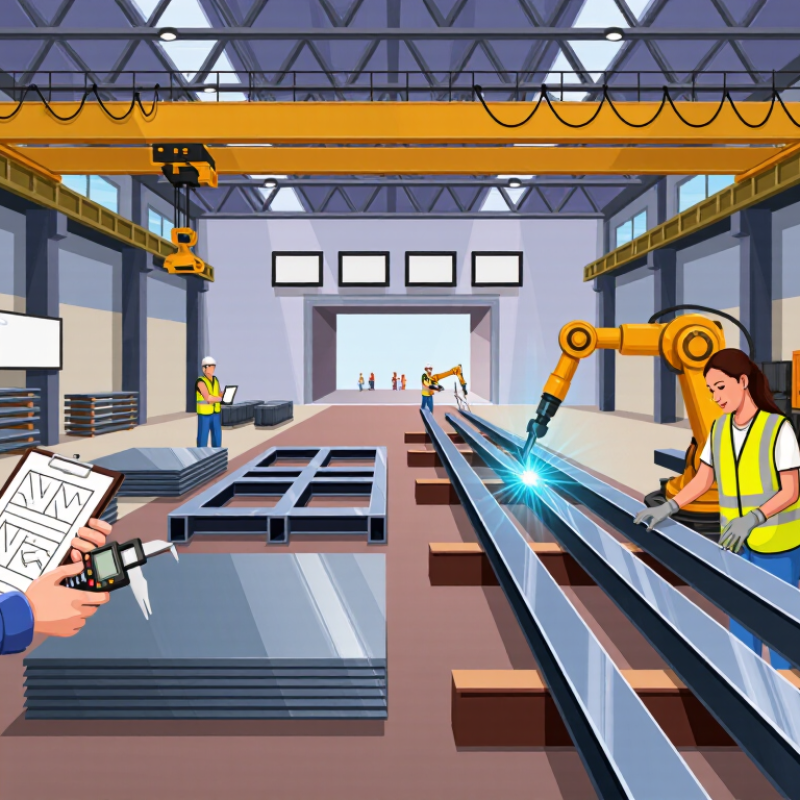
Why Choose the Right Steel Fabrication Materials?

Factors That Guide Steel Material Selection

Why Choose the Right Steel Fabrication Materials?
Factors That Guide Steel Material Selection

Steel selection starts with the part’s job. A support beam in a warehouse may need high strength, while a decorative panel may prioritize a clean finish. Check expected loads, dimensions, and connection types before comparing grades. A material that performs well on paper may be difficult to cut, bend, or weld in the shop. Details matter.

The environment also shapes the choice. Outdoor steel near saltwater faces corrosion risks that indoor equipment may not. Consider coatings, maintenance access, and the expected service life. Availability and lead times matter, too; a suitable grade is less useful if it delays the project. Cost should include fabrication and upkeep, not just the price per kilogram. One detail is easy to overlook: a more durable option can still be unnecessary for a sheltered, low-stress part.

Tips: Match the grade to the actual loads and exposure. Confirm weldability with the fabricator, and verify dimensions against the drawings. Ask about material certificates and coating needs. A checklist helps, but it cannot replace a review of the finished design. Sometimes the first choice needs revisiting.

Mechanical Properties and Fabrication Requirements

Choosing steel by strength alone can create problems on the shop floor. ASTM A36/A36M specifies a minimum yield strength of 250 MPa and a tensile-strength range of about 400–550 MPa for applicable products and thicknesses. These figures help engineers compare load capacity, but they do not predict every fabrication outcome. A plate may meet strength requirements and still distort during welding or crack when bent too tightly.

Small details matter.

Check ductility, thickness, weldability, and forming limits against the actual process. AWS D1.1/D1.1M addresses structural-steel welding, including procedure qualification and inspection; its requirements reinforce why material grade and joint design must be considered together. For a shop cutting 10 mm plate, for example, the selected grade should suit the bend radius, heat input, and dimensional tolerance—not just the drawing’s strength target.

This is easy to overlook.

Material certificates also need review: verify the grade, thickness, and test results before cutting begins. A specification can look complete while missing a practical bend requirement. Recheck it.

Environmental Conditions and Corrosion Resistance

Why Choose the Right Steel Fabrication Materials?

Environmental Conditions and Corrosion Resistance

Choosing fabrication steel starts with its surroundings, not just its load rating. A sheltered indoor frame faces a different risk from a pier railing sprayed with saltwater. Salt travels far. Coastal air can carry chlorides inland, while road de-icing salts collect around lower supports. In humid spaces, condensation may form on cool steel even when no rain reaches it.

Corrosion protection depends on exposure, detailing, and upkeep. Stainless steels offer useful resistance in many settings, but grade selection matters; chlorides and stagnant water can still cause pitting or crevice corrosion. Carbon steel may be suitable with a properly specified coating or galvanizing, provided cut edges, welds, and trapped-water pockets are addressed. Details matter. A narrow gap beneath a base plate can stay wet long after nearby surfaces dry.

Temperature swings, industrial fumes, and abrasion can also shorten coating life. Consider how the part will be cleaned, inspected, and repaired, not merely where it will be installed. A coating damaged during lifting can expose bare steel at an edge, so handling and touch-up procedures matter. No material is maintenance-free; actual exposure is often less predictable than the drawing suggests. A site assessment and relevant corrosion data help narrow options, though they cannot remove every uncertainty.

Why Choose the Right Steel Fabrication Materials? - Environmental Conditions and Corrosion Resistance
Material Typical Corrosion Resistance Suitable Environmental Conditions Key Limitations and Fabrication Considerations Common Applications
Uncoated carbon steel Low in the presence of moisture and oxygen; rusts readily without protection. Dry indoor locations or settings where a suitable coating and maintenance program can be maintained. Usually needs paint, a protective coating, or another corrosion-control system for exposed service. Scratches and damaged coatings can expose the steel. Frames, supports, machinery, and structural components in controlled or protected environments.
Hot-dip galvanized steel Zinc coating provides a barrier and sacrificial protection to exposed steel at small coating defects. Many outdoor and moderately corrosive environments, depending on coating thickness, exposure, and maintenance. Coating life varies with atmospheric conditions. Prolonged contact with strongly acidic or alkaline substances can damage zinc; fabrication after galvanizing may require coating repair. Outdoor platforms, guardrails, support structures, and general-purpose exterior components.
Weathering steel Can develop a relatively protective rust patina when exposed to appropriate wet-dry cycles. Locations with good drainage and alternating periods of wetting and drying, away from persistent dampness and heavy salt exposure. Not suitable for every climate. Continuous moisture, trapped water, marine salt, or de-icing salts can prevent a stable protective patina from forming. Bridges, façades, and outdoor structures designed for suitable exposure conditions.
Type 304 stainless steel Good general atmospheric and indoor corrosion resistance; vulnerable to chloride-induced pitting and crevice corrosion. Clean indoor environments, food-handling areas, and many non-marine outdoor applications with limited chloride exposure. Salt deposits and stagnant moisture can increase localized corrosion risk. Welding and surface condition can affect performance. Indoor equipment, architectural components, tanks, and general-purpose fabricated parts.
Type 316 stainless steel Generally more resistant than Type 304 to chloride-related pitting and crevice corrosion because it contains molybdenum. Coastal atmospheres and applications with moderate chloride exposure, subject to proper design, cleaning, and exposure assessment. Not immune to seawater corrosion, especially in crevices or stagnant conditions. Performance depends on chloride concentration, temperature, and surface details. Marine-adjacent fittings, chemical-processing equipment, and exterior components exposed to salt spray.
Duplex stainless steel (e.g., 2205) High strength and generally strong resistance to pitting and stress-corrosion cracking in chloride-containing environments. More demanding chloride service than common austenitic stainless grades, when the specific environment and design are properly evaluated. Requires suitable welding procedures and control of heat input to preserve properties. It is not universally resistant to all acids or seawater conditions. Process equipment, pressure-containing components, and structural parts in demanding industrial environments.
Aluminum alloy 5052 Good resistance to atmospheric and many marine environments due to its protective oxide film; can be affected by galvanic contact. Marine and outdoor applications where low weight is valuable and the alloy is compatible with the service conditions. Electrical contact with dissimilar metals in the presence of an electrolyte can accelerate galvanic corrosion. Strength and weld design must be considered. Marine panels, enclosures, transport components, and lightweight fabricated structures.

Selection note: Corrosion performance depends on the actual chemical exposure, temperature, moisture, chloride levels, drainage, surface finish, fabrication details, and maintenance. Confirm material suitability against project-specific conditions and applicable engineering requirements.

Safety Standards and Intended Service Life

Why Choose the Right Steel Fabrication Materials?

Safety Standards and Intended Service Life

A steel member is safe only when its grade, thickness, connections, and fabrication process suit the loads and exposure. Follow the project’s governing structural specification and check mill certificates; appearance alone cannot verify strength or weldability. For wet, coastal, or chemically aggressive settings, plan corrosion protection and inspection access early. Small omissions matter. Ask the fabricator to flag substitutions before cutting begins, since late changes can undermine documented design assumptions.

The NACE IMPACT study, published in 2016, estimated annual global corrosion costs at US$2.5 trillion, about 3.4% of 2013 global GDP. This broad estimate highlights why service life depends on more than the initial material price. A sheltered warehouse may need a different steel and coating strategy than a salt-exposed bridge. Consider moisture, chemicals, temperature changes, and realistic maintenance intervals. Record the selected grade, coating system, and inspection frequency in project documents.

Tips: Match the specified grade to the design documents. Check coating compatibility at cut edges and welds. Keep the inspection plan realistic. It may need revision.

Balancing Material Performance, Availability, and Cost

Choosing steel for a fabrication job means weighing performance against what suppliers can deliver on schedule. A high-strength grade may reduce plate thickness, yet require tighter forming controls and qualified welding procedures. That can shift labor costs, not just material costs. A drawing may specify a grade that looks ideal on paper. Not always.

Availability matters at the sizes actually needed. If a project calls for 12-millimeter plate but local stock comes in 10 or 16 millimeters, redesign can affect weight, fit-up, and cutting time. Check mill certificates, dimensions, surface condition, and delivery dates before locking the design. For outdoor parts, corrosion resistance may justify a pricier alloy or coating system, but compare maintenance access and expected service life. A cheaper grade can become costly when repairs interrupt production. Small details matter.

Weldability and machinability also shape the choice. Steel that machines cleanly may save hours on holes and edges, while a harder grade can accelerate tool wear. Ask fabricators whether the selected grade suits their equipment, bend radii, and inspection plan. I would still leave room for judgment: supplier substitutions happen, and a spreadsheet rarely captures every shop-floor constraint. That uncertainty deserves discussion before the material arrives.