
skip to Main Content

How to Choose a Scattering Laminating Machine

Choosing a Scattering Laminating Machine starts with the material, not the brochure. Film type, substrate thickness, working width, and production volume all affect the right configuration. A machine that handles a narrow sample well may struggle with a full-width roll. Small differences matter. Ask suppliers to test your actual materials and document the settings used.

Industry context can help frame the investment. Smithers’ report, The Future of Global Printing to 2028, estimated the global print market at $818.5 billion in 2023 and projected $834.3 billion by 2028. That broad market figure is not a forecast for scattering laminating machines. It does, however, signal a large and evolving print ecosystem where finishing choices affect product quality and workflow. For a practical comparison, review documented output speed, temperature stability, coating consistency, powder handling, and changeover time. Request a live demonstration using a representative job. Check whether operators can clean the unit without lengthy downtime. Measure twice.

No single specification tells the whole story. Compare the machine’s results against your own quality targets, energy limits, and maintenance capacity. A faster line may create waste if material feeding is inconsistent. I have seen specifications look convincing on paper, yet leave important questions unanswered about everyday operation. Ask for test records, service response details, and references from users with similar substrates. Then weigh purchase price against usable output, not headline speed. A careful choice should fit the work you actually run.
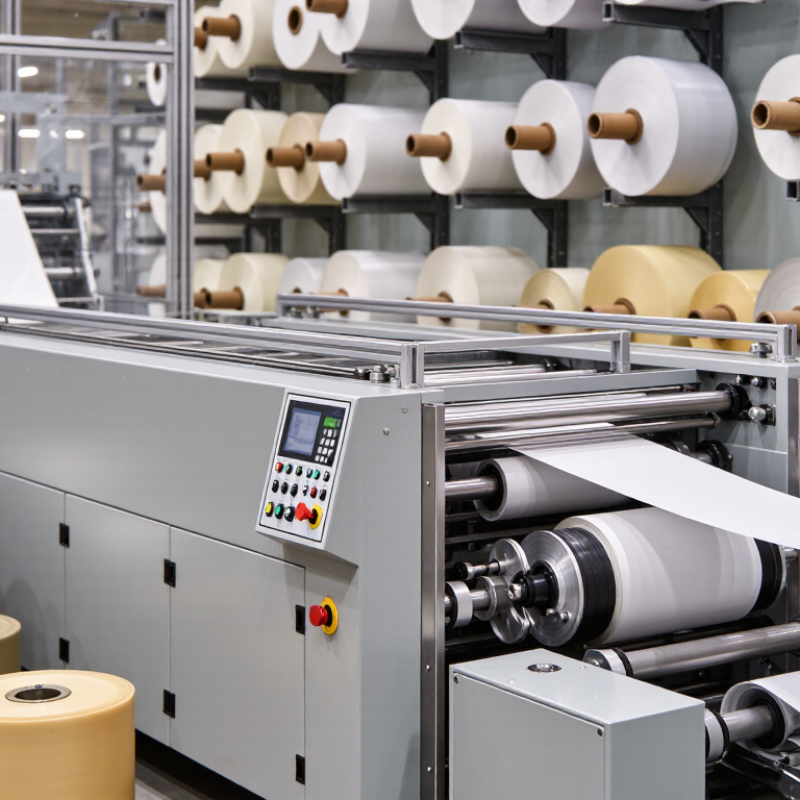
How to Choose a Scattering Laminating Machine

Identify the Materials and Production Requirements

Start with the actual substrate, not the laminator’s headline speed. List every layer: paper grade, film type, coating, and adhesive. Record thickness and width ranges, plus whether surfaces are porous, treated, or prone to curling. Small differences matter. A thin film may wrinkle under excess tension, while heavy paper can demand more stable feeding and pressure.

The U.S. EPA’s Advancing Sustainable Materials Management: 2018 Fact Sheet reports that containers and packaging accounted for 82.2 million tons of U.S. municipal solid waste, or 28.1 percent. This is not a laminator-performance benchmark. It does show why material choices and scrap rates deserve attention. Ask suppliers to run your actual samples, then inspect bond strength, bubbles, edge trim, and curl after cooling.

Match production requirements to those trials. Note typical and peak daily volume, roll changes, target speed, and acceptable setup waste. Check whether the machine handles your narrowest and widest jobs without unstable web tension. Ask about adhesive compatibility, drying capacity, temperature control, and operator adjustments. A neat specification sheet can mislead. I would compare output at the required finish and width, not just maximum speed; production teams sometimes overlook changeover time. Keep one failed sample too. It may reveal a weakness that a perfect test roll hides.

Compare Machine Types and Processing Capabilities

A scattering laminating machine should be compared by its feed format and material-handling method, not just its maximum speed. Sheet-fed models suit separate boards or panels, while roll-to-roll systems support continuous webs and longer production runs. Check the usable width, thickness range, and feeding tolerance against your actual stock. A machine that handles a sample well may still struggle with curled sheets or uneven rolls.

The scattering unit determines how evenly particles, fibers, or another specified material reach the adhesive layer. Ask how the machine controls feed rate and what adjustments are available for different particle sizes. Then compare the laminating stage: heated rollers can help bond compatible films, while pressure-sensitive processes may avoid extra heat. Not every adhesive or substrate works with every setup. Small details matter. Inspect a test run for bare spots, buildup near the edges, wrinkles, and inconsistent bonding. I find this comparison easy to oversimplify; a faster line is not automatically more productive if operators must stop often to clean or recalibrate it. Request a trial using your real materials and record the settings, waste, and finished surface quality.

How to Choose a Scattering Laminating Machine - Compare Machine Types and Processing Capabilities
Machine Type Typical Process Feed Format Processing Capabilities Best Suited For Key Trade-Offs What to Check Before Purchase
Batch or flatbed scatter laminator Adhesive powder is spread over a stationary or indexed substrate, then activated with heat and bonded under pressure. Sheets, cut panels, or short material lengths Suitable for trials, small lots, and parts that are difficult to feed continuously. Powder coverage and heating can be adjusted by recipe and operator setup. Sampling, product development, short production runs, and irregularly shaped materials Lower continuous output and more handling between cycles; consistency depends on setup and operator practice. Usable working area, loading method, temperature uniformity, pressure control, and ease of cleaning.
Single-sided roll-to-roll scatter laminator A web unwinds through a powder scattering unit, heating section, and bonding or cooling section before rewinding. Continuous rolls of fabric, nonwoven, film, foam, or other compatible web materials Applies fusible adhesive powder to one side of a moving substrate. Line speed, powder feed, and heating conditions must be coordinated to achieve an even bond. Repeat production of one-sided laminates and adhesive-backed webs Requires stable web tension and suitable substrate handling; lightweight or stretchy webs may need additional guiding or support. Working width, tension control, edge guiding, powder-feed uniformity, heater length, and web cooling before winding.
Multi-zone continuous roll-to-roll line Powder scattering is followed by separate heating, melting or activation, bonding, and cooling zones. Continuous rolls Separate zones allow the process to be tuned for powder melting, adhesive wet-out, bonding pressure, and cooling. The actual production rate depends on the material and required dwell time. Long production runs, higher throughput requirements, and processes needing tighter temperature control Higher equipment footprint and setup complexity; more zones do not guarantee a suitable bond without process trials. Independent zone controls, heating uniformity, available dwell time, exhaust provisions, and the line’s minimum and maximum stable speeds.
Double-sided or sandwich laminating line Adhesive is applied between two layers, either by scattering onto one or both surfaces or by using a pre-coated layer, then heat and pressure form the laminate. Two continuous webs, or a web combined with a sheet or film layer Can bond two substrates into a layered construction. The required adhesive amount and activation conditions depend on the surface, thickness, and heat sensitivity of each layer. Composite textiles, interlinings, foam laminates, and other multi-layer products Alignment, layer tension, and heat transfer through the full stack require careful control; incompatible layers may distort or bond poorly. Number of unwind stations, alignment controls, pressure arrangement, layer thickness range, and access for threading and cleaning.
Modular scatter-and-laminate system Separate modules, such as powder feeding, scattering, heating, pressing, cooling, and winding, are combined to suit the process. Usually continuous rolls; some configurations also accept sheets Provides flexibility to add or change process stages. Useful when products, adhesive powders, or substrate constructions vary. Facilities with multiple product specifications or evolving process requirements Compatibility and control integration between modules must be verified; a modular line may need more commissioning and operator training. Module interfaces, control-system integration, future expansion options, maintenance access, and responsibility for line-level process validation.

Selection note: Confirm compatibility using the actual substrate and adhesive powder. Suitable temperature, line speed, pressure, and cooling conditions vary by material and adhesive; validate them with supplier data and production trials rather than relying on machine type alone.

Evaluate Key Specifications and Feeding Systems

A scattering laminating machine should match the materials and daily workload of your shop, not just its advertised speed. Check the maximum working width against your largest sheets, then leave room for occasional oversized jobs. Compare rated speed with the finish you need: faster feeding may increase output, but uneven coating or wrinkles can create costly rework.

Small details matter. Review the supported film thickness, temperature range, pressure controls, and warm-up time. These figures affect whether the machine handles thin film cleanly or struggles with heavier stock. A specification sheet can look reassuring, though it rarely shows how settings behave during a long run. Ask for a sample test using your actual paper and film, and inspect edges, bubbles, and adhesion after cooling.

Feeding systems also shape consistency. Manual feeding offers flexibility for short, varied batches, but depends more on operator alignment. Automatic feeders can keep sheets moving steadily and reduce repetitive handling; however, they need suitable paper sizes and careful setup. Check guides, rollers, loading capacity, and access for clearing a misfeed. If sheets curl or vary in thickness, ask how the feeder responds before committing. An awkward adjustment can slow an otherwise capable machine. I would weigh simple controls and easy cleaning alongside headline capacity; that judgment may need revisiting as production changes.

Check Safety, Maintenance, and Supplier Support

When comparing a scattering laminating machine, inspect its safety features while the equipment is running and during cleaning. Check that guards cover accessible rollers, emergency stops are reachable, and interlocks stop motion when access panels open. Ask the supplier to demonstrate shutdown and restart procedures, not just describe them. Small details matter. A warm roller housing or a poorly placed cable can complicate routine work.

Maintenance access matters too. Look for clear space around rollers, simple ways to remove adhesive buildup, and documented inspection intervals. The U.S. Department of Energy’s 2010 Operations & Maintenance Best Practices Guide estimates predictive maintenance can save 8–12% over preventive maintenance alone across industrial operations. That is not a laminator-specific promise, but it supports asking for condition checks and service records. Request a sample maintenance schedule and confirm how quickly common spare parts can be supplied. Supplier support should include practical operator training, readable manuals, and a named service contact. I would also ask what happens when a fault appears outside business hours. A polished demo cannot answer every question, and I have seen buyers overlook support response times until production is already waiting.

Estimate Total Cost and Verify Machine Performance

Estimate the total cost beyond the machine’s purchase price. Include installation, operator training, tooling, maintenance, energy, and expected material waste. A low purchase price can look attractive, but frequent changeovers may raise the cost per finished sheet. Ask for a written estimate based on your planned shifts and monthly output. Small details matter.

Before comparing quotations, define your job requirements. Record sheet width, substrate types, target speed, and acceptable coating variation. Then request a trial using your own material and adhesive, not only a sample selected for easy processing. Inspect several sheets across the run. Look for uneven scattering, wrinkles, edge buildup, and bonding problems after curing. Not always. One clean sample proves little.

Track usable output, setup time, rejected sheets, and stoppages during the test. Compare actual throughput with the supplier’s stated capacity under the same conditions. Ask how quickly operators can adjust coating weight and clean the scattering unit; these tasks affect daily production. Check service intervals and the availability of wear parts. I have seen estimates miss the cost of trial waste, and that is an easy oversight. Set acceptance criteria in advance, including speed, finish consistency, and waste rate, then record the results.