
skip to Main Content

How to Choose a Pipe Swaging Machine?

Choosing a Pipe Swaging Machine is not just a matter of comparing prices or motor sizes. The right model must suit your tube material, outside diameter, wall thickness, and required end profile. A copper tube for a small repair shop behaves differently from thick stainless steel tubing on a production floor. Details matter. Before reviewing equipment, list the parts you make most often, their tolerances, and your expected daily output. This record can help you decide whether a manual, hydraulic, or CNC-controlled machine is appropriate. It can also prevent you from paying for capacity that may go unused.

Look closely at tooling range, clamping stability, stroke adjustment, cycle consistency, and changeover time. Ask the supplier to test material and dimensions close to yours; a brochure cannot prove repeatability. Check how dies are stored, how maintenance is handled, and whether operators can access training and service support. If possible, observe a test run. Listen for uneven noise, inspect formed ends for cracks or wrinkles, and measure them instead of judging by appearance alone. Consider floor space, power requirements, and guarding before purchase. A machine that meets today’s needs may struggle when your product range changes. That risk is easy to overlook. There is no universal best choice: a lower-cost model may suit occasional work but become costly under constant use. This guide covers the questions to ask, specifications to check, and trade-offs to consider before choosing.
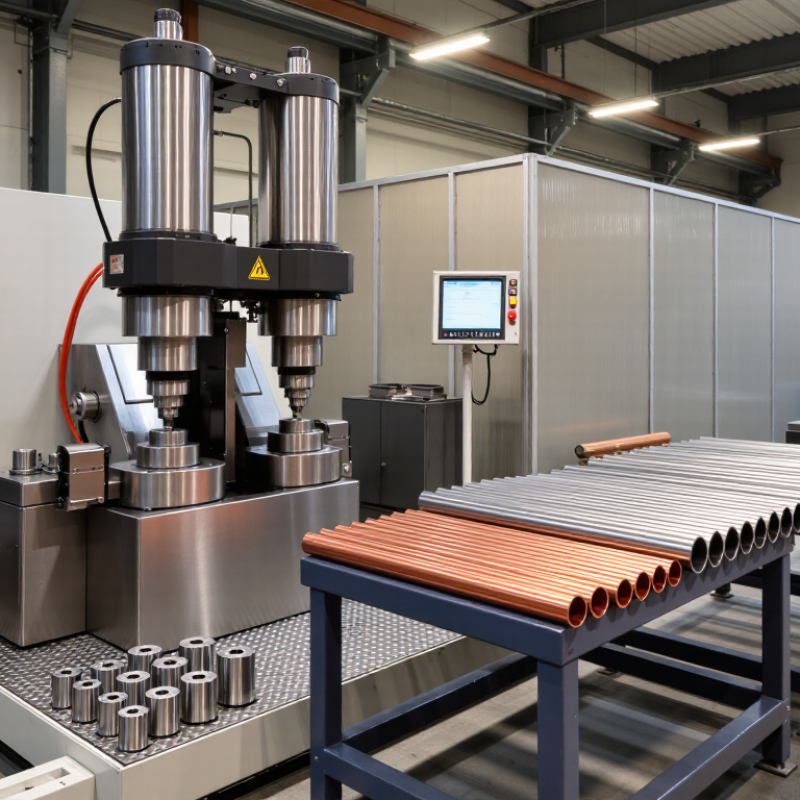
How to Choose a Pipe Swaging Machine?

Identify the Pipe Swaging Tasks and Production Requirements

Start by listing the pipe ends you need to form. A swaging machine may reduce an outside diameter, create a taper, or prepare an end for joining. These tasks are not interchangeable. Record the pipe material, starting diameter, wall thickness, and required finished dimensions. Include a sample drawing or a physical part if available.

Next, estimate how often each part will run. A machine suited to occasional repairs may slow a busy production line. Note the number of pieces per shift, typical batch size, changeover frequency, and acceptable cycle time. Check how tightly finished dimensions must be controlled, too. A small mismatch can cause trouble during assembly. It is easy to overlook setup and inspection time when estimating output; revisit those assumptions with the people who will operate the equipment.

Tips: Bring representative pipe samples and test the most demanding job before choosing. Ask how tooling changes, alignment, and routine maintenance affect setup time. Confirm that operators can load and remove parts comfortably. A spreadsheet helps, but it may not capture awkward handling or inconsistent incoming pipe. Check those details on the shop floor.

How to Choose a Pipe Swaging Machine?

Identify the pipe swaging tasks and production requirements.

These illustrative planning figures show how required output can guide machine capacity selection. Confirm actual cycle time using your pipe dimensions, material, swage geometry, tooling, and part-handling process.

Match Machine Capacity to Pipe Size, Material, and Wall Thickness

A pipe swaging machine must suit the pipe you actually process, not just the largest diameter listed in a catalog. Check the pipe’s outside diameter and the machine’s working range. A tube that barely fits the stated limit may leave little room for consistent setup. Small details matter.

Material changes the force and tooling required. Copper, aluminum, and stainless steel respond differently during forming, so confirm that the machine and dies are suitable for your material. Wall thickness matters too: thick-wall pipe may need more forming force, while thin-wall stock can wrinkle or collapse if pressure is poorly controlled. The result depends on the pipe condition as well as the machine.

Ask for capacity data tied to specific pipe sizes, materials, and wall thicknesses. A single maximum-capacity figure is not enough. Check whether the machine supports the die sizes you need and whether adjustments can be made repeatably. If possible, test a sample using your actual pipe. Inspect the swaged end for cracks, folds, and uneven shaping, then check how it fits the mating component. Test one sample. A trial may expose a mismatch that a specification sheet misses, though one successful piece does not guarantee every production run will behave identically.

Compare Swaging Methods, Tooling, and Setup Options

How to Choose a Pipe Swaging Machine? Compare Swaging Methods, Tooling, and Setup Options

Rotary swaging reduces a pipe’s diameter through repeated radial impacts, making it useful for long, gradual tapers. Radial-die machines form a shorter area with focused force. Press-style swaging is simpler to set up, but it may leave a less gradual transition. Match the method to the drawing: measure the finished diameter, taper length, wall thickness, and material before comparing machine capacity. A sample pipe helps. Thin walls can wrinkle, while a hard alloy may spring back more than expected.

Tooling matters as much as the machine. Check die profile, closing stroke, and how quickly worn tooling can be replaced. For varied jobs, adjustable dies may reduce changeover time; repeat production may justify dedicated tooling. Setup options range from hand loading to powered feeding. Consider pipe length, operator access, and how the finished end is supported. A long pipe needs room to move. The setup can look simple on paper.

The U.S. Bureau of Labor Statistics’ 2023 Survey of Occupational Injuries and Illnesses reported 2.8 recordable cases per 100 full-time workers in manufacturing. That figure is not specific to swaging, but it supports reviewing guarding, loading height, and pinch points during machine selection. I would test the actual pipe material and geometry before committing. A neat test piece can still hide a poor changeover routine.

Evaluate Controls, Safety Features, and Operating Needs

A pipe swaging machine should feel understandable before it feels fast. Check whether the controls are clearly labeled and easy to reach while wearing work gloves. Can an operator adjust the stroke, pressure, and cycle speed without guessing? A readable pressure gauge and a clear status display help workers spot changes before a fitting is damaged. Small details matter. Ask to see a normal setup and a changeover, not just a brief demonstration. If settings are difficult to repeat, record the approved values and verify them on a test piece. I might once have judged a panel by its neat layout alone; that misses how it works during a busy shift.

Safety features should fit the actual task. Look for a guarded forming area, an accessible emergency stop, and interlocks that prevent cycling when a guard is open. Check how the machine handles die changes and routine cleaning. Those steps can expose hands to pinch points if the procedure is unclear. Also consider daily production volume, pipe sizes, operator experience, available floor space, and maintenance access. A machine built for occasional batches may struggle with continuous work, while an elaborate control system can slow a simple job. Ask who will train operators and how faults are diagnosed. It is easy to overlook this. A short, documented restart procedure can prevent confusion after a jam or power interruption.

Review Reliability, Maintenance, and Supplier Support

When choosing a pipe swaging machine, judge reliability against your actual workload, not just a catalogue rating. Ask how the machine performs across repeated cycles and whether it can handle your pipe materials, diameters, and wall thicknesses. If possible, run a sample using your own stock. Watch for uneven forming, excess vibration, or inconsistent cycle times. Small differences matter on a busy production floor. Request service records or references from users with similar applications; a polished demonstration alone proves little.

Maintenance needs should be clear before purchase. Check how often seals, dies, and other wear parts require inspection, and whether routine tasks can be completed by trained in-house staff. Ask for a maintenance schedule, parts list, and realistic delivery estimates for replacement components. No machine stays perfect. I would also ask what faults commonly appear after extended use; suppliers may not have a neat answer, but their openness is revealing. Support matters when production stops. Confirm who provides troubleshooting, how quickly they respond, and whether practical training is available.

Tips: Bring sample pipes and a list of common jobs to the demonstration. Ask the supplier to show a die change and explain one routine fault. Note the time, tools, and skill required. Then compare support promises with the written service terms.

How to Choose a Pipe Swaging Machine? – Review Reliability, Maintenance, and Supplier Support

Evaluation Area What to Check Evidence to Request or Verify Signs of a Suitable Choice
Workpiece and Capacity Confirm the machine’s supported pipe or tube outside diameters, wall thicknesses, material types, and required end-forming operations. Compare the published capacity limits with the actual parts and materials in your production plan. Ask for a trial using representative workpieces. The intended sizes and materials are within the machine’s stated operating range, and the trial produces parts that meet drawing requirements.
Forming Quality and Repeatability Review dimensional consistency, surface condition, concentricity, and the ability to repeat the required swaged profile across production runs. Inspect sample parts and measurement results. Where suitable, request results from repeated cycles using the same material, tooling, and settings. Samples meet the relevant tolerances and show no unacceptable cracking, wrinkling, excessive marking, or deformation.
Machine Reliability Assess the frame, drive system, controls, protective devices, and the suitability of the machine for the expected duty cycle and operating environment. Request operating and service documentation, warranty terms, and details of any available reliability or endurance test information. Verify safety features during inspection. The machine is specified for the planned workload, is built for the intended environment, and includes appropriate guarding and operating instructions.
Tooling and Changeover Check the availability and compatibility of dies, mandrels, clamps, and other tooling needed for the required pipe sizes and profiles. Confirm tooling specifications, changeover instructions, tool-life guidance, and whether setup can be completed safely and consistently. Required tooling is available, securely fits the machine, and can be changed and set up without unnecessary production delays.
Maintenance and Spare Parts Review routine inspection points, lubrication requirements, hydraulic or mechanical service needs, wear parts, and access to replacement components. Ask for a maintenance schedule, parts list, troubleshooting guide, and details on spare-part availability and typical ordering arrangements. Maintenance tasks are clearly documented, essential parts can be identified, and service access is practical for the plant’s maintenance team.
Supplier Training and Technical Support Evaluate installation assistance, operator and maintenance training, troubleshooting support, and access to qualified service personnel. Confirm what support is included, how support requests are handled, available training formats, and the scope of commissioning assistance. Responsibilities and support arrangements are stated clearly, and the supplier can explain how operators will be trained and service issues addressed.
Safety and Documentation Check guarding, emergency-stop arrangements, safe work procedures, electrical documentation, and risk information relevant to the machine’s intended use. Review the operating manual, safety instructions, electrical drawings, and applicable conformity or risk-assessment documentation for the destination market. Documentation is complete and understandable, and the machine’s safeguards are appropriate for its intended operation and workplace requirements.