
skip to Main Content

How to Choose the Right Parcel Sorting System?

Choosing the right Parcel Sorting System starts with the parcels you handle—not the machine’s headline speed. A system that works well for small cartons may struggle with soft mailers, uneven labels, or mixed parcel sizes. Before comparing models, map your daily volume, peak-hour surges, destination count, and available floor space.

Fred Smith, FedEx founder, is often quoted as saying, “The information about the package is as important as the package itself.” That principle matters on the sorting floor. Scanners, software, and conveyor controls must share accurate data, or parcels can be sent to the wrong chute. Ask vendors how their system handles unreadable labels, changing routes, and integration with your existing warehouse software. Request a live demonstration using representative parcels.

Look beyond throughput claims. Measure actual performance with your parcel mix, and check what happens when volume spikes or a belt stops. Review maintenance access, spare-parts availability, operator training, noise, and energy use. A compact sorter may save floor space, but leave little room for repairs or future growth. That trade-off is easy to miss.

No checklist catches everything. Site conditions change, and forecasts can be wrong. A pilot test can reveal awkward handoffs, bottlenecks, and scanning failures before a full installation. Use the results to compare options against clear requirements, not sales language alone. The best choice is the system your team can operate reliably, maintain safely, and adapt as parcel patterns evolve.
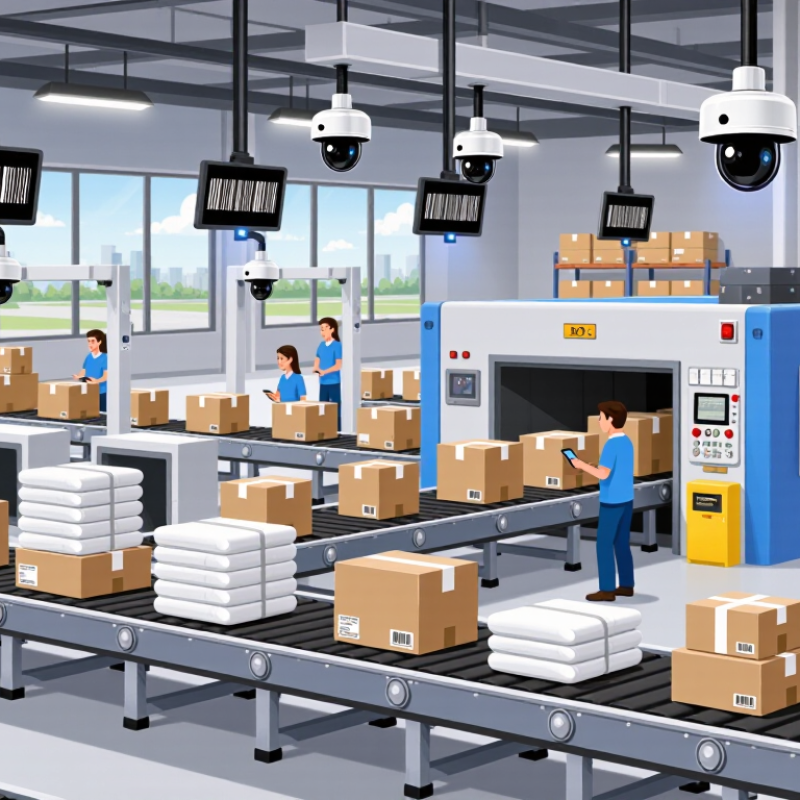
How to Choose the Right Parcel Sorting System?

Define Parcel Profiles, Volumes, and Throughput Requirements

Define the parcel profile before comparing sorter speeds. Record length, width, height, weight, packaging type, and barcode location. Include padded mailers, soft bags, long cartons, and parcels that arrive slightly crushed. Small details matter. A system tested only with neat boxes may struggle when flexible packaging bends or labels face downward.

Pitney Bowes’ 2024 Parcel Shipping Index estimates that global parcel volume reached 161 billion in 2023, with 256 billion projected by 2029. This industry-wide growth is useful context, not a facility forecast. Build your own forecast from shipment records, then separate ordinary days from seasonal peaks. Measure actual peak-hour arrivals, not just daily averages. A line processing 4,000 parcels per hour on paper may fall behind when volume arrives in short bursts. That estimate is useful, but not perfect.

Translate the data into operating requirements: induction rate, destination count, allowable recirculation, and the time available to clear each dispatch wave. Check whether the quoted throughput assumes evenly spaced parcels and ideal conditions. It often does. Test representative parcels at realistic spacing, including the awkward ones, and record misreads, jams, and manual handling. Recheck the assumptions after a peak season; parcel mix changes, and old averages can mislead.

How to Choose the Right Parcel Sorting System? — Define Parcel Profiles, Volumes, and Throughput Requirements

Illustrative planning profiles for evaluating system requirements. Throughput figures are design estimates, not guaranteed equipment capacities; actual rates depend on parcel spacing, induction method, destination count, operating hours, and handling constraints.

Facility Profile Typical Parcel Mix Representative Parcel Size and Weight Daily Volume Sort Window Estimated Peak Rate Potential System Approach Key Requirements to Confirm
Local e-commerce fulfillment site Predominantly polybags and small cartons; limited irregular parcels Most parcels: 100–400 mm long; up to about 5 kg. Define a separate process for non-conveyables. 8,000 parcels per day 10 hours About 1,200 parcels per hour Manual or semi-automated induction with a compact conveyor sorter, put wall, or destination chutes Number of destinations, seasonal peak factor, label readability, and whether operators can feed parcels at the required rate
Regional parcel center Mixed polybags, cartons, and small irregular items Common range: 150–600 mm long and 0.2–15 kg; establish limits for bulky or unstable items. 30,000 parcels per day 16 hours About 3,000 parcels per hour Automated singulation and barcode scanning feeding a belt, sliding-shoe, or comparable sorter Peak-hour arrival pattern, recirculation rate, chute capacity, and the share of parcels that need manual handling
Large regional hub Broad mix of cartons, mailers, and some non-standard parcels Common range: 100–800 mm long and 0.1–25 kg, subject to the selected equipment's limits. 80,000 parcels per day 18 hours About 7,000 parcels per hour Automated induction and identification with a higher-capacity sorter, such as a sliding-shoe or cross-belt configuration Required rate at each induction point, destination count, chute or takeaway design, and contingency for missed reads
National or major metropolitan hub High-volume mixed parcels, including a managed stream for oversize or irregular items Varies by network; set explicit minimum and maximum dimensions, weight, rigidity, and package stability limits. 200,000 parcels per day 20 hours About 15,000 parcels per hour High-capacity automated sorting with multiple induction points, scan verification, and a separate exception-handling path Surge capacity, system availability, downstream takeaway capacity, sort-plan changes, and recovery procedures during downtime
Planning note: Peak rates are approximate design targets for the busiest operating periods, not daily averages. Validate them against measured arrival profiles and parcel samples, then check that induction, scanning, sorter, and destination handling can all support the same required rate.

Compare Sorting Technologies and System Configurations

A parcel sorting system should match the parcels you handle, not just a peak-rate figure on a supplier’s chart. Belt diverters suit straightforward routes and moderate volumes. Sliding-shoe systems can direct parcels across several chutes while keeping movement controlled. Cross-belt sorters offer flexible routing at higher speeds, but need more space and careful induction. Faster is not always better.

The parcel mix changes the comparison. Small cartons, soft mailers, and long boxes behave differently on belts and at transfer points. Measure their dimensions, weight, surface, and daily volume before choosing. A configuration that handles today’s cartons may struggle with tomorrow’s padded envelopes. That happens.

A linear layout can be easier to access and expand, while a loop may serve many destinations within a compact footprint. Both need space for safe maintenance, exception handling, and parcels that miss a read or chute. Compare not only rated throughput, but also usable throughput during busy shifts. Ask operators to test representative parcels, including awkward shapes. Real tests can reveal gaps in the plan, and the first layout may still need revision.

Assess Facility Layout, Integration, and Automation Needs

How to Choose the Right Parcel Sorting System?

Start with the building, not the equipment catalogue. Map columns, doors, fire exits, conveyor paths, and space for maintenance access. Measure aisle widths and ceiling clearance; a layout that looks open on a drawing can feel crowded once guards and workstations are installed. Measure twice. Also record parcel dimensions, weights, and hourly volumes during ordinary and peak periods. Average-day figures can hide the pressure of a busy shift.

Check how the sorter will connect with existing systems. Confirm what data your warehouse software can send, such as destination, service level, and parcel status. Agree on how labels are scanned and how unreadable codes, duplicate records, or missing data are handled. These exceptions deserve attention before installation. A smooth demonstration is not enough; test with real parcel shapes and realistic data, while keeping sensitive information protected.

Choose automation around the work your team actually performs. If parcel flow varies sharply, a modular setup may be easier to expand than a fixed, high-speed design. Consider staffing, training, jam access, noise, and safe ways to clear diverted items. More automation is not always better. I would also challenge the volume forecast: it may be optimistic, and a system sized only for a short-term peak can leave costly capacity idle. Compare expected throughput with measured demand and leave room for practical adjustment.

How to Choose the Right Parcel Sorting System

Example planning assessment: rate each facility requirement from 1 (lower priority) to 5 (critical). Score your own site using measured throughput, available floor space, parcel mix, and integration requirements.

Use the ratings as a starting point, not industry benchmark data. Confirm that the proposed system fits the facility layout, connects with existing systems, and can handle current and expected parcel volumes.

Evaluate Accuracy, Scalability, Safety, and Maintenance

A parcel sorter should match real operating conditions, not just a peak-speed figure on a sales sheet. Pitney Bowes’ 2024 Parcel Shipping Index estimates that global parcel volume reached 161 billion in 2023 and could rise to 256 billion by 2029. That growth makes scalability essential.

Check whether the system can add lanes, scanners, or shifts without rebuilding the whole floor. Test it with irregular cartons and soft mailers, too. Real parcels are rarely perfect.

Accuracy needs practical measurement. Ask suppliers to report mis-sorts and unreadable labels during a live trial, including at peak speed. Track results by parcel type, not only as one attractive percentage.

MHI’s 2024 Annual Industry Report found 55% of respondents planned to increase investment in supply-chain technology and innovation. Investment alone does not guarantee better service.

Keep an exception station where staff can inspect damaged labels or unusual shapes.

Safety and maintenance affect uptime every day. Check access to emergency stops, clear walkways, guarding, and safe jam-clearing procedures.

BLS injury data can help benchmark warehouse risks, but local task-level assessments matter more. Ask how often belts, sensors, and rollers need inspection, and whether routine work requires specialist support.

Small details count. A sorter that is fast but difficult to clean may lose hours to preventable stoppages.

I would leave capacity for manual review; automation still makes mistakes.

Choose a System Based on Total Cost and Operational Fit

A parcel sorting system should fit the work your site actually handles, not just its busiest-hour target. Compare the purchase price with installation, software, training, energy use, maintenance, and likely downtime. A lower quote may exclude floor reinforcement or changes to conveyor routes. Those costs matter. Ask suppliers to state what is included and how service response times are measured. Then compare the full cost across the system’s expected working life.

Operational fit is just as important. Measure parcel dimensions, weights, daily volume, and peak-hour surges using real shipment data. Check whether the system can handle soft mailers, uneven cartons, and labels that arrive at awkward angles. Walk the proposed layout with operators. A neat drawing can miss the tight turn by a loading door or the space needed to clear a jam safely. Consider how exceptions will be routed and whether staff can reach the controls without crossing active lanes. I would also test a representative batch before making a final decision; tidy sample parcels can hide problems. No forecast is perfect. Review assumptions with the people who work each shift, and leave room for volume changes without paying for capacity you may never use.