
Blog
How to Choose a Lip Gloss Maker in 2026?
Choosing a Lip Gloss Maker in 2026 requires more than comparing glossy samples and attractive packaging. The global lip gloss market continues to expand, with Grand View Research estimating a 2023 value of about USD 3.3 billion and steady growth through 2030. That momentum creates opportunity. It also creates noise.
A reliable supplier should show documented ingredient sourcing, batch testing, stability data, and clear manufacturing controls. Ask to see viscosity results, microbial testing, and packaging compatibility reports. A gloss may look beautiful in a glass vial, then separate after six weeks in heat. That detail matters. Really matters. McKinsey’s beauty industry research also identifies product quality, trust, and innovation as major drivers of consumer purchasing decisions. Those factors should guide your factory audit, not only the lowest quotation.
Cosmetic chemist Perry Romanowski has often warned, “Natural does not mean safe.” His point is practical: botanical oils, pigments, and flavor systems still require careful evaluation. A professional Lip Gloss Maker should explain allergen management, preservative strategy, pigment compliance, and shelf-life testing without hiding behind vague claims. Request pilot batches before placing a large order. Compare applicator feel, color consistency, leakage resistance, and formula stability under different temperatures. I would not treat a polished catalog as proof of expertise. It is only a starting point. The right partner combines technical evidence, transparent communication, scalable production, and responsible quality control. That combination may take longer to verify, but it can prevent expensive reformulation later.
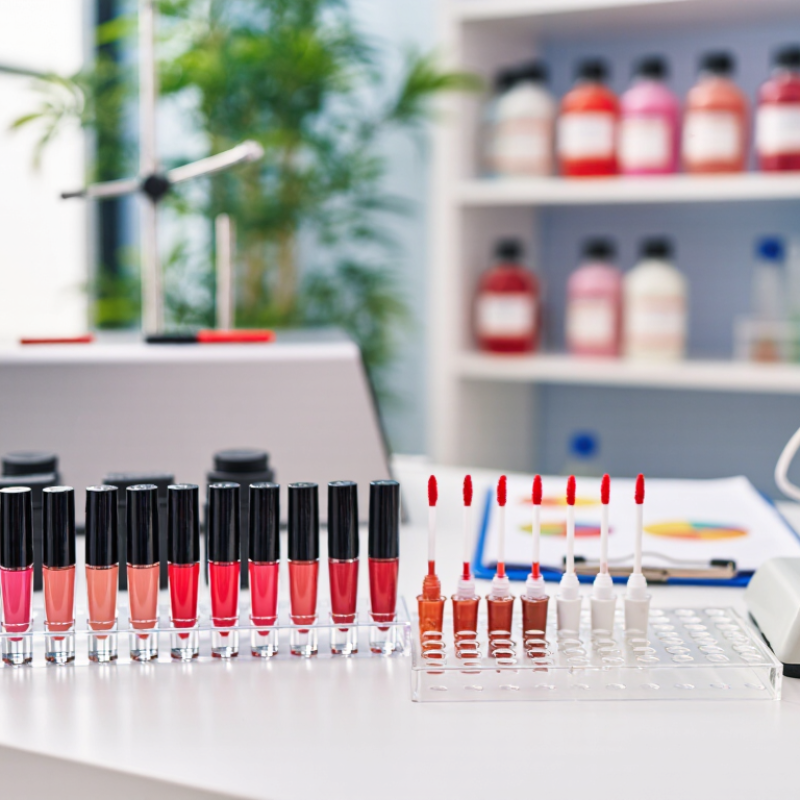
Define Your Lip Gloss Product Requirements
Before choosing a lip gloss maker, define the product you actually want to create. Specify the target customer, shade range, finish, texture, and expected retail price. A clear brief prevents vague quotations and unsuitable samples. For example, “high-shine nude gloss” is incomplete. State whether it should feel cushiony, non-sticky, lightweight, or plumping. Decide the package size, applicator shape, closure, and decoration requirements. These details affect formula compatibility and production cost.
Formula performance needs measurable expectations. Request information about viscosity, shine retention, scent level, ingredient restrictions, and wear testing. Ask for stability, microbiological, and packaging-compatibility records where appropriate. Do not rely on verbal promises alone. A reliable maker should explain minimum order quantities, sample revisions, lead times, batch controls, and quality inspection procedures. Requirements may also change between markets, so confirm that labeling and product documentation can support your intended sales regions.
Test the samples like a customer would. Apply the gloss over lipstick, eat a light meal, and check separation, leaking, odor changes, and applicator performance. Store samples in warm and cool conditions. Small defects become expensive at scale. A pilot batch is valuable, although it may not reveal every production issue. I would record each test with dates and photographs, then revise the brief honestly. Sometimes the most attractive texture is too sticky, or the perfect package is difficult to fill. That tension deserves attention before signing a manufacturing agreement.
How to Choose a Lip Gloss Maker in 2026? - Define Your Lip Gloss Product Requirements
| Requirement Area | Recommended Product Requirement | Practical Evaluation Criteria | Why It Matters When Choosing a Maker |
|---|---|---|---|
| Product Type | Define whether the product is clear gloss, tinted gloss, shimmer gloss, plumping gloss, lip oil, or a hybrid formula. | Ask for matching samples and confirm that the manufacturer has suitable mixing, filling, and homogenization equipment. | Different textures and pigment loads require different formulation and filling capabilities. |
| Finish and Sensory Profile | Specify gloss level, tackiness, slip, cushion, spreadability, after-feel, fragrance intensity, and expected wear time. | Use a written sensory scorecard and compare samples at the same temperature and application amount. | Sensory performance strongly affects repeat purchase and should be agreed before mass production. |
| Ingredient Preferences | List preferred and restricted ingredients, vegan requirements, mineral-oil position, allergen policy, fragrance policy, and animal-testing requirements. | Request the full ingredient declaration, safety data where applicable, allergen information, and formulation change-control procedure. | A clear ingredient brief reduces reformulation, claim, and regulatory risks. |
| Color Range | Define the number of shades, color families, opacity, shimmer level, and acceptable batch-to-batch color tolerance. | Require shade approval using physical drawdowns or filled samples, not only digital color references. | Pigments, pearls, and transparent bases can appear different on the lips than on a screen or paper. |
| Packaging Format | Choose tube, squeeze tube, bottle, or other format; define fill volume, applicator type, closure, decoration, and target dimensions. | Confirm compatibility between formula, wiper, applicator, bottle, cap, adhesive, and decoration materials. | Packaging compatibility affects leakage, evaporation, contamination control, and consumer experience. |
| Fill Weight and Tolerance | Set the target net content, such as 3–6 g for a standard lip gloss format, together with the permitted production tolerance. | Ask how net-content checks are performed and request documented in-process and finished-goods inspection records. | Accurate filling supports legal net-content compliance and consistent customer value. |
| Safety and Stability Testing | Require stability, compatibility, microbiological quality, and preservative-effectiveness testing when applicable to the formula. | Review test protocols, acceptance criteria, sample conditions, test duration, and final reports before approval. | Testing helps identify separation, odor change, color shift, microbial growth, leakage, and packaging interaction. |
| Quality Management | Select a maker with documented batch records, raw-material traceability, sanitation procedures, calibration, and deviation management. | Check whether the facility follows cosmetic GMP principles and can provide batch release and inspection documentation. | A controlled quality system improves consistency and supports investigation if a complaint occurs. |
| Regulatory Scope | Identify every intended sales market and define required labels, responsible-party information, product files, claims support, and language requirements. | Confirm that the maker can support market-specific documentation and does not make unsupported treatment or medical claims. | Cosmetic requirements and labeling obligations vary by jurisdiction and product claims. |
| Minimum Order Quantity | Set separate quantities for stock formulas, semi-custom formulas, fully custom formulas, shades, and packaging components. | Obtain a written quotation showing minimum order quantity, sampling fees, tooling fees, component minimums, and overage policy. | A low formula MOQ may still require a higher packaging MOQ, affecting inventory and cash flow. |
| Development Timeline | Plan time for brief review, laboratory samples, revisions, packaging approval, testing, production, and shipping. | Request a milestone schedule and define approval deadlines, revision limits, and the procedure for formula or component changes. | A realistic schedule prevents rushed approvals and reduces launch delays. |
| Cost Structure | Compare formula, packaging, decoration, testing, tooling, assembly, freight, duties, and quality-inspection costs. | Evaluate total landed cost rather than laboratory or unit price alone, and confirm quotation validity and payment terms. | Hidden development and packaging charges can materially change the final product margin. |
| Sustainability Requirements | Define recycled-content targets, recyclability goals, refill options, material restrictions, packaging weight, and certification needs. | Request material specifications and verify environmental claims with supplier documentation or recognized certification where required. | Sustainability claims should be technically supportable and compatible with local advertising rules. |
| Intellectual Property | Clarify ownership of custom formulas, shade development, artwork, molds, tooling, test data, and product names. | Use a written confidentiality and manufacturing agreement before sharing proprietary specifications. | Clear ownership terms protect product differentiation and reduce disputes during scale-up or supplier changes. |
| After-Sales and Continuity | Require complaint handling, retained samples, corrective-action procedures, raw-material change notices, and supply-continuity planning. | Ask for response times, escalation contacts, backup component options, and procedures for recalls or nonconforming batches. | Reliable post-production support is essential for protecting consumers and maintaining long-term availability. |