How to Choose the Right Electronic Board for Your Project?
Choosing the right electronic board for your project is crucial. The global market for electronic boards is growing rapidly. Recent reports show that the demand for these boards is projected to increase by over 10% annually. This growth reflects their importance in various applications, from consumer electronics to industrial automation.
Finding the right electronic board can be overwhelming. There are many factors to consider, such as size, processing power, and connectivity options. Some boards are specifically designed for beginners, while others cater to advanced users. Understanding your project's requirements will help you make an informed choice. Don’t overlook costs; they can vary significantly based on features.
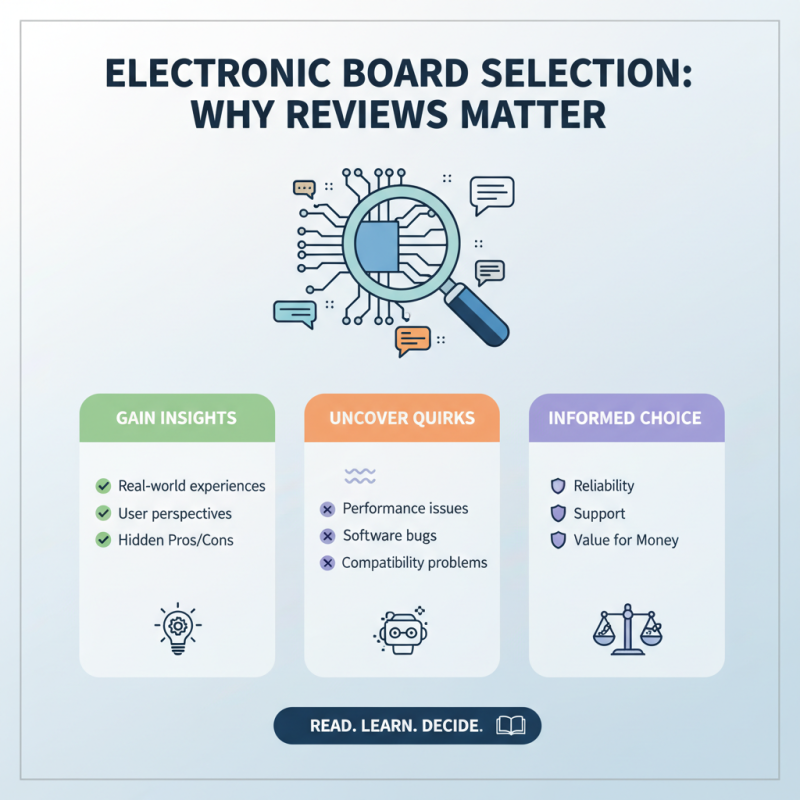
Moreover, not all electronic boards are suited for every task. Misjudgments can lead to wasted time and resources. It's essential to review your project's specific needs. Consider reliability and support options, as these can greatly impact your project's success. An informed decision will ultimately lead to better outcomes.
Understanding Your Project Requirements
When selecting an electronic board, start by understanding your project requirements. Define the goals clearly. Consider what tasks the board must perform. Is it for simple monitoring, or does it require complex processing? Knowing this helps narrow down options.
Think about the specifications you need. Processing power, memory, and connectivity are crucial. If your project involves sensors, ensure the board has enough input/output ports. Battery life may also matter. Long-lasting power is essential for mobile applications. Balance between performance and energy consumption.
Reflect on the learning curve too. Some boards are user-friendly while others require more expertise. Beginners might struggle with complicated setups. It can be frustrating to encounter issues due to lack of familiarity. Consider your team's skill level when making a decision. This reflection can save time and resources.
Evaluating Different Types of Electronic Boards
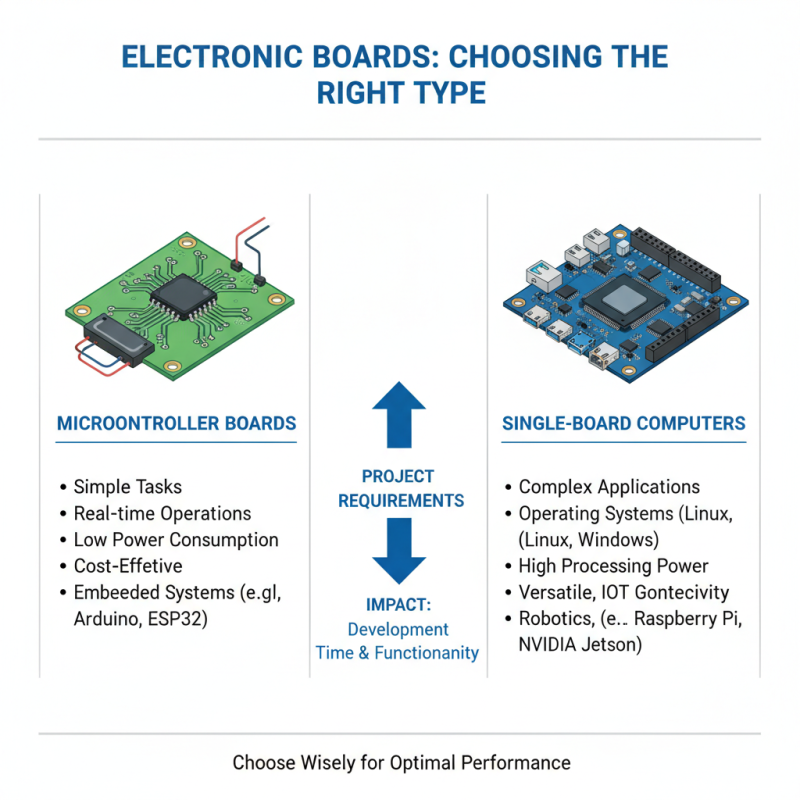
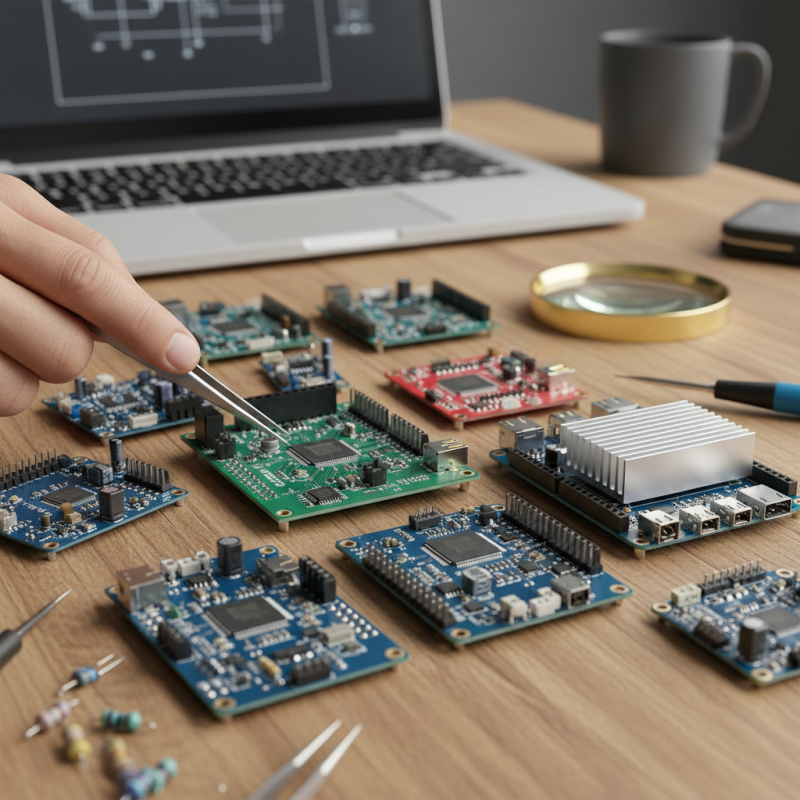
When evaluating different types of electronic boards, consider the project requirements. Each board has unique features. For example, microcontroller boards are great for simple tasks. In contrast, single-board computers support complex applications. Choosing the right type can significantly impact development time and functionality.
Data from industry reports suggests that 55% of developers prefer microcontroller boards for their low cost and ease of use. However, this choice may lead to limitations in processing power and connectivity options. Tight budgets can drive this decision. Yet, investing in a more capable board initially can save time and resources later.
Also, consider board size and power requirements. Compact designs can limit processing abilities. Some projects may not need extensive GPIO pins. Balancing size and functionality is crucial. It’s essential to prototype with different boards to evaluate their fit for your project. Failing to do this might result in incompatibility issues during testing. Reflect on these trade-offs to make an informed decision.
Comparing Features and Specifications
When choosing an electronic board for your project, specifications are key. Consider the processor type, memory capacity, and input/output options. According to industry reports, nearly 70% of project failures stem from selecting the wrong hardware. Matching the board's specs with your project's needs is essential.
For instance, if you're working on IoT applications, low power consumption is crucial. A board with at least 512 MB RAM can handle most tasks effectively. Look for features like Wi-Fi and Bluetooth integration, which enhance connectivity. Ensure that the board supports the necessary interfaces for your sensors and actuators.
Tips: Always evaluate the community and support available for your chosen board. A strong community can provide valuable insights and troubleshooting assistance. Don't underestimate the importance of documentation, too. Look for detailed guides and tutorials to ease the learning curve. Remember, choosing the wrong board could lead to delays and increased costs. Reflect on your project's goals and select wisely.
Assessing Budget and Cost Considerations
Choosing the right electronic board involves careful budget assessment. Start by defining your project's needs. Consider the complexity of the tasks. More advanced features often mean higher costs. Determine how much you can spend. Stick to this budget throughout the selection process.
Think about hidden costs. Sometimes, cheaper boards require additional components. These extras can add up quickly. Don't forget about long-term expenses too. Will you need replacements or upgrades later? Weigh these factors when making your choice. Reflect on whether the initial savings are worth it.
Prepare for potential unexpected expenses. Costs can vary based on market conditions. Keep an eye on prices over time. Additionally, assess whether you truly need all the features a board offers. Simpler boards often perform well for basic tasks. This can lead to significant savings without compromising quality.
How to Choose the Right Electronic Board for Your Project? - Assessing Budget and Cost Considerations
| Board Type |
Price Range (USD) |
Features |
Best For |
| Microcontroller Board |
$10 - $50 |
GPIO Pins, ADC, PWM Support |
Embedded Systems, IoT Projects |
| Development Board |
$20 - $100 |
Pre-installed IDE, Connectivity Options |
Prototyping, Learning |
| Single-Board Computer |
$25 - $200 |
Full OS Support, Multimedia Capabilities |
Robotics, Home Automation |
| FPGA Board |
$50 - $300 |
Reconfigurable Logic, High-Speed Processing |
High-Performance Computing, Signal Processing |
| Raspberry Pi Board |
$10 - $60 |
USB Ports, HDMI, GPIO |
Media Center, Low-Cost Computing |