
Blog
How to Choose the Right Cryo Chiller for Your Needs?
Selecting a Cryo Chiller is not just a matter of choosing the lowest temperature on a specification sheet. The right unit must match the process load, operating range, temperature stability, and hours of daily use. IEA’s The Future of Cooling report (2018) projects that global energy demand for space cooling could more than triple by 2050. That projection concerns space cooling, not cryogenic equipment, but it highlights why efficiency deserves attention. Every watt rejected becomes heat somewhere. Small detail, real consequence.
Start with the actual process conditions. Record the required temperature, peak and continuous heat loads, fluid type, flow rate, and expected pull-down time. A laser laboratory, analytical instrument, and production line may all need cooling, yet their operating patterns differ sharply. Compare capacity at your real setpoint, not only a headline rating. Check temperature stability, pump performance, footprint, noise, maintenance access, and available service support. The ASHRAE Handbook—Refrigeration (2022) offers established refrigeration design guidance, but it cannot replace application-specific sizing or a supplier’s verified performance data. Ask for test conditions in writing. Then compare models on the same basis.
There is a judgment call. A larger unit may provide useful headroom, but it can also increase cost and energy use. A smaller unit may struggle during peak demand. Neither choice is automatically right. This guide explains how to weigh those trade-offs and identify a Cryo Chiller suited to your process, facility, and operating priorities.
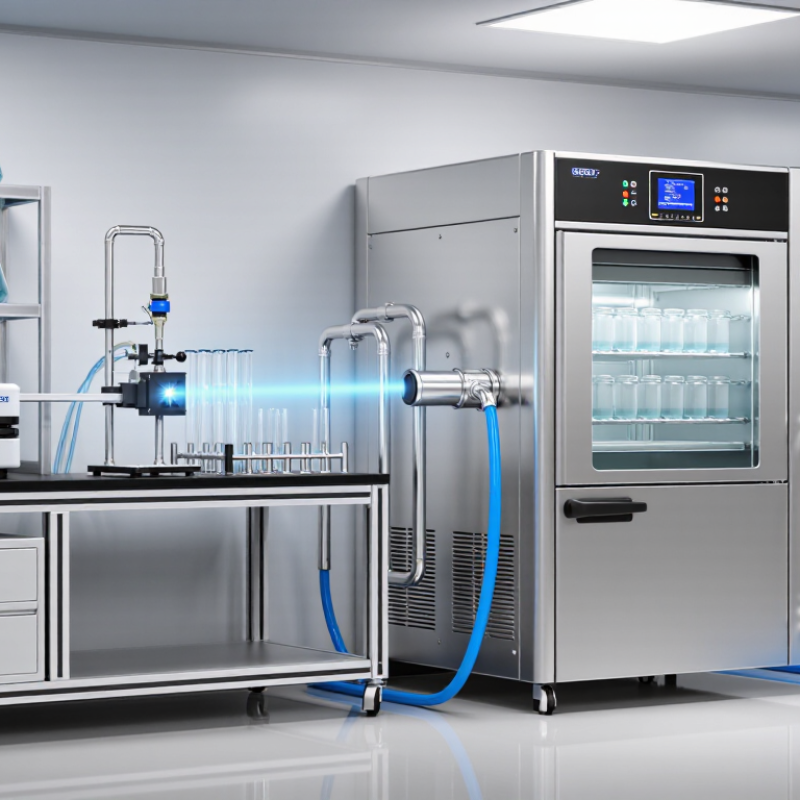
Understanding How Cryo Chillers Work and the Types Available
A cryo chiller removes heat from equipment or a process and carries it away through circulating coolant. In a typical closed-loop system, a compressor and heat exchangers move heat from the coolant to the surrounding air or water. The cooled fluid then returns to the load. Its actual temperature depends on the design, heat load, and flow rate—not just the number on the control panel.
Common options include single-stage mechanical chillers for moderate low-temperature needs and cascade systems for colder operating ranges. Cascade designs use two refrigeration circuits to reach temperatures that are difficult for one circuit alone. Some setups use a cryogenic fluid as a cooling source instead; these differ from recirculating chillers in how they supply and manage coolant. That matters. A specification can look neat while the real heat load is messy. To compare systems, check the required temperature range, cooling capacity, stability, coolant compatibility, and available space for heat rejection. Ask whether capacity is stated at your actual operating temperature, since performance can change across the range. A little margin is useful, but oversizing may add cost without improving control. The best fit is the system that holds the required conditions reliably in your real operating setup.
| System Type | How It Works | Typical Temperature Capability | Common Applications | Key Advantages | Selection Considerations |
|---|---|---|---|---|---|
| Ultra-low-temperature vapor-compression chiller | Uses a compressor-driven refrigerant cycle, often with multiple stages or a cascade arrangement, to remove heat from a circulating fluid. | Many systems are designed for roughly −40°C to −100°C; the achievable temperature depends on the model, heat load, fluid, and operating conditions. | Cooling process equipment, laboratory instruments, and components that need a controlled circulating coolant below the range of standard chillers. | Provides continuous fluid circulation and can offer convenient temperature control without consuming a cryogenic liquid. | Check minimum operating temperature, cooling capacity at the required setpoint, coolant compatibility, flow rate, and heat rejection needs. |
| Liquid-nitrogen cooling system | Uses liquid nitrogen as a consumable coolant, either by direct contact or through a heat exchanger. Nitrogen boils at about −196°C at atmospheric pressure. | Can approach the liquid-nitrogen boiling temperature at the cooling interface; the actual process temperature depends on heat transfer and control. | Rapid cooling, cryogenic testing, sample preservation, and applications that require temperatures far below those of conventional mechanical chillers. | Can provide very low temperatures and high cooling rates without a refrigeration compressor at the point of use. | Requires a reliable nitrogen supply, ventilation, oxygen-deficiency safeguards, and planning for coolant consumption and operating cost. |
| Gifford–McMahon (GM) cryocooler | Uses a compressor and a displacer-based regenerative refrigeration cycle to produce cooling in a sealed, closed-cycle system. | Depending on configuration and load, systems can provide stages in the tens of kelvin and, in suitable designs, reach approximately 4 K. | Cooling cryostats, superconducting devices, infrared detectors, and other equipment requiring cryogenic temperatures. | Can reach very low temperatures and operates without routine replenishment of liquid cryogen. | Consider vibration, compressor location, maintenance requirements, cooldown time, and cooling capacity at the target temperature. |
| Pulse-tube cryocooler | Uses oscillating pressure in a working gas and regenerative heat exchange to create cooling, with no moving displacer at the cold end. | Available in different configurations, commonly reaching temperatures from around 80 K down to approximately 4 K. | Low-vibration cryogenic instruments, detector systems, and research equipment. | The cold head has no moving parts, which can reduce vibration and cold-end mechanical wear. | Compare cooling capacity at the required temperature, vibration transmitted from the compressor, system size, and cooldown time. |
| Stirling cryocooler | Uses a regenerative cycle with oscillating gas and mechanically driven components to move heat from the cold end to the warmer end. | Common designs operate in the tens of kelvin to near 100 K; exact performance depends on the design and heat load. | Compact cooling for infrared sensors, portable instruments, and specialized cryogenic equipment. | Can be compact and suitable for applications where a relatively small cryogenic cooler is needed. | Assess vibration, service life, orientation limits, power use, and available cooling capacity at the operating temperature. |
| How to choose: Start with the required process temperature and heat load, then compare cooling capacity at that temperature—not only the lowest advertised temperature. Also check coolant or cryogen requirements, circulation and flow needs, temperature stability, vibration limits, utilities, safety provisions, maintenance, and total operating cost. Temperature figures above are indicative; confirm performance with the equipment supplier for the intended operating conditions. | |||||