
Blog
What Is the Best WiFi Carbon Monoxide Detector?
A Wifi Carbon Monoxide Detector can send an alert to your phone, but connectivity does not replace a dependable local alarm. The danger is easy to miss: carbon monoxide has no color or smell. The U.S. Centers for Disease Control and Prevention reports that more than 400 Americans die from unintentional carbon monoxide poisoning each year, with over 100,000 emergency department visits. Its warning is direct: “Carbon monoxide (CO) is an odorless, colorless gas that can cause sudden illness and death.” That makes alarm reliability, placement, and clear alerts more important than a long feature list.
What is the best model for your home? It should sound a loud alarm locally, provide timely phone notifications, and keep working through common Wi-Fi disruptions. Check whether it needs a hub, how it handles power outages, and whether its app identifies the alarm’s location. A notification can arrive late. Test the siren, too. For buying decisions, compare independent certification and manufacturer instructions rather than relying on app ratings alone. The CDC provides the health-risk evidence; product safety claims should be checked against the device’s certification details. This guide weighs practical protection against convenience, while recognizing a limitation: no connected detector can guarantee a notification will reach you.
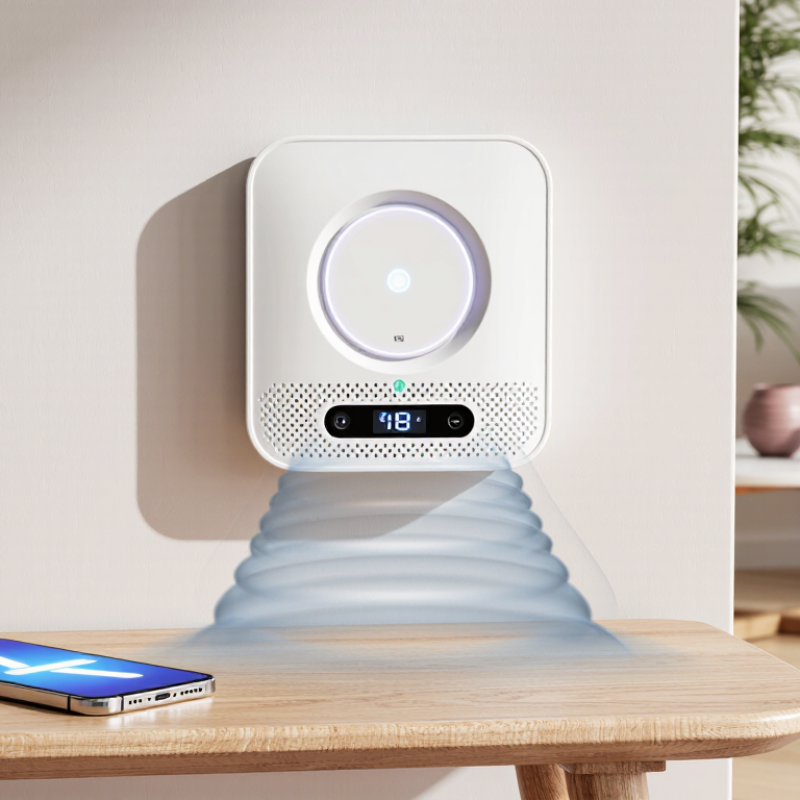
How WiFi Carbon Monoxide Detectors Work
A WiFi carbon monoxide detector uses a sensor to monitor the air, commonly an electrochemical sensor that reacts to carbon monoxide. When levels reach its alarm threshold, the unit sounds a local alert. Its WiFi connection can also send a notification to a phone, sometimes with the measured level and alert time. The sensor detects the gas; WiFi carries the message. If the router or internet fails, remote alerts may not arrive, so the local alarm still matters. Carbon monoxide has no color or smell. The CDC reports that it causes more than 400 unintentional deaths in the United States each year.
Connected alerts can help when you are away, but they do not replace a working alarm in the home. Check the device’s instructions for sensor life, testing, placement, and backup power. A phone alert is useful, not magic. I would not assume every WiFi detector measures or reports levels in the same way; features vary, and a delayed notification is still possible. For reliable performance, look for clearly stated testing information and compliance with the relevant safety standard, such as UL 2034 in the United States.
Tips: Test the alarm regularly using its test button. Keep it near sleeping areas as directed by its manufacturer, and replace it when its service life ends. If it sounds, move everyone outdoors and contact emergency services. Don’t troubleshoot indoors.
| Comparison dimension | What to look for | Verified detail | Why it matters |
|---|---|---|---|
| Safety certification | A CO alarm certified for the country where it will be used | In the United States, UL 2034 is a common residential CO-alarm standard. EN 50291 is used for household CO alarms in many European markets. | WiFi connectivity does not replace alarm certification. Check the product label and local requirements. |
| How detection works | A CO sensor, local audible alarm, and network-connected notification feature | Many household alarms use an electrochemical sensor. The alarm measures CO at the device; WiFi sends status or alarm notifications through a connected app or service. | The detector must still sound locally. App alerts are an additional notification channel, not a substitute for the built-in alarm. |
| Alarm response | A certified alarm that follows the applicable regional standard | For example, UL 2034 response requirements include an alarm within 60–240 minutes at 70 ppm, 10–50 minutes at 150 ppm, and 4–15 minutes at 400 ppm. | CO alarms are designed to respond to concentration over time; they may not alarm immediately at every detectable CO level. Follow the alarm instructions. |
| WiFi compatibility | Confirm the supported WiFi band, network requirements, and app setup before purchase | Some connected alarms require a 2.4 GHz WiFi network; requirements vary by model. Internet access is generally needed for remote notifications. | A detector may work as a local alarm while remote alerts are unavailable during a router, internet, or service outage. |
| Power and backup | Choose a power arrangement suited to the home, with backup power where applicable | Connected alarms may be battery-powered, hardwired, or use another specified power arrangement. Backup behavior and battery requirements differ by product. | Check whether the local alarm continues to operate during a power outage and replace or maintain batteries as directed. |
| Notifications | Clear app alerts for alarm events, low battery, faults, and end of life, if supported | Remote notification features depend on the detector, its app or service, network connectivity, and phone notification settings. | Do not rely on a phone alert as the only warning. Make sure people at home can hear the alarm. |
| Sensor life and maintenance | A clearly stated replacement date, test function, and maintenance instructions | CO alarms have a limited service life. The exact replacement interval is product-specific; follow the date and instructions printed on the alarm or in its manual. | WiFi status cannot extend the sensor’s service life. Test and replace the alarm as directed by its manufacturer. |
| Placement | Placement that follows the alarm instructions and local building guidance | Common guidance is to install CO alarms near sleeping areas and on each level of a home; exact placement and mounting instructions vary by jurisdiction and product. | A connected alarm cannot protect areas where no alarm is installed. Avoid locations prohibited by the product instructions. |
| Best overall choice | A locally certified CO alarm with a loud built-in alert, suitable power backup, clear end-of-life guidance, and WiFi notifications that match the home network | There is no single best configuration for every home; certification, placement, power, network compatibility, and maintenance needs differ. | Prioritize reliable local detection and alarm operation. Treat WiFi as a useful extra for remote awareness. |
If a CO alarm sounds, move everyone to fresh air immediately and contact emergency services or the appropriate local authority. Do not re-enter until it is confirmed safe.