
skip to Main Content

How to Choose the Best Rough Terrain Pallet Truck

Choosing the right Rough Terrain Pallet Truck starts with the ground beneath your wheels. Gravel, mud, ramps, and uneven warehouse yards can expose weaknesses quickly. A model that performs smoothly on concrete may struggle beside a loading dock after heavy rain. This guide explains how to compare capacity, ground clearance, fork dimensions, wheel design, braking control, and handle comfort before purchasing.

Real working conditions matter more than attractive specifications. Measure your pallet sizes, aisle widths, ramp angles, and typical load weights. Then check whether the truck’s rated capacity matches those conditions, not merely the advertised maximum. Large pneumatic or rugged polyurethane wheels may improve stability, but they can also increase rolling resistance. Small details matter.

Think beyond the first delivery.

Experienced operators often notice problems that product brochures overlook. Test the steering response with a representative load, if possible. Inspect weld quality, fork alignment, frame clearance, and access to replacement parts. Ask the supplier about maintenance intervals, operator guidance, warranty coverage, and service availability. These questions support safer and more dependable purchasing decisions.

There is no universally perfect truck. A heavier frame may offer durability but reduce maneuverability in tight spaces. A lower-cost model may appear practical, yet downtime can become expensive. Even experienced buyers can misjudge seasonal ground conditions. Review your assumptions carefully. The best choice balances terrain, workload, operator needs, maintenance resources, and long-term operating costs. Practical evidence should guide the final decision.
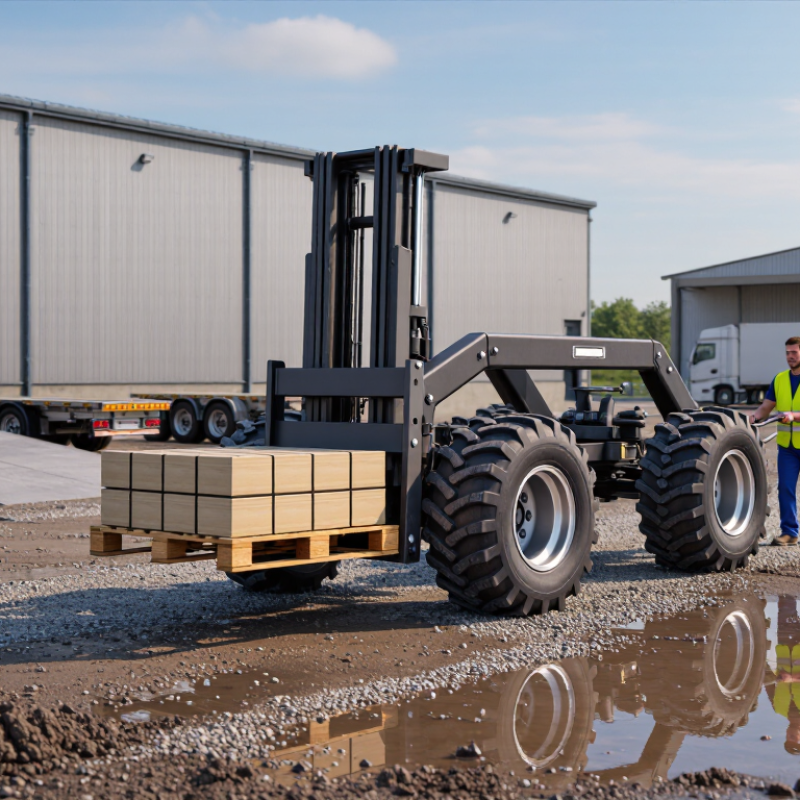
How to Choose the Best Rough Terrain Pallet Truck

Define the Load and Terrain Requirements

Choosing a rough terrain pallet truck starts with facts, not a sales brochure. Define the load before comparing equipment. Record the pallet’s total weight, length, width, and center of gravity. Include packaging, moisture, and uneven weight distribution. A 1,000-kilogram load may behave differently when half its weight sits near one edge. Measure it honestly. Do not rely on a rounded estimate.

Terrain needs equal attention. Walk the actual route with a tape measure and a simple slope gauge. Note gravel depth, mud, loose soil, potholes, ramps, and narrow turns. A truck that performs well on compacted gravel may sink into wet ground. Check doorway height and turning space too. Small obstacles matter. Repeated jolts can shift a tall load or tire the operator. If the route changes after rain, test under those conditions when possible.

Match capacity to the real load, not an optimistic average. Confirm rated capacity at the intended load center and lift height. Ask whether the wheels maintain traction on your worst surface. Larger, deeply treaded wheels can improve clearance, but they may increase turning effort. That trade-off deserves a site trial. Record pushing force, stopping distance, and load stability. I have seen teams overlook slope direction and regret it later. Recheck your assumptions after one week of use. Field evidence often exposes a detail the specification sheet missed.

Compare Pallet Truck Types and Essential Features

Choosing a rough terrain pallet truck starts with the surface, not the advertised load rating. Manual pallet trucks suit short movements on firm, uneven ground and offer simple maintenance. Powered walk-behind models reduce pushing effort during repeated transport. All-terrain versions usually add larger pneumatic wheels, stronger frames, and greater ground clearance. They perform better on gravel, compact soil, and loading areas with shallow ruts.

Fork size matters. Measure the pallets you actually use, including unusual or damaged units. A narrow fork may improve access, but it can reduce load stability. Check rated capacity at the intended load centre, not only the maximum figure. Polyurethane wheels roll smoothly on concrete, while pneumatic tyres absorb bumps outdoors. That comfort has a cost: punctures and pressure checks. Brakes, emergency controls, and a clear operator position deserve equal attention.

Weather exposure changes the decision. Select corrosion-resistant components for wet yards, and verify that electrical systems suit outdoor conditions. A low-lift truck may be enough for ground-level movement, while a high-lift model helps with small height changes. Do not overlook turning radius; a truck that handles rough ground may still struggle beside a narrow trailer. In practical assessments, buyers often focus on wheels and forget service access. That is a mistake. Inspect welds, battery access, fork alignment, and replacement-part availability. I would also test the truck with a real pallet, because brochure conditions rarely match a sloped, muddy worksite.

Evaluate Capacity, Maneuverability, and Ground Clearance

How to Choose the Best Rough Terrain Pallet Truck

Capacity is more than the maximum weight printed on a specification sheet. Check the load center, pallet dimensions, and how weight shifts over uneven ground. A 2,000-kilogram capacity may be unsuitable when the load sits far from the forks. I learned this after a tall crate caused noticeable steering resistance. It was within the rated limit, but poorly balanced. Choose a truck with a safe working capacity above your normal load. Leave room for sudden jolts and imperfectly stacked goods.

Maneuverability matters in muddy yards, gravel lanes, and narrow loading areas. Test the turning radius with a loaded pallet, not an empty truck. Large steering angles can improve control, but they may require more operator effort. Ground clearance should protect the frame from stones, ridges, and shallow drainage channels. However, excessive clearance can raise the load and reduce stability. Measure the lowest chassis point against the roughest route you actually use. A brief site test often reveals problems that a brochure misses.

Tips: Inspect tire condition, fork height, and brake response before each shift. Walk the route and identify soft patches, sharp edges, and hidden slopes. Keep loads low and centered. If steering feels vague, stop and reassess instead of forcing the truck forward. Some operators prefer larger wheels, but wheel size alone does not guarantee better performance. Surface type, load balance, and operator visibility must be considered together.

How to Choose the Best Rough Terrain Pallet Truck - Evaluate Capacity, Maneuverability, and Ground Clearance

Evaluation Dimension Light-Duty Rough Terrain Standard Heavy-Duty Rough Terrain High-Capacity Rough Terrain What to Consider
Rated load capacity 1,000–1,500 kg
2,200–3,300 lb
1,500–2,500 kg
3,300–5,500 lb
2,500–3,000 kg
5,500–6,600 lb
Select a truck whose rated capacity exceeds the heaviest expected load. Capacity can be affected by load-center distance, uneven ground, and attachments.
Typical load-center reference Approx. 600 mm
24 in
Approx. 600 mm
24 in
Approx. 600 mm
24 in
A longer or uneven load increases the effective load center and may reduce the safe capacity. Confirm the capacity chart supplied for the specific truck.
Fork length 1,000–1,150 mm
39–45 in
1,150–1,220 mm
45–48 in
1,220–1,800 mm
48–71 in
Forks should support the pallet without excessive overhang. Forks that are too long can reduce maneuverability in narrow work areas.
Unladen ground clearance Approx. 75–100 mm
3.0–3.9 in
Approx. 90–120 mm
3.5–4.7 in
Approx. 100–150 mm
3.9–5.9 in
Greater clearance helps the truck cross gravel, compacted soil, thresholds, and shallow ruts, but it can raise the load and affect stability.
Wheel and tire configuration Large pneumatic or semi-pneumatic tires; 2–4 load wheels Pneumatic tires with reinforced tread; 4–6 load wheels Heavy-duty pneumatic tires; multiple load wheels or suspension support Pneumatic tires absorb shocks and perform better on uneven surfaces. Solid tires resist punctures but generally transmit more vibration.
Typical turning radius Approx. 1,300–1,600 mm
51–63 in
Approx. 1,500–1,900 mm
59–75 in
Approx. 1,800–2,300 mm
71–91 in
Use the smallest suitable chassis when working between buildings, racks, trailers, or landscaped areas. Verify the measured radius with the forks loaded.
Typical overall width Approx. 680–800 mm
27–31 in
Approx. 700–900 mm
28–35 in
Approx. 800–1,000 mm
31–39 in
Measure gates, trailer doors, aisles, and access paths. The widest point may be the handle, wheel guards, or load.
Recommended operating surface Firm gravel, compacted soil, concrete, asphalt Uneven gravel, construction sites, farms, yards, and paved surfaces Rough industrial yards, heavy construction areas, and difficult outdoor routes No pallet truck should be treated as an all-terrain vehicle. Avoid deep mud, loose slopes, holes, and surfaces beyond the manufacturer’s limits.
Typical grade capability Approx. 5–10% on firm surfaces Approx. 8–15% on firm surfaces Approx. 10–20% when properly specified Grade performance depends on payload, traction, surface condition, direction of travel, and braking system. Use the rated limit, not an informal estimate.
Typical truck weight Approx. 120–250 kg
265–550 lb
Approx. 180–350 kg
400–770 lb
Approx. 300–600 kg
660–1,320 lb
Higher vehicle weight can improve traction and stability, but it increases transport requirements, ground pressure, and manual handling difficulty.
Power and propulsion Manual or compact electric drive Electric drive with powered lift; optional traction control High-torque electric or engine-assisted drive with powered lift Powered traction reduces operator effort on slopes and rough ground. Check battery capacity, charging access, noise, emissions, and service needs.
Best use case Short-distance material movement with moderate loads Daily outdoor pallet handling across mixed surfaces Frequent movement of heavy or oversized loads in demanding yards Match the truck to the actual route, load frequency, surface condition, and operator skill—not capacity alone.

Note: The figures above are representative industry ranges for comparison purposes. Exact specifications, safe working limits, grade ratings, and capacity data vary by equipment design and must be confirmed in the manufacturer’s technical documentation.

Check Safety, Durability, and Maintenance Needs

Choosing the best rough terrain pallet truck starts with safety, not lifting capacity alone. Check whether the frame remains stable on gravel, ramps, and uneven concrete. Large wheels can reduce jolting, but they do not remove tipping risks. Test the handle, braking system, and steering response while wearing normal work gloves. The forks should enter pallets smoothly without scraping or sudden drops. Operators also need clear visibility around the load.

Durability depends on practical construction details. Inspect welded joints, fork tips, wheel bearings, and the protective finish. In field assessments, I look for exposed parts that could collect mud or water. A strong truck may still fail early if its wheels clog after one wet shift. Maintenance access matters too. Grease points should be reachable, and replacement parts should not require unusual tools. I once underestimated cleaning time on a rough-site truck. That mistake affected daily productivity more than expected.

Tips: Measure the narrowest route before buying. Test the truck with a realistic load, not an empty pallet. Check wheels after every demanding shift. Remove stones, wire, and packed soil from moving parts. Record brake and steering issues immediately. Do not ignore small changes; a loose wheel can become a serious handling problem. Ask operators for feedback after several weeks, because early impressions are often incomplete.

Select the Best Model for Your Operating Environment

Choosing the best rough terrain pallet truck starts with the operating environment, not the rated capacity. Measure aisle width, ground slope, surface damage, and travel distance before comparing models. A compact unit may suit a farm warehouse, but it can struggle on loose gravel or wet concrete.

OSHA estimates that powered industrial truck incidents cause about 85 workplace deaths and 34,900 serious injuries each year in the United States. These figures cover several truck types, yet they underline one point: surface conditions and operator visibility matter. For uneven yards, select large pneumatic tires, strong ground clearance, and stable load support. On mixed indoor and outdoor routes, check turning radius, braking response, and battery performance under temperature changes. Small details matter.

Load distribution is another practical test. The rated capacity may apply only at a specific load center and floor condition. Ask suppliers for verified capacity charts and independent inspection records. Standards such as ANSI/ITSDF B56.9 can support safer design and maintenance decisions. Still, paperwork is not enough. A short site trial can reveal steering resistance, wheel spin, or poor visibility that specifications miss.

Operators should test the truck with the heaviest common load, not an idealized pallet. They should also repeat the test after rain, dust, or a long shift. That takes time. It may prevent a poor purchase. The best model is the one that remains controlled, visible, and reliable where your work actually happens.