2026 How to Choose Smart LED Light for Wholesale?
Choosing a Smart LED Light for wholesale requires more than comparing wattage and unit prices. Buyers must examine brightness stability, color consistency, control compatibility, heat management, warranty terms, and supplier reliability. A sample may look impressive in a showroom, yet perform poorly after continuous use in a hotel, warehouse, or retail store. Test before committing.
Lighting researcher Dr. Mariana Figueiro has explained, “Light is the strongest cue for our circadian rhythms.” Her observation reminds wholesalers that smart lighting affects more than energy consumption. Color temperature, dimming range, scheduling, and installation environments can influence comfort and daily routines. These details matter when selecting products for offices, homes, healthcare spaces, and hospitality projects. Small specifications create visible differences.
A dependable Smart LED Light supplier should provide clear technical data, repeatable samples, traceable quality checks, and responsive after-sales support. Ask about lumen maintenance, driver performance, app stability, wireless protocols, and data security. Review independent test reports where available. Confirm that packaging protects every fixture during long-distance transport. Do not trust attractive claims alone. Sometimes, the cheapest model becomes the most expensive choice after returns, replacements, and installation delays. My own assessment would still leave room for caution: smart controls can fail, users may ignore advanced features, and compatibility can change quickly. Wholesale success depends on practical testing, not fashionable specifications. Choose products that work simply, consistently, and at scale.
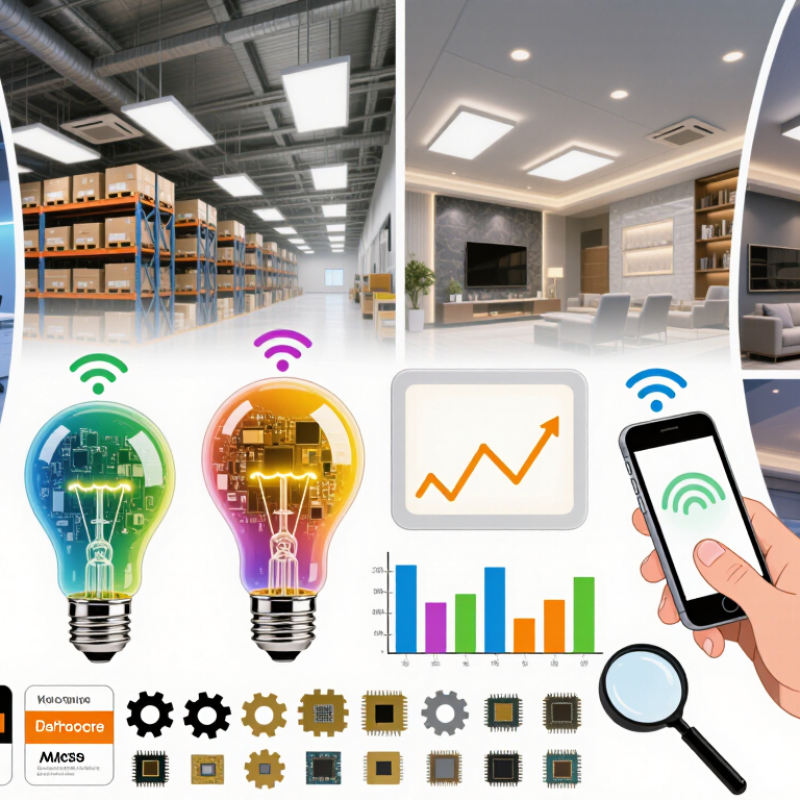
What Smart LED Lights Are and Why Wholesale Buyers Choose Them
2026 How to Choose Smart LED Light for Wholesale?
What Smart LED Lights Are and Why Wholesale Buyers Choose Them
Smart LED lights combine energy-efficient light-emitting diodes with digital controls. Users can adjust brightness, color temperature, schedules, and scenes through an app, remote, or voice system. For wholesale buyers, this combination creates practical value beyond basic illumination.
A warehouse manager may set 4,000K light for product aisles and reduce brightness after closing. Motion sensors can limit unnecessary operation in storage rooms. These details support lower energy use and simpler daily control. However, smart features need stable connections. Not every customer has reliable Wi-Fi. Some users also find complicated apps frustrating.
Wholesale buyers should examine lumen output, wattage, beam angle, color rendering, and expected service life. A 12-watt lamp should deliver consistent brightness, not only attractive packaging claims. Request test reports, sample units, control compatibility, and clear warranty terms. Check whether the product meets relevant electrical and efficiency requirements in the target market.
Test before ordering deeply.
In real purchasing work, small weaknesses appear quickly. A light may dim smoothly but reconnect slowly after a power cut. Another model may offer excellent color quality but cost more than its customers accept. Careful sampling, installation trials, and honest feedback from installers can reveal these gaps. Reliable supply, stable performance, and understandable controls often matter more than an impressive feature list.
How to Choose Smart LED Lights for Wholesale
Smart LED lights combine LED efficiency with remote control, scheduling, dimming, and automation. For wholesale buyers, rated life is an important purchasing factor because longer-lasting products can reduce replacement frequency and maintenance costs.
Wholesale insight: LED-based products generally offer a much longer rated life than incandescent and CFL lamps. When selecting smart LED lights, buyers should also verify connectivity type, control compatibility, dimming performance, warranty terms, and the rated life stated in the product specification.
Reference basis: typical rated-life figures commonly reported by the U.S. Department of Energy for general lighting technologies. Actual smart LED performance varies by product design and operating conditions.
Which Smart Features, Controls, and Connectivity Standards Matter
Wholesale buyers should judge smart LED lights by control reliability, not by a crowded feature list. A bright lamp is not automatically a smart lamp.
IoT Analytics reported 16.6 billion connected IoT devices worldwide in 2023. That growth makes interoperability important for commercial projects. Select products supporting Matter for cross-platform control, Wi-Fi for direct cloud access, or Thread for low-power mesh networks. Bluetooth Low Energy remains useful for commissioning and nearby control. The Bluetooth SIG’s 2024 market update forecast 7.6 billion annual Bluetooth device shipments by 2028. That signals strong ecosystem availability, but not guaranteed compatibility.
Check the control experience before placing a large order. Mobile apps should support schedules, scenes, dimming, energy monitoring, and user permissions. Physical switches still matter in hotels, offices, and warehouses. A cloud-only system may fail during internet outages. Local control is safer operationally.
For professional lighting, DALI-2 can provide addressable dimming, diagnostics, and group control, while gateways can connect it with broader building systems. Ask suppliers for firmware support periods, API documentation, reset procedures, and factory test records. Do not accept “works with smart home systems” without testing the exact gateway and lamp combination. I have seen impressive demonstrations become unreliable after network congestion. That risk is easy to underestimate.
How to Test, Order, and Scale Your Smart LED Light Purchase
For wholesale buyers, a smart LED light should pass physical testing before entering a spreadsheet. I inspect ten samples from different cartons, not one perfect unit. I check brightness consistency, color temperature, app pairing, dimming, and heat after four hours. Measure it twice. A light may connect quickly on Wi-Fi, yet fail after a router restart. That failure matters more than a polished demonstration. Record lux readings, standby power, restart time, and visible flicker with calibrated equipment. Cheap meters can mislead.
Before ordering, request a written specification covering wattage, lumen output, color range, connectivity, materials, packaging, and expected service life. Ask for production tolerances, replacement procedures, firmware support, and regional safety documentation. Confirm the minimum order quantity and carton dimensions before negotiating price. A low unit cost can become expensive when damaged packaging increases returns. Request a pilot order with mixed samples. Keep one unopened unit for later comparison. This simple step is often forgotten.
Scale in stages. Start with a controlled batch for offices, homes, or retail displays. Track pairing failures, return reasons, heat complaints, and daily operating hours. Compare the first batch with the next shipment, because quality can drift after larger production runs. I prefer written inspection records, although my early records were incomplete. That mistake made later claims harder to verify. Set acceptance limits before placing the larger order, including brightness variation, response time, packaging damage, and defect rates. Leave room for honest revision when field data challenges the original plan.