
skip to Main Content

Top Powder Mixing Equipment Manufacturers in China

Choosing a Powder Mixing Equipment manufacturer in China involves more than comparing prices or catalog photos. The right supplier should understand the material, target batch size, and required mixing uniformity. A ribbon blender may suit free-flowing powders, while a paddle mixer can handle different process demands. Details matter. Look closely at contact surfaces, shaft seals, discharge design, and cleaning access. These features affect daily operation, not just the equipment’s appearance.

This guide introduces manufacturers and explains practical points buyers can verify before requesting a quotation. Compare stated capacity with your actual working volume, and ask how the supplier evaluates mixing performance. A clear test plan, material certificates, factory inspection records, and responsive technical support can help establish confidence. Where possible, provide a representative sample and review the results with qualified process staff. No ranking can capture every production reality. Product claims also deserve careful checking, since specifications and service quality may vary by model and project. Use this overview as a starting point, then confirm details directly with each manufacturer. A good choice is not simply the machine with the largest motor. It is equipment suited to your process, supported by evidence, and practical to maintain.
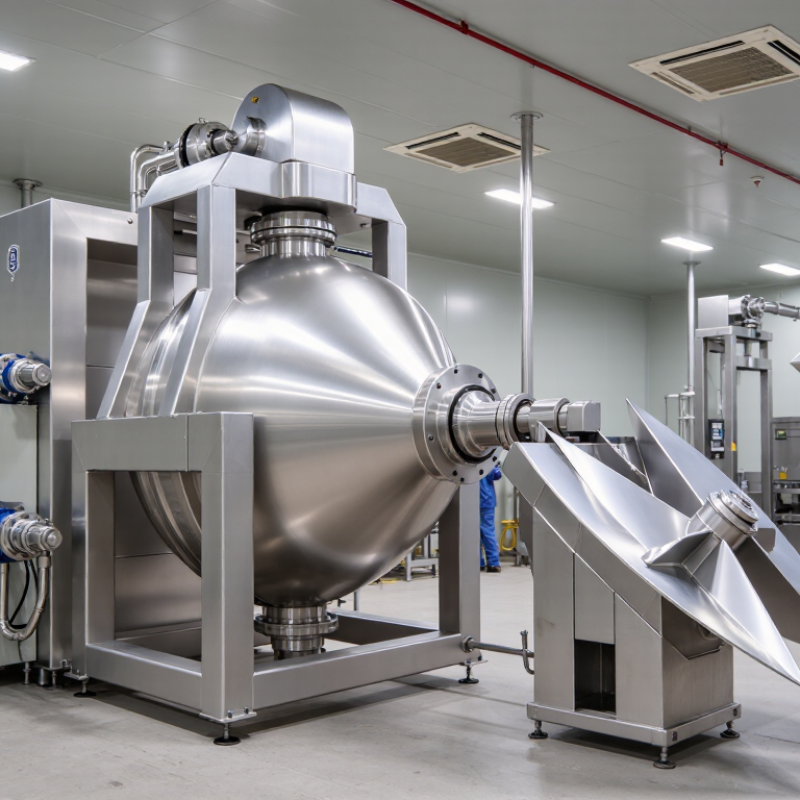
Top Powder Mixing Equipment Manufacturers in China

Understanding Powder Mixing Equipment and Its Main Types

Powder mixing equipment combines dry ingredients until their composition is consistent across a batch. The right machine depends on particle size, flow, moisture, batch volume, and how easily ingredients separate. A mixer that works well for free-flowing granules may struggle with fine, cohesive powders. Small details matter.

Ribbon blenders use rotating inner and outer blades to move material in opposing directions. They suit many routine, larger-batch blends, though very delicate particles may need gentler handling. Paddle mixers also move powder mechanically, often with a comparatively gentle action. For fragile ingredients, this can help limit damage, but the result still depends on fill level and mixing time.

V-blenders rotate a split vessel, tumbling powders through repeated division and recombination. They are often considered for free-flowing materials and modest batch sizes. High-shear mixers use faster-moving tools to break up lumps or distribute small additions, but excess energy can create heat or alter sensitive materials. That trade-off is easy to overlook. Testing a representative sample can reveal uneven color, leftover clumps, or segregation after discharge. Equipment descriptions alone rarely show the full picture.

Key Criteria for Evaluating Chinese Powder Mixer Manufacturers

Choosing a Chinese powder mixer manufacturer starts with the process, not the machine’s advertised capacity. Ask whether the mixer suits your batch size, particle behavior, moisture level, and target blend uniformity. Request a trial using your actual ingredients, then compare samples from several points in the vessel. Numbers matter. A single grab sample can hide uneven mixing, especially when powders differ in density or flow. Ask how uniformity was measured, how long the cycle ran, and whether the test can be repeated.

Inspect product-contact surfaces, welds, seals, discharge gates, and dust-control connections in person or through detailed records. These details affect cleaning time and contamination risk, not just appearance. Check material certificates, drawings, operating manuals, and the proposed inspection plan before placing an order. Service matters. Confirm spare-part lead times, commissioning support, and who responds when a motor overheats or a seal wears early. Ask for references from comparable applications, while remembering that another factory’s result may not transfer directly. A neat demonstration can still disappoint. Scale-up is often the weak point; a successful small trial does not guarantee the same blend in a larger vessel. Be cautious with claims that lack test conditions.

Top Powder Mixing Equipment Manufacturers in China — Key Criteria for Evaluating Chinese Powder Mixer Manufacturers

A material-verification benchmark for assessing powder-contact surfaces in mixer equipment.

How to use this: Request material test reports for product-contact parts and confirm the specified alloy against the applicable standard and your process requirements. Composition alone does not establish equipment suitability. ASTM A240/A240M specifies 316L molybdenum at 2.0–3.0 wt.%; the chart compares chromium and nickel only. Check the applicable standard edition and product form.

Leading Powder Mixing Equipment Manufacturers in China

Top Powder Mixing Equipment Manufacturers in China

Leading Powder Mixing Equipment Manufacturers in China

Leading powder mixing equipment manufacturers in China serve industries handling flour, mineral powders, pigments, and dry chemicals. Their product ranges may include ribbon mixers, paddle mixers, and double-cone mixers. Each design suits different batch sizes and material behaviors. A ribbon mixer, for example, can handle a large batch, but cohesive powders may still form stubborn lumps.

Experienced manufacturers should ask about bulk density, moisture, particle size, and cleaning requirements before recommending a machine. Buyers can request a test using their own material and review mixing uniformity, discharge residue, and cycle time. Check the contact surfaces, welds, seals, and access doors closely. These details affect cleaning and maintenance. A specification sheet can miss practical issues. That happens. Ask for drawings, material certificates, and clear service terms, then compare proposals against your actual process rather than price alone.

Tips: Share your target batch size and acceptable mixing time. Ask how the mixer handles fragile particles and how operators inspect internal surfaces. If test results are not repeatable, pause before ordering. A neat factory visit helps, but it cannot replace a material trial.

Comparing Manufacturers by Technology, Capacity, and Industry Focus

Comparing powder mixing equipment manufacturers in China works best when buyers look beyond catalog claims. Technology should match the material: ribbon mixers suit many free-flowing powders, while paddle or ploughshare designs may handle different particle behavior. Ask for trial data using your own ingredients. Check blend uniformity, discharge residue, seal design, and cleaning access. A polished brochure helps, but a witnessed test says more.

Capacity needs equal scrutiny. Compare working volume, not just vessel size, and confirm batch time at your target bulk density. A large machine can still underperform if powder bridges or separates during discharge. Industry focus matters too: food, chemical, mineral, and battery-material plants may prioritize different contact finishes, dust controls, temperature limits, or automation. Request drawings, material certificates, service scope, and a realistic delivery schedule. No scorecard captures every shop-floor issue; leave room for a second technical review.

Tips: Keep the trial simple. Share particle size, moisture, and target batch size, then compare results, energy use, and cleaning time. Ask who supports commissioning and spare parts after installation.

How to Select a Manufacturer for Your Production Needs

Top Powder Mixing Equipment Manufacturers in China

How to Select a Manufacturer for Your Production Needs

Choosing a manufacturer starts with your powder, not the machine catalogue. Define batch size, target uniformity, cleaning frequency, and the ingredients’ flow behavior. Fine powders may cling to vessel walls; heavier particles can separate after mixing. Ask manufacturers to test your actual materials and share batch records, mixing times, and cleaning procedures. A polished demonstration is useful, but production data matters more.

MarketsandMarkets’ Industrial Mixers Market report estimated the market at about USD 2.3 billion in 2023, with projected growth to USD 3.0 billion by 2028. That growth signals demand, not proof that any supplier fits your process. Compare mixing uniformity, usable batch range, contact-material specifications, safety features, spare-parts access, and technical support. Request references from facilities with similar powders and operating conditions. On paper, comparisons look simple. They often aren’t.

Tips: Send a small, representative powder sample for a witnessed trial. Record loading time, mixing time, discharge residue, and cleaning effort. Ask what happens when a batch falls outside specification. If a supplier cannot explain its test method clearly, pause before signing. A little doubt helps.