
Blog
7 Best Weigh Feeder Manufacturers for Global Buyers
Choosing a Weigh Feeder manufacturer is about more than comparing catalog prices. The right system must deliver a steady, measurable flow of material under real operating conditions. That means considering product characteristics, required throughput, plant layout, and maintenance access.
Details matter. A dusty powder behaves differently from coarse granules, and a feeder that performs well in one process may struggle in another. Buyers should review stated accuracy, feed-rate range, belt or screw design, control options, and integration requirements. Ask how performance is tested, what calibration support is available, and whether spare parts can be sourced reliably. A polished brochure is useful, but it cannot replace clear technical answers.
This guide introduces seven Weigh Feeder manufacturers serving global buyers. It is intended as a practical starting point, not a universal ranking: suitability depends on the application, service needs, and project specifications. Not always an easy choice. Compare each supplier’s documented capabilities and request references or application examples where possible. Also confirm that quoted configurations match your material and operating environment. Small differences in installation conditions can affect results. With careful evaluation, buyers can narrow the field and choose a partner whose equipment, support, and communication fit the plant—not just the purchase order.
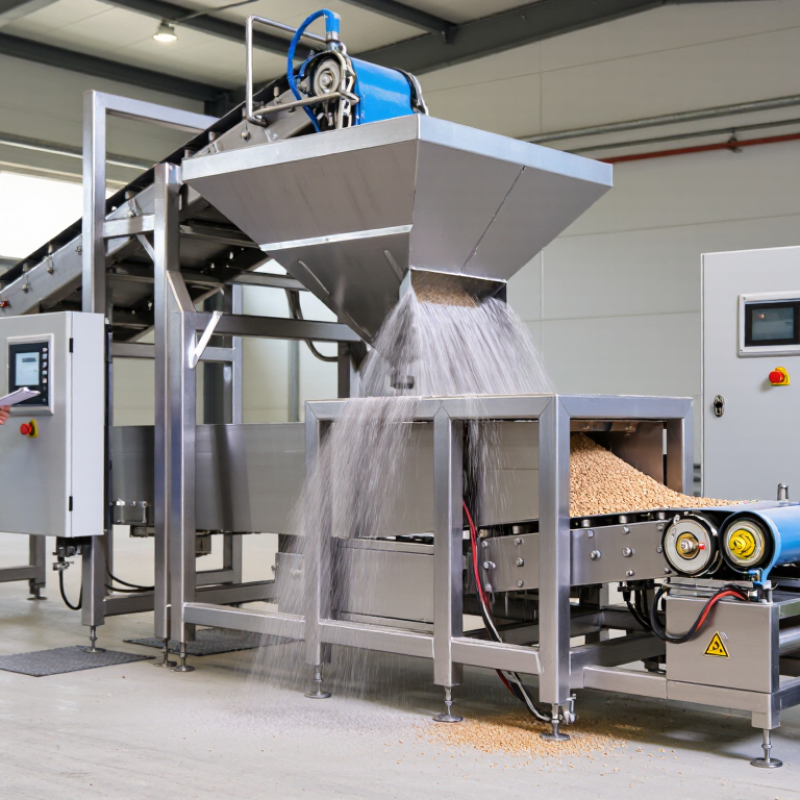
What Weigh Feeders Are and How They Work
A weigh feeder measures and controls the flow of bulk material, such as powder, granules, or small pellets. Unlike a basic conveyor, it tracks how much material moves over time. A typical belt-type unit has a feed hopper, a moving belt, load cells, and a speed sensor. The load cells measure the material’s weight on a short section of belt. The sensor records belt speed. A controller combines these readings to estimate the feed rate.
The feeder compares the measured rate with the target set by the operator. If the flow drifts, the controller adjusts belt speed or another feed mechanism. For example, a dusty powder may bridge above the belt, causing uneven delivery. Material buildup can also affect readings. Small changes matter. Installation, calibration, and regular checks help keep measurements dependable, though actual accuracy depends on the material and operating conditions. Do not assume every material behaves alike.
Tips: Check that the feeder is level and the belt is clean before calibration. Test it with the actual material when practical. Record readings over time; a single good result may hide a recurring fluctuation.
Key Criteria for Evaluating Weigh Feeder Manufacturers
A weigh feeder manufacturer should prove that its equipment suits your material, not just quote a maximum capacity. Ask about feed-rate range, accuracy under changing loads, and performance with your actual material. Fine powders, damp granules, and coarse minerals behave differently. A feeder that handles a steady test flow may struggle when material bridges above the belt. Request test data and clarify how it was collected. Numbers can mislead.
Check the mechanical details. Belt width, hopper geometry, load-cell protection, and access for cleaning affect daily operation. Ask how the controller communicates with your plant system and what happens after a power interruption. Maintenance needs matter, too: confirm spare-part availability, calibration steps, and service response times. Ask for installation references from similar industries, but verify that the operating conditions truly match yours. A polished case study is not enough. Request a site visit or a documented acceptance test where possible. Compare total ownership costs, including commissioning, training, and expected wear parts. Some buyers focus too much on the purchase price; that is understandable, but it can leave costly gaps. No specification sheet can remove every uncertainty, so record assumptions and agree on measurable acceptance criteria before ordering.
Seven Leading Weigh Feeder Manufacturers for Global Buyers
Global buyers comparing seven leading weigh feeder manufacturers should look beyond catalog accuracy. A feeder must deliver a stable mass flow despite changing material density, vibration, or hopper level. World Steel Association data put global crude steel production at about 1.89 billion tonnes in 2024, illustrating the scale of continuous bulk-material handling. The International Energy Agency estimates cement production at roughly 4.1 billion tonnes in 2020. These figures make reliability and service access practical purchasing concerns, not minor features.
Compare manufacturers on seven points: weighing accuracy, feed-rate range, material compatibility, control-system integration, calibration support, spare-parts access, and regional service response. Ask for test results using material similar to yours; a laboratory sample may not behave like damp powder on a cold morning. Check how quickly technicians can diagnose drift, and whether replacement load cells are stocked near your site. Small details matter. NIST guidance on measurement traceability emphasizes documented calibration and uncertainty, useful benchmarks when reviewing performance claims. No shortlist is perfect. I would still request operating references from plants with comparable throughput, then verify the stated accuracy under real production conditions. A polished brochure cannot answer every question.
How Weigh Feeder Solutions Vary Across Industries
A weigh feeder is not simply a belt with a scale; its duty changes with material and process risks. In cement plants, abrasive limestone and raw meal call for rugged belts, dust sealing, and steady low-rate dosing.
The U.S. Geological Survey estimated world cement production at 4.1 billion tonnes in 2023, in Mineral Commodity Summaries 2024. At that scale, small feed-rate errors can become costly across continuous kilns. There is a catch. Durability alone does not guarantee accurate feeding.
Grain mills and ingredient plants prioritize gentle handling, cleanability, and repeatable small-batch recipes. FAO’s 2024 Cereal Supply and Demand Brief forecast cereal output at about 2.85 billion tonnes, highlighting the scale of grain flows.
Food-grade service may require smooth contact surfaces and accessible inspection points, though sanitation needs vary by product and site. Mining presents another trade-off: coarse, variable feed can require impact-resistant weigh sections, while tight control may still matter downstream.
A datasheet rarely captures bridging, sticky fines, or cramped maintenance access. Buyers should compare particle size, moisture, throughput, turndown, cleaning needs, and calibration access—not just nameplate capacity.
How to Match a Manufacturer to Your Application and Region
Choosing a weigh feeder manufacturer starts with the material, not the catalogue. Fine powders may bridge or dust; damp aggregates can stick to the belt. Define feed rate, particle size, bulk density, required accuracy, and operating hours. Then ask for test data from a comparable material. A polished specification can still miss real flow behavior.
Region matters, too. Check whether the supplier can provide commissioning, spare belts, load-cell support, and calibration near your site. Confirm electrical supply, ambient temperature, dust protection, and control-system compatibility. OIML R 50 provides technical requirements for continuous belt weighers, a useful reference when comparing weighing performance.
For cement applications, the IEA reports that cement production accounts for around 7% of global CO2 emissions; stable material dosing can support process control, though it cannot alone reduce emissions. Ask for documented accuracy under stated operating conditions, not just a headline figure.
