
skip to Main Content

What Is the Best Type of Air Compressor in 2026?

Choosing the best Air Compressor in 2026 starts with a practical question: what will it run, and for how long? A small workshop powering an impact wrench has different needs from a factory supplying several production lines. Tank size, airflow, pressure, duty cycle, noise, and maintenance all matter. A bigger motor alone does not guarantee a better fit.

The U.S. Department of Energy’s Improving Compressed Air System Performance guide reports that compressed air can account for about 10% of electricity use in U.S. manufacturing, and considerably more in some plants. That makes efficiency more than a specification-sheet detail. CAGI’s standardized data sheets can help buyers compare compressor performance on a consistent basis. Still, published ratings cannot replace measurements of real demand, leaks, or changing workloads.

Compressed-air specialist Ron Marshall’s system-focused guidance points toward a useful rule: measure demand before selecting equipment. In plain terms: “Choose for the work, not the nameplate.” That sentence is a practical summary, not a direct quotation. The right choice may be a rotary screw unit for steady demand, a reciprocating model for intermittent use, or a variable-speed design where demand fluctuates. There is no universal winner. Even a seemingly efficient model can disappoint if it runs oversized, cycles constantly, or sits beside a dusty, hot wall. This guide compares the main compressor types, explains where each performs well, and shows which questions to ask before buying in 2026.
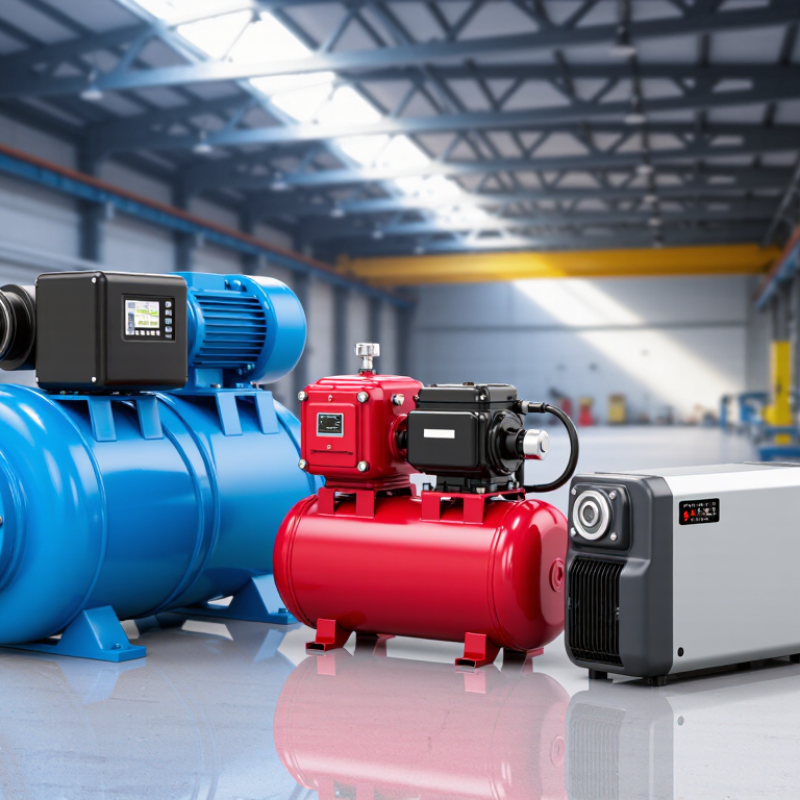
What Is the Best Type of Air Compressor in 2026?

Define “Best” by Duty Cycle, Flow (SCFM), Pressure (PSI), and Life-Cycle Cost

What Is the Best Type of Air Compressor in 2026?
Define “Best” by Duty Cycle, Flow (SCFM), Pressure (PSI), and Life-Cycle Cost

“Best” depends on the work. For intermittent tasks, a reciprocating compressor may fit; steady, extended demand often favors a rotary screw design. Large, stable flows may justify a centrifugal unit. Match duty cycle to actual use, including peak periods, idle time, and future demand. A machine that runs nearly nonstop needs different sizing from one that fills a tank between short tool bursts.

Size for usable flow, not a headline number. Add up each tool’s SCFM at its required PSI, then account for simultaneous use and pressure losses through hoses, filters, and piping. The U.S. Department of Energy’s Improving Compressed Air System Performance sourcebook notes that compressed air can account for roughly 10% of industrial electricity use. That matters. DOE guidance also estimates that raising pressure by 2 PSI can increase energy consumption by about 1% at full capacity. Higher pressure is not a harmless shortcut.

Compare life-cycle cost across purchase, installation, electricity, maintenance, and downtime. Ask suppliers for performance data at your operating pressure, then check it against measured demand. A lower-priced unit may cost more to run; an oversized one can waste energy while cycling inefficiently. This is easy to misjudge. Log pressure and flow during a typical shift, and revisit the choice when production changes.

What Is the Best Type of Air Compressor in 2026? — Define “Best” by Duty Cycle, Flow (SCFM), Pressure (PSI), and Life-Cycle Cost
Compressor Type Typical Duty Cycle Typical Flow (SCFM) Typical Working Pressure (PSI) Life-Cycle Cost Profile Best Fit
Reciprocating (Piston) Often intermittent; many standard units are intended to run roughly 50–70% of the time. Check the manufacturer’s rating for the specific model. About 1–50 SCFM across common small and medium shop units; larger systems can exceed this range. Commonly about 90–175 PSI, depending on design and stage count. Usually the lowest initial purchase cost. Maintenance is periodic, and frequent operation near capacity can increase wear and energy cost. Small workshops, garages, and applications with intermittent air demand.
Rotary Screw Designed for sustained operation; many industrial models are rated for continuous duty when correctly sized and maintained. Roughly 10–1,000+ SCFM, depending on compressor size and pressure. Commonly about 100–175 PSI; higher-pressure configurations are available. Higher initial cost than a comparable basic piston unit. Energy use, service intervals, cooling, and operating hours strongly affect lifetime cost. Manufacturing, workshops, and facilities with steady or frequent air demand.
Scroll Many oil-free scroll systems are designed for continuous operation, often using multiple modules to match demand. Typically about 2–50 SCFM per unit; modular systems can provide more. Commonly about 90–145 PSI, depending on the model. Often a higher purchase cost per unit of flow. Quiet operation and oil-free air can be valuable where air quality matters; filter and service costs still apply. Laboratories, clinics, dental settings, and other lower-flow applications needing quiet or oil-free air.
Centrifugal Intended for continuous, high-volume service when operated within its specified range. Generally hundreds to thousands of SCFM; exact output depends on size, stages, and operating conditions. Often about 100–150 PSI for standard plant-air systems; multistage designs can reach higher pressures. High initial and installation cost, but can be efficient at stable, large-scale demand. Performance and cost can worsen when demand varies substantially from the design point. Large plants with high, steady compressed-air demand and suitable technical support.
How to compare: SCFM and pressure figures are typical application ranges, not guaranteed ratings. Compare delivered flow at the required PSI, using the same rating conditions. Total life-cycle cost includes purchase and installation, electricity, maintenance, air treatment, and downtime. Actual duty cycle, output, and costs vary by model, sizing, controls, and operating conditions.

Compare Reciprocating, Rotary-Screw, Centrifugal, and Scroll Compressors

What Is the Best Type of Air Compressor in 2026? Compare Reciprocating, Rotary-Screw, Centrifugal, and Scroll Compressors

The best compressor depends on how much air your work needs and how steadily it needs it.

Reciprocating models suit intermittent use, such as a small workshop running air tools between tasks. They are straightforward, but can be noisy and produce pulsing airflow.

Rotary-screw compressors handle more continuous demand in production settings. They deliver steadier airflow, though heat management and maintenance still matter. I would not choose by horsepower alone; that shortcut can mislead.

Centrifugal compressors are designed for high-volume, continuous demand, often at larger facilities. They may be excessive for a site with frequent low-load periods.

Scroll compressors are compact and relatively quiet, making them useful where space and sound matter. Some designs provide oil-free air, but confirm the required air-quality specification rather than assuming. That detail matters. A compressor that performs well on paper may waste energy if it is poorly matched to actual demand.

Tips:

Record pressure and airflow needs across a typical shift. Check peak demand, leak losses, service access, and electricity use. A week of measurements can reveal more than a quick guess.

Match Compressor Type to Demand: Intermittent, Continuous, or 1,000+ CFM

The best air compressor in 2026 depends on how air is used, not just the machine’s rated capacity. For occasional work, such as running a nailer between tasks, a reciprocating compressor can suit the stop-and-start demand. Check its duty cycle and receiver size; a small tank may cause frequent cycling. Small bursts? That matters.

For continuous production, rotary screw compressors are commonly selected because they can supply steady airflow. Confirm the required CFM at the operating pressure, then account for tools running at the same time. Heat, ventilation, and maintenance access matter too. A unit that looks adequate on paper may struggle during a hot shift.

Tips: Record air use over a typical workday, including peak demand. Compare delivered CFM at your required pressure, not headline horsepower. For needs above 1,000 CFM, ask an engineer to assess system layout, pressure stability, and whether multiple units or a centrifugal design make sense. I’d still verify actual demand; estimates are often optimistic.

What Is the Best Type of Air Compressor in 2026?

Match compressor type to demand: intermittent, continuous, or 1,000+ CFM.

Reciprocating compressors are often suited to intermittent demand, rotary screws to steady continuous demand, and centrifugal compressors to large, continuous flows such as 1,000+ CFM. The plotted capacity bands are broad illustrative ranges, not universal limits; actual suitability depends on pressure, duty cycle, air quality, and system design.

Assess Efficiency Using ISO 1217 and DOE’s ~10% Industrial Electricity Estimate

Choosing the best air compressor in 2026 starts with measured performance, not a machine label. Reciprocating, rotary screw, and centrifugal designs suit different demand patterns. A workshop with intermittent tool use may need a different setup from a plant running steady production. Match the compressor to actual airflow and pressure needs. Oversizing can leave equipment cycling inefficiently.

ISO 1217 provides a framework for testing compressor capacity and power. Use comparable test conditions, including inlet temperature and pressure, when reviewing performance data. Look beyond advertised flow: check delivered air at the pressure your process requires, then compare it with electrical input. A technician can log demand across shifts using a flow meter and power meter. Small differences matter. Still, test results do not capture every site condition, such as leaks, hot intake air, or pressure losses through undersized piping.

The U.S. Department of Energy estimates that compressed air uses about 10% of industrial electricity. Treat this as an industry-wide indicator, not a forecast for your facility. Your share may be higher or lower. A careful audit can reveal whether the biggest savings come from compressor choice, controls, leak repair, or reducing excessive pressure. It is tempting to buy a more efficient unit and stop there. That may miss the real problem.

Specify Air Quality with ISO 8573-1 Purity Classes for the Application

Choosing an air compressor in 2026 starts with the air your process needs, not the machine’s label. ISO 8573-1:2010 classifies purity by particles, water, and total oil. Specify all three at the point of use. “Oil-free” does not guarantee clean air downstream. Filters, dryers, pipe scale, and condensate can change the result.

The standard makes requirements measurable. ISO 8573-1:2010 sets Class 1 total oil at no more than 0.01 mg/m³; Class 2 water requires a pressure dew point of −40°C or lower. These limits serve different needs. A packaging line may require dry air, while a coating process may need tighter oil and particle limits. Match the class to the application, then verify it at the farthest outlet. Paper specifications look neat; real plant air can be less predictable.

Purity requirements also affect equipment and operating costs. A lubricated compressor with suitable separation and treatment may meet a specified class; an oil-free unit may still need drying and particle filtration. The U.S. Department of Energy’s Improving Compressed Air System Performance sourcebook reports that compressed air can account for about 10% of industrial electricity use. Oversized filters can add pressure loss. Measure pressure drop, dew point, and oil at the use point. Looks clean. Still uncertain. Recheck after maintenance, since loaded filter elements and failed drains can change air quality.