
skip to Main Content

10 Best Pepperl Fuchs Inductive Sensors for Global Buyers

Choosing the right pepperl-fuchs Inductive sensor is rarely a simple matter of comparing prices. Global buyers must examine sensing distance, mounting style, housing material, connector design, and operating temperature. A sensor installed beside a steel conveyor may face vibration, oil mist, metal chips, and repeated washdowns. Its catalog rating matters, but the installation environment matters more.

Gunther Kegel, a recognized automation and sensor-industry expert, has described sensors as “the eyes and ears of automation.” That idea remains practical today. An inductive sensor detects metal without physical contact, helping machines count parts, confirm positions, and monitor movement. Pepperl+Fuchs models also serve demanding applications through options such as flush mounting, extended sensing ranges, compact threaded bodies, and IO-Link communication. Buyers should verify IP protection, switching frequency, target material, and cable requirements before ordering.

This guide reviews ten strong options for international purchasing teams. It considers factory automation, packaging lines, material handling, automotive assembly, and process equipment. The selection is useful, not absolute. A sensor praised in one plant may perform poorly in another. Even a high-quality model can fail when its sensing range is misunderstood or its connector is exposed to constant bending. That is an important limitation. Product availability, regional certification, and technical support should also be checked locally. Small details decide reliability. The best pepperluchs Inductive sensor is therefore not simply the most powerful model. It is the model that matches the target, machine geometry, installation conditions, and long-term maintenance plan.
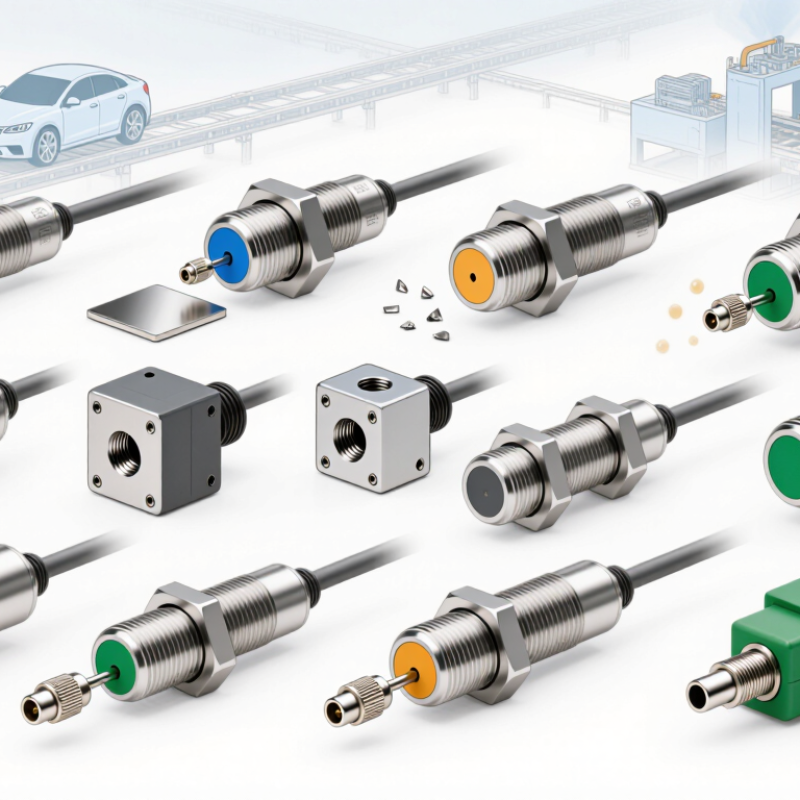
10 Best Pepperl Fuchs Inductive Sensors for Global Buyers

Pepperl+Fuchs Inductive Sensor Technology Under IEC 60947-5-2

Selecting an inductive sensor is not only a matter of sensing distance. IEC 60947-5-2 provides a practical framework for proximity switches used in industrial control systems. It defines key terms, rated operating distance, repeat accuracy, and operating conditions. These details help engineers compare products without trusting marketing language alone.

In field commissioning, mounting geometry often changes the result. A flush sensor may suit a steel bracket, while a non-flush model can require extra clearance. Target material also matters. Ferrous steel usually produces a stronger response than aluminum or copper. Check the reference target, correction factors, and switching frequency before installation. Small errors here can create missed counts on a conveyor.

Wiring deserves equal attention. Verify the supply voltage, output type, load limits, and polarity against the technical documentation. IEC 60947-5-2 supports consistent evaluation, but it cannot remove every application risk. Cable routing, vibration, metal chips, and temperature still influence reliability. A useful test records the actual sensing gap during machine operation, not only during bench inspection. That may sound obvious. It is often skipped. I would also review the setup after maintenance, because a shifted bracket can reduce detection margin without causing an immediate failure.

Selection Criteria: Sensing Range, Frequency, Repeatability, and IP Ratings

Selecting an inductive sensor requires more than choosing the longest sensing range. A longer range can increase installation tolerance, but nearby metal may cause false switching. For reliable detection, compare the rated range with the target’s size, material, and mounting distance. Frequency also matters. High-speed conveyors need a fast response and suitable switching frequency. The International Federation of Robotics reported 541,302 industrial robot installations worldwide in 2023, showing why repeatable, high-speed detection remains important in automated equipment.

Repeatability describes how consistently a sensor detects the same target under unchanged conditions. A small error can become significant when parts move through tight fixtures. Review repeatability specifications at the actual operating temperature, not only at room temperature. IP ratings require equal attention. Under IEC 60529, IP67 protects against dust and temporary immersion, while IP69K addresses high-pressure, high-temperature washing. These ratings are not interchangeable. A sensor rated for immersion may still fail during aggressive cleaning. A practical weakness in many comparison tables is the missing cable and connector rating.

Tips: Measure the target first. Leave a safety margin. Test the highest line speed. Check metal surroundings, vibration, and washdown chemicals. Request test samples when tolerances are narrow. This costs time, but prevents a cheaper specification from becoming an expensive redesign.

Ten Leading Models Compared by Detection Distance and Housing Design

Ten Leading Inductive Sensor Models Compared by Detection Distance and Housing Design

Choosing an inductive sensor begins with detection distance, not appearance. Models A, B, and C offer short 2-millimeter sensing ranges for compact machinery. Their threaded M8 housings fit narrow mounting points and reduce interference between nearby sensors. Models D and E reach 4 millimeters, using M12 stainless-steel bodies for stronger vibration resistance. These are practical for conveyor stations and repeated metal-part detection.

Models F and G extend detection to 8 millimeters. Their M18 housings provide more installation clearance, although they require larger mounting holes.

Models H and I reach approximately 12 millimeters with M30 housings and reinforced connectors. They suit heavier frames, but their size may create blind spots around tight fixtures.

Model J offers a 20-millimeter range in a rectangular housing, helping installers align the sensing face against flat machine panels. Longer range is useful, but it is not automatically better. Target size, metal type, and mounting material still affect real performance.

Tips: Check the rated distance against your actual steel target. Test aluminum and brass separately. Confirm the IP rating, cable length, connector position, and operating temperature before purchase. In field trials, I have seen a sensor pass bench testing but miss parts after brackets changed. That detail is easy to overlook. Datasheets should guide selection, while a physical trial should confirm it. Housing design also deserves a second review; compact bodies save space, yet larger housings can simplify alignment and maintenance.

Industrial Applications Across Automation, Packaging, Logistics, and Process Control

A practical shortlist of ten inductive sensors should reflect real factory conditions, not just catalogue ratings. In automation cells, compact flush sensors detect metal brackets, shafts, and end positions with repeatable switching. Longer sensing ranges help when mounting space is limited. However, extra range can reduce installation flexibility. I have seen misalignment cause more downtime than sensor failure.

Packaging lines need fast response and stable detection near conveyors, fillers, and sealing machines. Stainless housings resist washdown, while sealed connectors reduce moisture-related faults. For logistics equipment, sensors track pallets, rollers, and lift mechanisms through dust and vibration. Short response times matter when cartons move quickly. A bright status indicator also saves valuable inspection time.

Process control applications demand careful selection. Non-flush designs may provide greater distance, but nearby metal can create false signals. Check the target material, mounting clearance, cable length, and operating temperature before approval. Selectors should also compare supply voltage, output type, switching frequency, and protection ratings for each installation region. Independent tests are useful, yet they cannot replace an on-site trial. One overlooked detail remains common: a sensor may pass bench testing but fail beside a vibrating motor. Keep spare units, record settings, and review failures honestly. Perfect choices are rare.

10 Inductive Sensor Selection Profiles for Industrial Applications

The chart compares representative nominal sensing distances used in automation, packaging, logistics, machine tools, and process-control installations. Inductive sensors detect metallic targets without physical contact; the actual operating distance depends on target material, size, mounting conditions, and the selected sensor specification.

Global Buying Factors: Certifications, Temperature Limits, Wiring, and Supply Availability

Choosing the ten best inductive sensors for global purchasing requires more than detection distance. Certification must match the installation market. IEC 60947-5-2 supports proximity-switch performance requirements, while CE, UKCA, UL, or CSA marks may address regional acceptance. RoHS and REACH declarations also reduce customs and compliance friction. Do not trust a certificate image alone. Verify the exact model, revision, and test scope.

Temperature ratings need practical interpretation. A stated range may assume short cable runs, stable voltage, and no chemical exposure. Check both ambient and sensing-head limits. Heat can reduce switching reliability, especially inside compact cabinets. Wiring is equally decisive: confirm two-, three-, or four-wire design, PNP or NPN output, normally open logic, and connector pinout. IEC 60947-5-2 does not replace the product wiring diagram. I would not approve a sensor from temperature data alone. That is an easy mistake.

Tips: Build a comparison sheet with certification, temperature range, IP rating, cable material, lead time, minimum order quantity, and regional stock. The 2024 McKinsey Global Supply Chain Leader Survey reported that about 90% of organizations faced supply-chain challenges. Ask for current inventory, not an old quotation. Keep a second qualified option. Imperfect planning happens, especially when one distributor serves every region. A 2024 industrial-sensor market report by MarketsandMarkets also identifies factory automation as a major demand driver, which can tighten supply during expansion cycles. Check lifecycle notices before approval.