
skip to Main Content

2026 Best Electric Chip Fryers for Commercial Kitchens

Choosing commercial Electric Chip Fryers in 2026 is about more than basket size or headline power. A fryer must keep pace with real service: baskets moving between the oil and the pass, staff handling rushes, and chips draining before they reach the plate. Capacity, recovery time, temperature control, cleaning access, and available electrical supply all affect daily performance. Small details matter.

This guide considers how those features work together in busy kitchens, from cafés serving steady portions to restaurants facing sharp evening peaks. It also looks at practical ownership factors, including countertop space, oil management, safety features, and the clarity of manufacturer specifications. A larger tank is not automatically the better choice; it can take up valuable space and may not suit a lower-volume menu. Likewise, advertised output figures need context. Kitchen layout, product load, and operating habits can change results.

The comparisons are intended to help buyers ask more useful questions before committing to equipment. Check whether published capacity reflects usable cooking volume, and confirm installation requirements with a qualified supplier. There is no single fryer for every kitchen. Even experienced operators can misjudge demand, especially when menus or service patterns change. That deserves a second look. A careful shortlist should match the fryer to the food, the workflow, and the people who will clean and operate it every day.
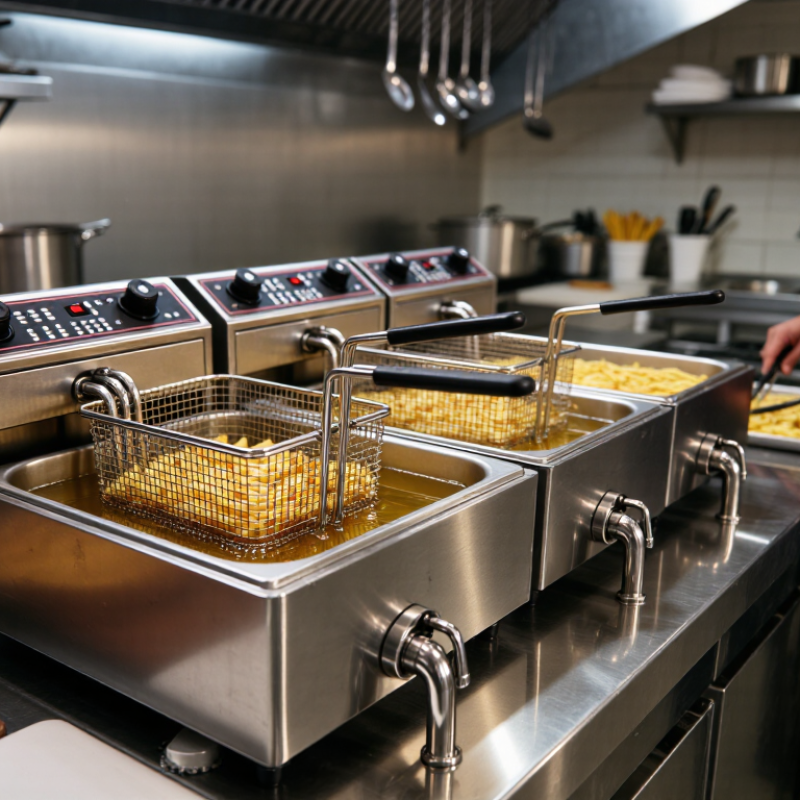
2026 Best Electric Chip Fryers for Commercial Kitchens

How Commercial Electric Chip Fryers Work

A commercial electric chip fryer turns electrical energy into heat through elements positioned in or beneath the oil tank. The control system reads the oil temperature and switches the elements on or off to keep it near the selected setting. Some models use immersed elements, which heat the oil directly and can recover temperature quickly after a basket is loaded. Others heat through the tank base. The details vary.

When cold chips enter hot oil, the temperature drops. A well-sized fryer restores heat steadily, helping food cook more evenly and avoiding a greasy result. This recovery depends on the fryer’s power, the batch size, and how cold or wet the chips are. Small details matter. Overloading the basket can overwhelm even a capable unit.

Many fryers include a cooler zone near the tank bottom, where crumbs settle and may burn less readily. A thermostat or temperature probe helps regulate heat, but it cannot compensate for poor cleaning or incorrect loading. Operators should check the temperature with suitable equipment and follow the manufacturer’s instructions for oil level, filtration, and cleaning. In practice, controls can feel reassuringly simple; consistent results still take attention. Even experienced staff sometimes misjudge a batch. That is worth noticing, not ignoring.

Key Fryer Types and Features for Professional Kitchens

Commercial electric chip fryers generally fall into countertop and floor-standing types. Countertop units suit cafés with limited space and modest batch sizes. Floor-standing models handle busier service, while twin-vat designs let cooks prepare separate batches or products. Choose vat capacity around the rush, not the quiet hour. Small details matter. A fryer with responsive temperature controls and strong heat recovery can restore oil temperature after a basket of cold, wet-cut chips enters the vat. That helps maintain a crisp exterior and steadier cooking times. Open-vat designs are easier to clean around; tube-style elements can offer efficient heat transfer but may complicate crumb removal. Check the manual and service access before buying.

Useful features include a drain valve, removable sediment screen, over-temperature protection, and clearly marked controls. ENERGY STAR’s commercial fryer guidance reports that certified fryers can use about 30% less energy than standard models; actual savings vary with workload and operating habits. Compare rated power, vat size, and recovery performance together. A high-powered unit may recover quickly, yet still waste energy during long idle periods. That trade-off deserves a closer look. In a working kitchen, oil filtering and regular cleaning also affect consistency, though busy teams may not follow ideal routines every shift.

Comparing Capacity, Power, Efficiency, and Safety

For a busy commercial kitchen, fryer capacity should match the rush, not just the menu. Estimate portions per hour, then check basket size, vat volume, and recovery time after each drop. A large vat is not automatically faster. During service, a slow temperature rebound can leave fries pale and queues growing.

Power affects that rebound and the electrical load. Compare the fryer’s rated kilowatts with the kitchen’s available circuit, and ask for recovery-time data under realistic batch conditions. The U.S. EPA’s ENERGY STAR Commercial Fryers specification sets a useful efficiency benchmark: qualifying electric models must reach at least 80% cooking energy efficiency. It also limits idle energy use to 1.0 kW for fryers with vats no wider than 18 inches, or 1.2 kW for wider vats. Check the current specification before purchase.

Efficiency matters between orders, too. ENERGY STAR’s idle-energy limits highlight a cost that is easy to overlook during a short product demonstration. That comparison is useful, but imperfect: actual consumption depends on batch size, oil temperature, and operating hours. For safety, look for an independent high-limit thermostat, stable baskets, clear oil-level markings, and a drain path that keeps hot oil away from staff. Ask operators to test controls and cleaning access before installation. Small details matter.

How to Choose a Fryer for Your Kitchen’s Needs

Choosing an electric chip fryer starts with the menu and the rush, not the largest tank available. Estimate portions per hour, then check the fryer’s usable oil capacity and basket size. A full basket of frozen chips can cool the oil quickly. Recovery time matters when orders arrive back-to-back.

Match the fryer’s power requirements to your kitchen’s electrical supply before ordering. Confirm the available voltage, circuit capacity, and installation space with a qualified professional. Measure twice. Allow room for staff to lift baskets safely and move hot oil during cleaning. A compact unit may fit neatly, yet leave too little room for busy service.

Look for precise temperature controls, a clear display, and safety features such as over-temperature protection. For kitchens that fry throughout the day, accessible filtration can reduce oil handling and downtime. Check how easily baskets, heating elements, and drains can be cleaned. Not glamorous. Still important. A fryer can seem ideal on paper but feel awkward beside a crowded prep bench, so consider the staff’s workflow and the location of nearby sinks. Compare warranty terms, service access, and replacement-part availability; low purchase cost alone can be misleading. There is no perfect size. The right choice balances output, power, cleaning, and space.

Best Practices for Operation, Cleaning, and Maintenance

Commercial electric chip fryers perform best when operators control heat, oil level, and batch size. Check the tank, baskets, and power cord before switching on. Keep the fryer level, and allow oil to reach its set temperature before adding food. Overloading cools the oil quickly and can leave chips greasy. Use dry baskets and lower them slowly to limit splashing. Small habits matter.

Tips: Record oil changes and cleaning checks on a simple shift log. Skim crumbs during service, but never handle hot oil without suitable protective equipment. If temperature readings seem unreliable, stop and inspect the unit according to its operating manual.

At closing, switch off and unplug the fryer if the manual permits, then let the oil cool fully before draining. Filter or replace oil based on its condition and your kitchen’s procedures. Clean removable parts with suitable detergent, and wipe the exterior without soaking electrical components. Rinse and dry parts completely before reassembly. Check the plug, cable, controls, and seals for wear. A rushed closing routine is easy to repeat; it is also where missed crumbs and damp parts can cause trouble. When damage or unusual heating appears, take the fryer out of service and arrange qualified inspection.

2026 Best Electric Chip Fryers for Commercial Kitchens - Best Practices for Operation, Cleaning, and Maintenance

Capacities and electrical requirements vary by model. Always check the fryer’s rating plate and manufacturer’s instructions before installation or use.
Fryer type Typical configuration Best suited for Operating best practice Cleaning routine Maintenance focus
Countertop single-vat One compact oil tank; electrical supply and vat capacity are model-specific. Small kitchens, snack stations, or lower-volume service with limited floor space. Keep food within the basket’s recommended load. Lower baskets carefully, and allow the oil to return to set temperature between batches. After the unit is switched off and safely cooled, remove crumbs and wipe accessible surfaces. Filter or replace oil according to its condition and the equipment instructions. Check the cord, plug, controls, basket, and heating element for damage or residue. Keep ventilation openings clear.
Floor-standing single-vat One larger vat, often with a cabinet or built-in oil filtration; exact features vary by model. Busy service stations that need greater batch capacity than a countertop unit. Use a dedicated basket for each food type where practical. Shake excess ice or loose coating from frozen products before frying, following the product instructions. Filter oil on the schedule recommended by the manufacturer and kitchen procedure. Clean the vat, baskets, cabinet, and floor around the fryer without splashing water into electrical components. Inspect filtration connections, drain valve, thermostat, high-limit safety control, and power connection as directed by qualified personnel.
Floor-standing split-vat One tank divided into separate cooking zones; capacity and control arrangement differ by model. Kitchens that prepare different foods or need to run smaller batches at separate settings. Observe each zone’s oil level and temperature separately. Avoid moving baskets between zones if this could transfer allergens or food particles. Clean each zone and its accessories separately where required. Confirm that oil is cool enough for the prescribed draining or filtration procedure. Check that each zone’s controls respond correctly. Arrange prompt inspection if a zone heats unevenly or its safety control trips repeatedly.
Floor-standing twin-vat Two independent vats, typically with separate controls; total electrical demand depends on the model and installation. High-volume kitchens that benefit from parallel cooking or separating menu items. Plan batches across vats to avoid overloading either one. Confirm the electrical circuit is suitable for the unit’s nameplate rating before installation. Treat each vat as a separate cleaning area. Securely close drain valves after cleaning and check for leaks before refilling. Inspect both control sets, baskets, drains, and filtration parts. Have electrical and safety-control checks performed by qualified service personnel.
All commercial electric fryers Heating elements may be immersed or arranged differently by design; follow the specific operating manual. Any professional kitchen selecting equipment for its menu, service volume, available power, and cleaning procedures. Keep oil within the marked minimum and maximum levels. Never heat an empty vat, overfill the basket, or leave hot oil unattended. Keep water away from hot oil. Switch off and isolate power as instructed. Let oil cool before handling; use suitable protective equipment and approved tools. Never pour water onto burning oil. Record cleaning and service checks. Stop using the fryer if wiring is damaged, oil leaks, or controls behave abnormally; seek qualified service.