
Blog
7 Tips for Buying Aluminum Perfume Bottles
Choosing Aluminum Perfume Bottles involves more than selecting a polished finish. The bottle must protect the fragrance, dispense consistently, and suit the brand’s filling process. A sleek sample can still disappoint. Looks can deceive.
Grand View Research estimated the global aluminum packaging market at USD 45.3 billion in 2023, with projected annual growth of 4.5% from 2024 to 2030. This figure covers aluminum packaging broadly; it is not a perfume-bottle market estimate. That distinction matters when comparing supplier claims. Circular-design expert William McDonough’s familiar principle, “Waste equals food,” offers a useful lens for considering material recovery and end-of-life choices. It is a broad design principle, not a perfume-packaging specification. Buyers still need evidence about the bottle, coating, pump, and closure as a complete package.
These seven tips focus on practical checks: aluminum grade and wall thickness, fragrance compatibility, atomizer performance, surface finish, customization, minimum order quantity, and supplier quality controls. Ask for production samples, not just renderings. Test the spray pattern and inspect the cap fit. Confirm whether the inner coating and pump components suit your formula; a metallic exterior alone does not prove compatibility. Small details matter. No checklist removes every risk, and supplier documentation deserves careful review. A reflective finish may hide scratches under showroom lights. The goal is not to find a perfect bottle on paper, but one that performs reliably in real use.
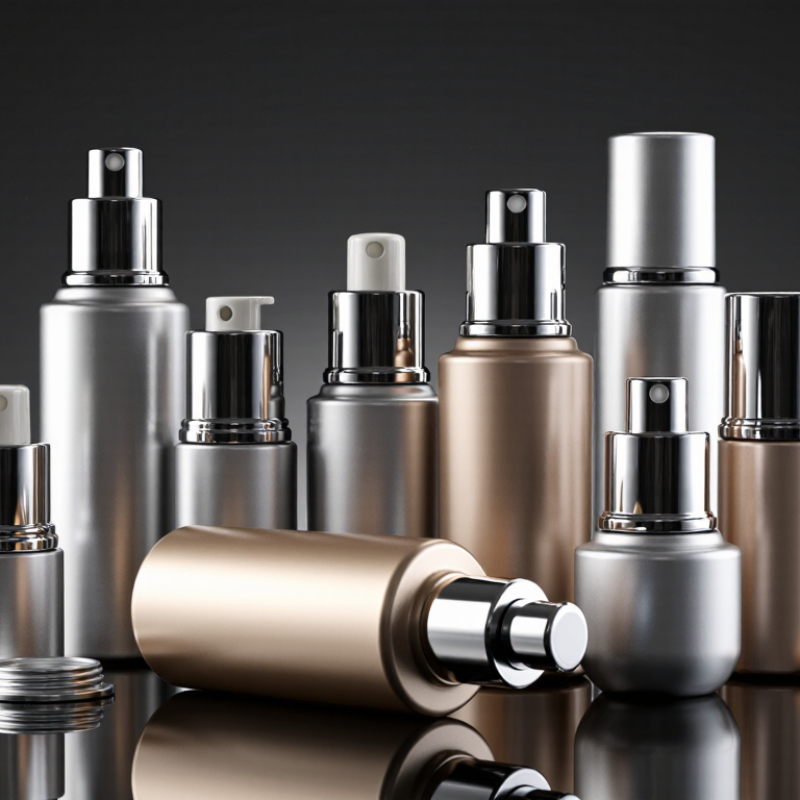
Define the Bottle’s Intended Use and Capacity
Before comparing finishes or prices, decide where the aluminum perfume bottle will be used. A compact bottle for a handbag needs different proportions from one displayed on a dressing table. For travel, check the filled bottle’s weight, cap security, and whether the sprayer resists accidental pressure. For retail or gifting, a wider base may feel steadier and leave more room for a clear label. Small details matter.
Capacity should match the amount people will realistically use. A 10 ml bottle suits sampling or occasional carry, while a larger size may work better for daily use at home. These are starting points, not rules. Consider how many sprays the product provides, how often customers refill it, and whether the bottle must fit a pouch or shipping carton. Measure the full package, not just the container; a tall cap can add more height than expected.
It is tempting to choose the largest capacity for better value. That can be a poor fit if the bottle feels bulky or the fragrance is used slowly. Check the actual internal volume, sprayer dose, and compatibility of the product with the bottle’s inner coating. Ask for a filled sample when possible, then test it in the intended setting. A quick desk measurement may miss an awkward grip. That happens.
Assess Aluminum Grade, Lining, and Build Quality
Aluminum grade affects more than appearance. Ask the supplier for the alloy specification and a material declaration, rather than relying on a vague “premium aluminum” label. Consistent material helps the bottle resist dents and keeps production more predictable. Still, a higher grade alone does not guarantee a better package. Wall thickness, forming quality, and the intended fragrance formula matter too. Check a sample under bright light for uneven color, pinholes, or thin spots. Small details matter.
The inner lining deserves equal attention. Fragrance ingredients can interact with some coatings, so request compatibility information for the actual formula and storage conditions. A practical sample check is to fill a few bottles, inspect them for changes in odor or color, and look for leaks after storage. This is useful, but it is not a substitute for proper compatibility testing. Not always obvious. Build quality shows at the seams, neck, and closure: threads should engage smoothly, edges should feel even, and caps should sit without wobbling. A heavier bottle may feel reassuring, yet weight alone proves little. I would compare several samples side by side; even careful checks can miss flaws that appear later in production.
7 Tips for Buying Aluminum Perfume Bottles: Assess Aluminum Grade, Lining, and Build Quality
Use this illustrative 1–5 priority scale to guide your inspection, not as a product test or industry rating. Confirm the alloy grade with supplier documentation, check that the interior lining is continuous and suitable for the fragrance, and assess seams, threads, wall consistency, and leak-test results before purchasing.
Check the Sprayer, Closure, and Leak Resistance
Tip: Check the sprayer before judging the bottle. Press it several times and look for a fine, even mist. A healthy sprayer should not spit large drops, stick halfway down, or leave perfume pooling around the nozzle. Test it with water if the seller allows, then wipe the top and press again. One spray can be misleading.
Tip: Examine the closure and neck together. The cap should fit securely without forcing, while the sprayer collar should sit level against the bottle. Gently turn the cap and check for wobbling or visible gaps. Small details matter. A cap that feels tight does not automatically mean the bottle is sealed; the inner seal and threaded connection do much of that work.
Tip: Ask how leak resistance is checked, especially when buying several bottles. Place a filled sample upright, on its side, and upside down over a clean tissue, following the supplier’s safe testing guidance. Look for damp spots near the neck after a short wait. A quick shake is not a complete test, and prolonged testing may miss problems that appear later. I would also inspect the bottle after a few open-and-close cycles; it takes time, and it is easy to skip.
Confirm Compatibility with the Perfume Formula
An aluminum bottle is only as compatible as its inner lining, closure, and sprayer. Perfume formulas vary: alcohol levels, water content, oils, and aromatic materials can affect these parts differently. Ask the supplier what lining is used and whether it has been tested with a formula similar to yours. A general claim of “perfume compatible” is not enough.
Test filled samples before ordering in volume. Keep some upright and others on their sides, then check for leaks, changes in color or odor, and a lining that looks cloudy, blistered, or softened. Small details matter. Test the sprayer too: a formula that leaves residue may clog a fine nozzle or change the spray pattern. Check again after storage at realistic temperatures, not just on filling day.
A short test offers useful clues, but it cannot predict every long-term storage condition. Record the formula, bottle materials, fill date, and inspection results so you can compare samples consistently. Ask for written compatibility guidance when possible, including information about the gasket and coating. One sample may behave perfectly, while another from a different production batch does not. That uncertainty is worth taking seriously.
Compare Suppliers, Customization, and Safety Standards
Compare suppliers against one written specification, not polished sample photos. Record aluminum grade, bottle weight, lining type, closure fit, minimum order, lead time, and defect policy. Ask each supplier for recent leak, drop, and corrosion-test results. A cap that looks elegant can still loosen in transit. Small details matter. Request a sample filled with your actual fragrance, then check for odor changes, coating damage, and seepage over several weeks. I would not treat a supplier’s general quality certificate as proof that a particular bottle suits a particular formula.
Customization should be tested, not merely approved on screen. Confirm color consistency, print rub resistance, neck dimensions, and whether the interior coating is compatible with alcohol-based fragrance. Ask for material declarations and test documentation, and check applicable packaging and cosmetic requirements in your sales markets. The International Aluminium Institute’s 2023 material-flow reporting estimates that about 75% of all aluminum ever produced remains in use. That broad figure is not a perfume-bottle recycling rate; local collection and sorting still matter. It is useful context, not a promise. Compare quotations only after confirming tooling charges, sample fees, and who owns custom molds. Cheap can become expensive. I’d also keep one imperfect sample for reference, since production color may drift slightly from the approved version.
7 Tips for Buying Aluminum Perfume Bottles - Compare Suppliers, Customization, and Safety Standards
| Tip | What to Compare | Customization Questions | Safety and Quality Checks |
|---|---|---|---|
| 1. Define the bottle and dispensing system | Compare capacity, dimensions, bottle shape, neck finish, and whether the design uses a crimp or screw closure. Check that the pump and closure are compatible with the bottle. | Ask which bottle sizes, finishes, colors, and pump styles are available, and whether custom dimensions require new tooling. | Request drawings or samples to check fit, spray function, closure security, and leakage. Confirm that the bottle is intended for the product and use conditions you specify. |
| 2. Evaluate suppliers using comparable specifications | Compare written quotations on the same capacity, material description, decoration, closure, order quantity, packaging, and delivery terms. Review sample quality and quality-control procedures. | Ask which options are standard and which require custom production. Request a written specification for every agreed feature. | Request relevant material and quality documents, and clarify how defects, inspections, and corrective actions are handled. Do not rely on a quotation alone to establish compliance. |
| 3. Check the minimum order quantity and total cost | Compare the quoted unit price alongside tooling, setup, decoration, sample, packing, freight, and other applicable charges. Minimum order quantities vary by supplier and customization. | Ask whether a stock bottle can be used with custom printing or labeling to avoid the cost and commitment of a fully custom design. | Confirm the order quantity, accepted tolerances, inspection terms, and replacement or credit process in writing before placing the order. |
| 4. Confirm customization details before production | Compare available printing, labeling, surface finishes, colors, and closure options. Check how artwork, color matching, and decoration are approved. | Ask for artwork templates, printable-area limits, color references, proofing steps, and any setup or tooling charges. Approve a production-representative sample where possible. | Check that inks, coatings, and other applied finishes are suitable for the intended packaging use. Request supporting information for the specific materials used. |
| 5. Test compatibility with the actual perfume | Compare the bottle’s internal surface, any liner or coating, pump components, and seals against the intended fragrance formula and storage conditions. | Tell the supplier about the formula type and intended use, and ask whether the proposed bottle has been evaluated with comparable contents. | Run compatibility and leakage testing with the actual formula. Check for changes in appearance, odor, spray performance, corrosion, or seal integrity over the planned storage period. |
| 6. Verify safety and regulatory documentation | Identify the markets where the finished cosmetic will be sold and determine which packaging and product requirements apply there. Requirements can differ by market and product. | Ask for documentation relevant to the bottle’s material, coatings, inks, and components, such as technical specifications and applicable test reports. | Review documents for the exact components being purchased. A general certificate or an ISO 22716 reference alone does not establish that a particular bottle is compatible or compliant. |
| 7. Approve a sample and plan delivery | Compare production samples for dimensions, finish, print quality, pump output, closure fit, and packaging for transport. Confirm production and shipping schedules in writing. | Approve a signed or otherwise clearly identified sample that records the agreed color, artwork, finish, and component combination. | Agree on incoming inspection criteria and packaging requirements. Check delivered bottles for damage, contamination, leaks, and consistency before filling. |
