
Blog
What Are the 7 Best Transparent LED Display Suppliers?
A Transparent Led Display can bring video and motion into a glass storefront without completely blocking the view beyond it. In a retail window, for example, pedestrians may see bright product footage while still noticing shelves and lighting inside. The effect depends on more than the screen itself. Glass type, viewing distance, ambient light, installation space, and content all shape the result.
Choosing a supplier takes careful comparison. This guide examines seven providers through practical questions: What pixel pitches and panel formats do they offer? Can they explain brightness, transparency, and viewing-angle trade-offs clearly? Do they provide project references, technical documentation, sample testing, and responsive support? Small details matter. A sample viewed in a dim showroom may look very different from a display facing strong afternoon sunlight.
The suppliers featured here are starting points, not a universal ranking for every project. A useful shortlist should match your building, budget, schedule, and maintenance needs. Ask for a written specification, a detailed quote, and realistic lead times. Where possible, inspect a demonstration using content similar to your own. No supplier is perfect, and a polished sales presentation cannot replace verification. Compare the evidence, note what remains unclear, and confirm service arrangements before committing. That extra scrutiny may feel slow. It can prevent costly surprises after installation.
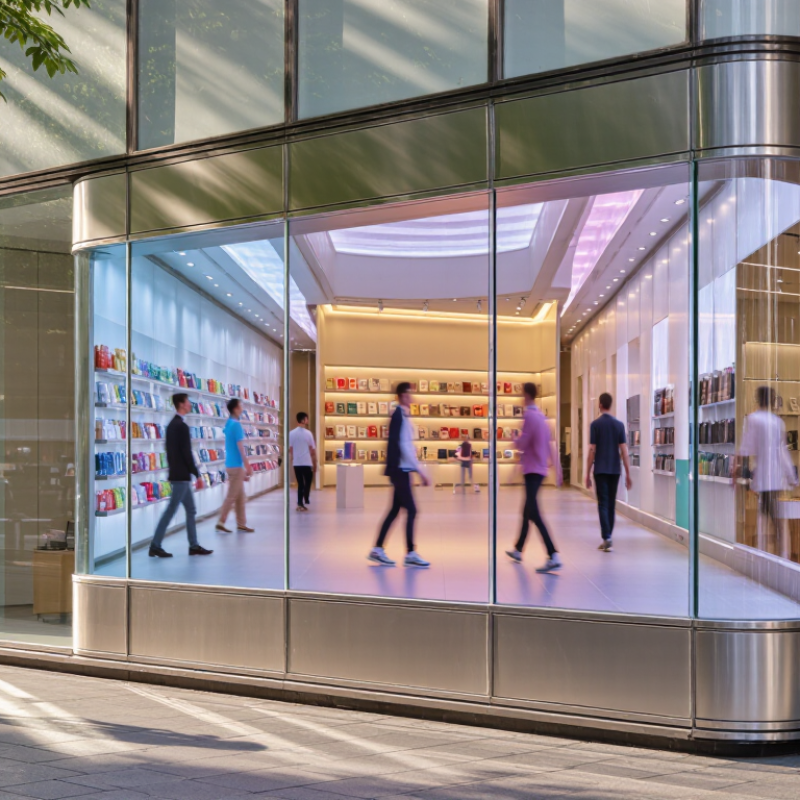
What Defines a Leading Transparent LED Display Supplier?
A leading transparent LED display supplier proves performance in the space where the screen will operate. Retail windows face daylight, reflections, and changing viewing angles. Ask for measured brightness, transparency, pixel pitch, and power use—not just a polished showroom video. A bright demo can mislead. The supplier should test a representative panel under your actual lighting conditions and explain how image quality changes as transparency increases.
MarketsandMarkets’ 2022 Transparent Display Market report projected growth from USD 2.9 billion in 2022 to USD 8.7 billion by 2027. That forecast signals interest, not a guarantee of demand or product quality.
Look for engineering support beyond the sale. A credible supplier provides clear installation drawings, compatible control systems, spare-module availability, and a practical repair plan. Ask how technicians replace a failed LED strip without dismantling an entire window. Request documentation for thermal performance, viewing angles, and operating limits, then verify those claims with a sample or reference installation.
Ask for proof. Warranty length matters, but so do exclusions, response times, and access to replacement parts. Forecasts can shift, and specifications can look better on paper than in a sunlit shop. A careful supplier will discuss those trade-offs openly.
Key Factors for Evaluating Transparent LED Display Manufacturers
Supplier selection should begin with measurable performance, not showroom impact. MarketsandMarkets estimated the global LED display market at $7.1 billion in 2023, projecting $10.3 billion by 2028. Grand View Research reported a different 2023 estimate of $7.53 billion, reflecting differences in market scope. Neither figure isolates transparent displays, so treat them as context, not proof of supplier quality. Ask manufacturers for verified data on pixel pitch, brightness, refresh rate, transparency, and power use. Then check how each figure was measured.
Real conditions matter. Request a sample panel and inspect it against a bright window, from several viewing distances, and after hours of operation. Look for uneven color, visible wiring, flicker on camera, and heat near the power supply. Ask how quickly technicians can replace a module and whether spare parts match later production batches. Get warranty terms and test reports in writing. A polished demonstration can hide installation limits. One weakness in many evaluations is comparing transparency percentages without checking brightness or viewing angle; the numbers alone can mislead.
What Are the 7 Best Transparent LED Display Suppliers? - Key Factors for Evaluating Transparent LED Display Manufacturers
Use these seven criteria to compare suppliers. Product specifications vary by model and installation, so request documentation and verify performance on a representative sample before purchasing.
| No. | Evaluation Factor | What to Check | Useful Comparison Data | Evidence to Request |
|---|---|---|---|---|
| 1 | Transparency and visibility | Check how the display affects daylight, views through the glazing, and the appearance of the building façade. | Compare the stated transparency percentage for the exact proposed model. Values around 60%–90% are advertised across different transparent LED products; measurement methods and panel designs can differ. | A model-specific datasheet and a physical sample viewed from both sides under realistic lighting. |
| 2 | Brightness and ambient-light performance | Assess whether the display remains legible in the intended location, particularly near sunlit windows or outdoors. | Compare brightness in nits at specified operating conditions. Required brightness depends on sunlight exposure, glazing, content, and local installation conditions. | A brightness test report, dimming-control details, and an on-site or equivalent lighting demonstration. |
| 3 | Pixel pitch and viewing distance | Match pixel pitch and resolution to the viewing distance, content detail, and available installation area. | Smaller pixel pitch provides more pixels per area but may affect cost and transparency. Compare the proposed pixel pitch and total pixel resolution for the complete display. | A scaled layout, pixel-resolution calculation, and sample content viewed from the expected audience distance. |
| 4 | Refresh rate and image quality | Check for flicker, color consistency, grayscale performance, and camera-banding risk when the screen is filmed. | Compare the specified refresh rate and test conditions; a high stated rate alone does not establish uniform color or camera performance. | A live demonstration with moving content and, if filming is planned, a camera test at relevant settings. |
| 5 | Installation and maintenance | Confirm mounting requirements, access for repairs, module replacement procedures, and compatibility with the building structure. | Compare panel dimensions and weight, cable routing, service access, and the time and tools needed for a module replacement. | Installation drawings, maintenance instructions, spare-parts list, and a demonstration of replacing a module. |
| 6 | Reliability and environmental suitability | Verify operating temperature, humidity limits, ingress protection where applicable, and suitability for the actual indoor or outdoor environment. | Compare the specified environmental ratings and power consumption for the exact model and installation configuration. | Model-specific test reports, installation limitations, and the applicable compliance documents for the destination market. |
| 7 | Warranty and technical support | Review warranty coverage, exclusions, response process, software support, spare-parts availability, and who handles installation and service. | Compare the written warranty term and coverage rather than relying on general claims; service terms vary by supplier, product, and region. | A sample warranty, service-level terms, support contacts, and a written spare-parts plan. |
Seven Notable Transparent LED Display Suppliers
Seven notable transparent LED display suppliers differ less by headline brightness than by what they build well: glass-integrated panels, adhesive films, mesh screens, modular cabinets, rental systems, custom façade displays, and turnkey installations. These seven supplier profiles serve different sites. A glass-fronted shop may need fine pixel pitch, while a sunlit atrium needs higher brightness and careful glare control. Measure the actual viewing distance. Then request a sample at the intended pixel pitch.
Grand View Research’s transparent display market report estimated a 2023 market value of about USD 1.5 billion and forecast strong growth through 2030. These are market estimates, not guaranteed demand; definitions and methods can vary. That matters. Ask suppliers for measured transparency, brightness, power use, and viewing-angle data under stated test conditions. Also check how the display handles heat, cleaning, and replacement. A beautiful demo may not show seams, reflections, or service access on a real façade.
Tips: Ask for a working sample and a site-specific mock-up. Check wiring routes, control compatibility, warranty terms, and spare-part availability. Small details matter. Compare total installed cost, not just panel price. A specification sheet can still leave unanswered questions.
What to Look for in Transparent LED Display Suppliers
An editorial 100-point checklist for comparing suppliers—not measured supplier performance or a market survey.
Compare product specifications, installation requirements, warranty terms, and service coverage for your specific project before choosing a supplier.
How the Seven Suppliers Compare in Products and Services
What Are the 7 Best Transparent LED Display Suppliers?
How the Seven Suppliers Compare in Products and Services
A useful comparison starts with the display, not the sales pitch. Ask each of seven shortlisted suppliers for pixel pitch, brightness, transparency, viewing distance, and indoor or outdoor ratings. Their portfolios may include LED mesh, transparent film, modular cabinets, rental panels, or custom architectural formats. These products suit different glass sizes and installation needs. AVIXA’s 2024 Industry Outlook and Trends Analysis projected global professional audiovisual revenue would reach $325 billion by 2029. That figure covers the wider AV sector, not transparent LED displays alone.
Service can separate similar-looking products. Compare site surveys, structural guidance, control-system compatibility, warranty terms, spare-parts availability, and response times. Request a working sample or a demonstration at realistic viewing distance. Check whether the supplier documents brightness and transparency under consistent test conditions. Small details matter. A polished showroom image may hide glare, visible cabling, or uneven brightness in daylight. I would also check how each supplier handles replacement modules; this detail is easy to overlook, and service promises can be vague.
Tips: Send all seven suppliers the same glass dimensions, ambient-light conditions, content type, and operating hours. Ask for written power, maintenance, and installation estimates. If one proposal seems unusually perfect, pause and verify its assumptions.
How to Choose a Supplier for Your Display Project
A transparent LED display can look striking in a showroom and disappointing beside a sunlit window. Define the viewing distance, ambient light, glass dimensions, and content before comparing suppliers. Ask for pixel pitch, brightness, transparency rate, and viewing-angle data for the exact configuration you plan to buy. A specification sheet alone is not enough.
Request a working sample or a live demonstration. Check whether text stays readable from the intended distance, and whether reflections wash out the image at midday. Watch for uneven brightness between modules. Details matter. Ask how the supplier tests color consistency, heat, and continuous operation. Confirm that mounting drawings, power requirements, and control-system compatibility are documented before production begins.
Support deserves the same scrutiny as the display. Request clear warranty terms, expected response times, and the process for replacing a faulty module. Ask whether spare parts will remain available throughout your project timeline. Speak with a customer whose installation resembles yours, if possible. A polished presentation can hide gaps in after-sales service. I would not rank suppliers by price alone; still, a higher quote does not automatically mean better engineering. Compare itemized costs, delivery milestones, and the people responsible for resolving installation problems.
