
Blog
2026 Best Custom Sewer Jetter for Global Buyers
Choosing the right Custom Sewer Jetter starts with the work it must handle. Municipal crews, contractors, and service companies may face different pipe diameters, access conditions, and debris. A compact unit can fit a service vehicle, while a larger trailer-mounted system may suit longer jobs and heavier use. Details matter.
This guide examines the specifications that shape real-world performance: pump pressure and flow, hose length and durability, engine or power options, tank capacity, controls, and maintenance access. A high pressure rating can look impressive on a brochure, but it does not tell the whole story. Flow rate, nozzle choice, and hose reach also affect cleaning results. Buyers should compare these figures with their typical jobs and confirm equipment details with the manufacturer.
Reliable selection also means looking beyond the machine. Review operator protections, service intervals, spare-parts availability, warranty terms, and technical support in the destination market. Requirements vary by location, so buyers should verify applicable equipment and transport standards with qualified local sources. Not always simple. A specification that works well on paper may prove inconvenient in daily use, and that deserves a closer look. The sections ahead offer a practical framework for comparing suppliers, asking focused questions, and choosing a jetter that fits both operating needs and long-term ownership.
What a Custom Sewer Jetter Is and How It Works
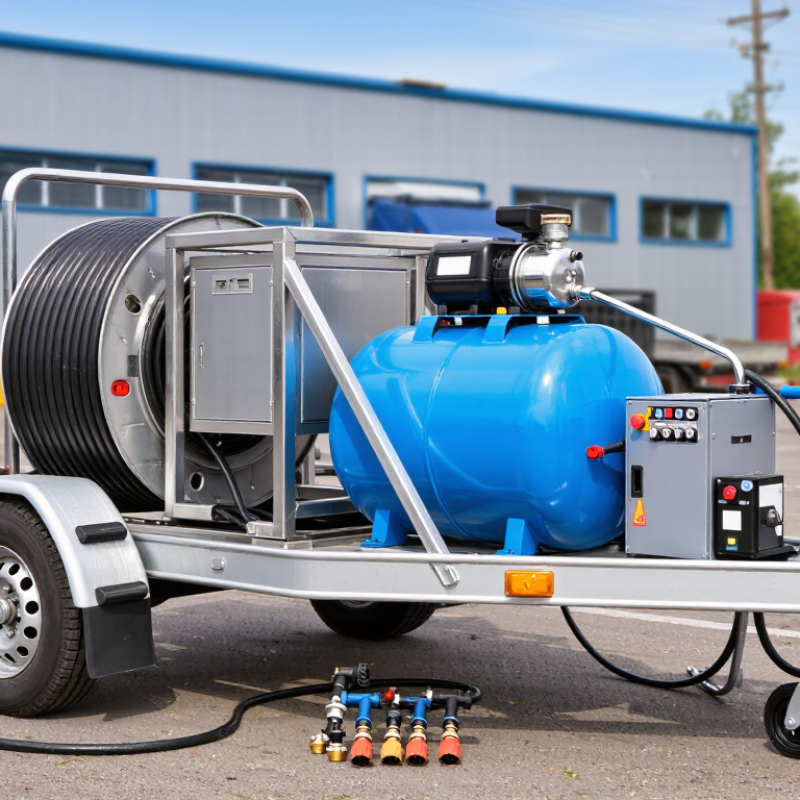
A custom sewer jetter is a high-pressure water cleaning system configured for a particular vehicle, pipe network, and job pattern. Its setup may include a water tank, pump, hose reel, hose length, and interchangeable nozzles. The goal is a workable match, not simply the highest pressure. Small details matter.
A pump sends water through the hose to a nozzle inside the drain. Forward-facing jets loosen deposits, while rear-facing jets help move the hose through the pipe and carry debris back toward the access point. ASCE’s 2021 Report Card for America’s Infrastructure describes roughly 800,000 miles of public sewer mains in the United States and assigns wastewater infrastructure a D+ grade. That scale helps explain the need for adaptable maintenance equipment, but it does not make every blockage suitable for jetting.
For global buyers, custom specifications should reflect local pipe sizes, available water, transport limits, and common job locations. A compact unit may suit narrow streets; a larger tank can reduce refill stops on longer routes. There is a trade-off. Higher pressure alone does not guarantee better cleaning, and unsuitable operation can damage fragile pipes. Match flow, pressure, hose, and nozzle to the pipe condition, then verify the setup with a qualified operator.
Main Types of Sewer Jetters and Their Applications
Custom sewer jetters generally fall into three practical groups: portable electric units, trailer-mounted systems, and truck-mounted machines. Portable models suit indoor drains and short branch lines. Their compact frames fit through doorways, but limited water capacity can interrupt longer jobs. Small jobs.
Trailer-mounted jetters provide more water and flow for contractors clearing building laterals, commercial drains, and local sewer lines. Truck-mounted systems are designed for sustained work on larger municipal mains, where operators may need longer hose runs and greater debris-carrying flow.
Pressure alone is not the whole story. A high-pressure, low-flow unit may open a blockage but leave sediment behind; nozzle choice, pipe condition, and operator control also matter.
The U.S. EPA’s 2022 Clean Watersheds Needs Survey estimated $630.1 billion in wastewater and stormwater infrastructure needs over 20 years. That figure is not a jetter-sales forecast, but it shows the scale of assets requiring attention.
Buyers should match machine capacity to pipe diameter, access, and expected duty cycle, then check water-tank size, hose handling, and serviceability. Capacity charts can mislead. I would also verify performance on the smallest lines in the planned workload, since oversized equipment can be awkward where access is tight.
Key Specifications for Comparing Sewer Jetter Models
The U.S. EPA’s 2022 Clean Watersheds Needs Survey estimated $630.1 billion in wastewater, stormwater, and nonpoint-source pollution-control needs over 20 years. That infrastructure burden makes reliable maintenance equipment a practical purchasing concern. When comparing custom sewer jetters, assess operating pressure and water flow together. Pressure helps break deposits; flow carries loosened material downstream. A high pressure rating alone can mislead. Confirm pump output at the intended working speed, then check nozzle compatibility and hose diameter.
Compare engine power, tank capacity, hose length, and reel speed against real route conditions. A 300-foot hose may sound useful, but friction loss can reduce nozzle performance on long runs. Ask for pressure-flow curves, duty-cycle limits, filtration requirements, and service access. Check winterization details, especially drain points and exposed fittings. Small parts matter. Verify dimensions and weight against the service vehicle’s payload and storage space. Request an acceptance test using the proposed hose and nozzle, not a bare-pump demonstration. Results still vary with debris, pipe diameter, bends, and operator technique. A specification sheet cannot capture every job.
Custom Options for Different Jobs and Operating Conditions
2026 Best Custom Sewer Jetter for Global Buyers
Custom Options for Different Jobs and Operating Conditions
A custom sewer jetter works best when its pump, hose, and nozzle suit the job. Small residential lines may need a compact unit and a flexible hose. Municipal maintenance or larger pipes can call for greater flow and longer hose reach. But higher pressure alone does not guarantee better cleaning. Match pressure and water volume to pipe size, blockage type, and the nozzle’s requirements. A larger pump is not always better.
Operating conditions matter just as much. Buyers should confirm available water supply, power source, vehicle space, and access to routine maintenance. In cold regions, ask about practical measures for protecting water lines and equipment during storage. For frequent transport, check hose handling, control placement, and lifting points. These details are easy to overlook on a specification sheet. A site visit or clear job description can help suppliers recommend a suitable setup, though real work may still reveal compromises.
Tips: Share typical pipe diameters, hose distances, and daily operating hours before requesting a quote. Ask for a test run using the proposed configuration, and review service access. Test before shipment. Keep the specification tied to actual jobs, not just peak figures.
How Global Buyers Can Evaluate Suppliers and Compliance
2026 Best Custom Sewer Jetter for Global Buyers
Choosing a custom sewer jetter starts with the work it must perform. Share pipe diameters, typical blockage types, water availability, and expected operating hours with each supplier. A capable supplier should explain how pump capacity, hose length, and nozzle selection fit those conditions. Ask for the proposed specifications in writing, not just a sales estimate. Small details matter.
Compliance needs careful checking before purchase. Request current test reports, equipment manuals, electrical details, and material records where relevant. Then compare them with the import, workplace safety, and environmental requirements in your destination market. Requirements differ by country and equipment configuration, so confirm uncertain points with a qualified local specialist. A document can look complete and still miss a local requirement.
Assess supplier reliability through practical evidence. Ask how custom changes are recorded, inspected, and tested before shipment. A witnessed factory test can reveal pressure instability, leaks, or controls that are difficult to use with gloves. Confirm spare-parts lead times, remote troubleshooting options, and warranty terms in clear language. If a supplier cannot explain a test result, pause. I would also ask for a sample inspection checklist; it may not answer everything, but it shows how carefully the supplier tracks quality.
2026 Best Custom Sewer Jetter for Global Buyers
Common Single-Phase Mains Voltage by Market
Use this comparison as an initial check when evaluating a custom sewer jetter supplier. Values show common nominal household single-phase supplies, not a guarantee of the power available at every job site. Confirm the jetter’s motor voltage and frequency, plug and phase requirements, and local electrical compliance before ordering. Japan’s mains frequency varies by region (50 Hz or 60 Hz).
